Protest Targets Lebanon Youth Facility Accused of Abuse; Forced Labor

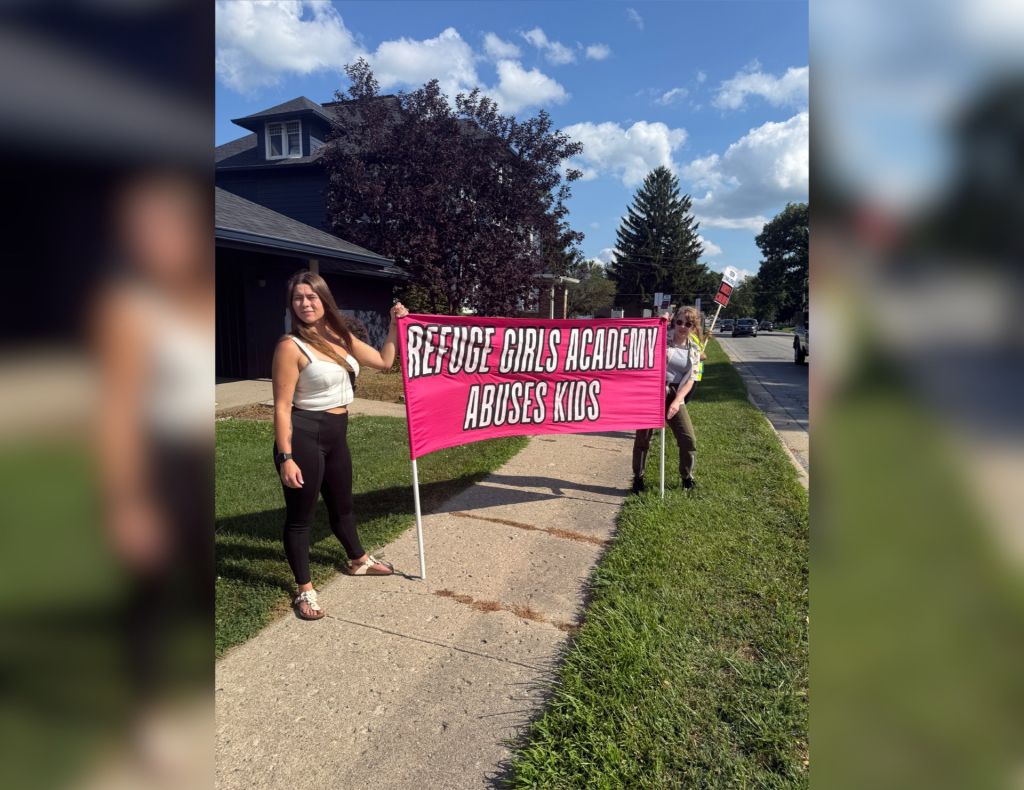
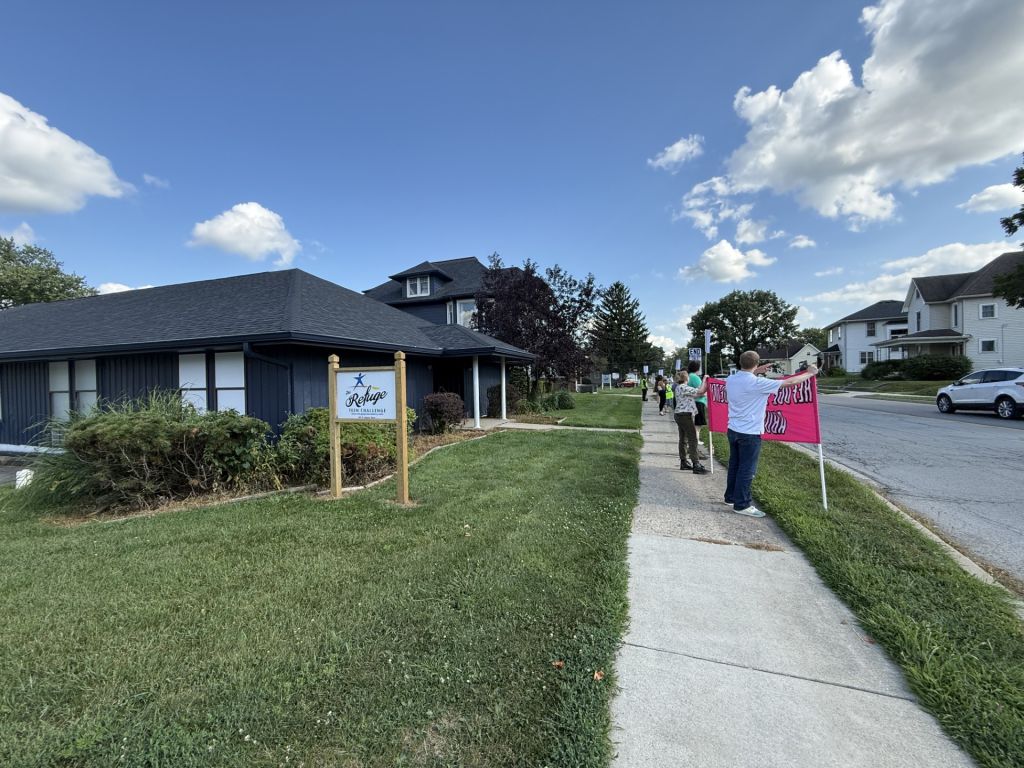
LEBANON, Ind. — Outside an unassuming residential building at 1015 N. Lebanon Street, a growing chorus of voices demanded an end to what survivors describe as decades of institutionalized cruelty, physical abuse, and labor trafficking.
On Wednesday, July 29, survivors of Central Indiana Teen Challenge (CITC)—now operating under the name Refuge Girls Academy—joined forces with Purdue Students for a Democratic Society (SDS-Purdue) for a rally outside the facility. The demonstration comes during a time here there is also a legal escalation: an expanded federal civil lawsuit originally filed in April with nine plaintiffs has now grown to represent 35 young women who state they were exploited, neglected, and abused as minors.
The litigation, led by attorney Andrea Simmons of Indianapolis-based CohenMalad, LLP alongside Boston’s Justice Law Collective, paints a disturbing portrait of a faith-based residential facility operating far beyond the scope of its public promises.
Attorney: 35 Women Sue Indiana Facility Over Abuse; Trafficking
“We have interviewed every single one of them for at least an hour, sometimes much longer than that,” attorney Andrea Simmons stated during an interview. “We kind of let them decide how much they need to share… Many of them have suppressed these memories.”
Promises of Healing vs. The Reality of Solitary Confinement
Promoted on its website as a peaceful sanctuary offering professional therapy and academic support for struggling youth, Refuge Girls Academy is part of Adult & Teen Challenge USA—an umbrella network of over 200 residential programs operating under the Assemblies of God religious group.
However, court filings and survivor testimonies describe an environment stripped of evidence-based medical care or credentialed staff. Instead, residents encountered forced unpaid labor, severe psychological coercion, conversion therapy tactics, and bizarre humiliation rituals used to extract total obedience.
Because Indiana enforces a 10-year statute of limitations on civil actions regarding childhood abuse, many older survivors at Wednesday’s rally are legally barred from filing individual claims against the facility. However, they stood on the sidewalk chanting and holding banners to support the 35 current plaintiffs whose cases fall within the legal window.
Testimonies from the Front Lines
Mandi MacDonald entered the facility 20 years ago at age 15 after being court-ordered as an alternative to juvenile detention. Living with diagnosed ADHD and depression, MacDonald recounted how an act of honesty transformed into months of psychological torture. After confessing to her uncredentialed counselor that she had logged onto her MySpace page during a hotel visit with her parents—simply to see if anyone missed her—staff stripped her of her rank, demoted her to entry level, and placed her under severe punishment.
“I was given impossible expectations. I was ordered to handwrite a thirty-page manual twenty times, perfectly,” MacDonald shared. “I was having OCD tendencies and kept retracing the lines… When I couldn’t complete it, they took away my voice. I wasn’t allowed to speak or be spoken to for months.”
MacDonald was eventually locked alone in an isolation room for two months with nothing but a Bible and her writing assignment, fed a mandatory diet consisting solely of cold beans, bread, carrots, and an apple for every meal. Today, as a mother and licensed massage therapist specializing in trauma-informed bodywork, she notes that the complex PTSD (CPTSD) inflicted by the facility left lifelong neurological scars.

Brittany Lake attended Teen Challenge between 2009 and 2010. Lake entered the program not for substance abuse, but due to academic struggles. She recalled receiving a meaningless education consisting of unaccredited, grade-school level workbooks—including a chemistry packet whose first chapter argued that alchemy was a sin against God.
When Lake neared her 18th birthday, facility director Dawn Rose manipulated Lake’s parents into threatening a court custody petition to prevent her from leaving, falsely promising that Teen Challenge was the only way she would earn her diploma.
“The diploma I got from Teen Challenge wasn’t valid. I had to go to community college because I couldn’t get into a real college,” Lake explained. “Even in community college, they made me do remedial testing because my degree wasn’t valid.”
Lake also detailed witnessing a dyslexic and autistic resident who was locked in the “safe room” for two months, forced to rewrite the student manual while being fed nothing but peanut butter sandwiches, which severely impacted the girl’s digestive health.
Emelia Neel was a resident from 2009 to 2010, Neel recounted physical exertion tactics disguised as treatment. Residents were forced to run up and down local hills while staff chased them in vans, limiting their hydration to a single Dixie cup of water regardless of heat or fatigue.
“I faced a lot of really brutal things here, including eating cold beans in a corner for several months for all three meals,” Neel recalled. “They would lock girls away in what was called the safe room for weeks on end… We’re talking about ruining people’s entire lives.”
Neel noted that a close friend she made in the program died of an overdose shortly after leaving—unable to cope with the compounding trauma experienced inside the facility.
Systemic Exploitation and Unpaid Labor
The federal lawsuit details broader patterns of trafficking and medical neglect. Residents were allegedly trafficked out to local businesses and institutions—including Purdue and Butler Universities—to perform manual labor without compensation under the guise of character building. Unpaid fundraising was also routine, with vulnerable teens forced to recount intimate personal struggles in front of unfamiliar church congregations to solicit donations for the facility.
Medical emergencies were also routinely ignored or mocked. In one instance detailed by Lake, a resident had to secretly sneak a phone call to her parents to secure a doctor’s appointment for an abscess; physicians later warned the teen that she was hours away from entering septic shock.
Organizers with SDS-Purdue and survivor groups emphasize that their fight extends beyond a single location. They are demanding:
*The immediate, permanent closure of Refuge Girls Academy / Central Indiana Teen Challenge.
*An immediate ban on conversion therapy practices.
*State and federal regulatory oversight of the unaccredited “troubled teen industry.”
As the expanded federal civil suit moves forward in court, survivors say they will continue raising public awareness to ensure no more children are subjected to institutional abuse under the banner of rehabilitation.