Hart Says Indy Can Fix Roads Without Raising Taxes

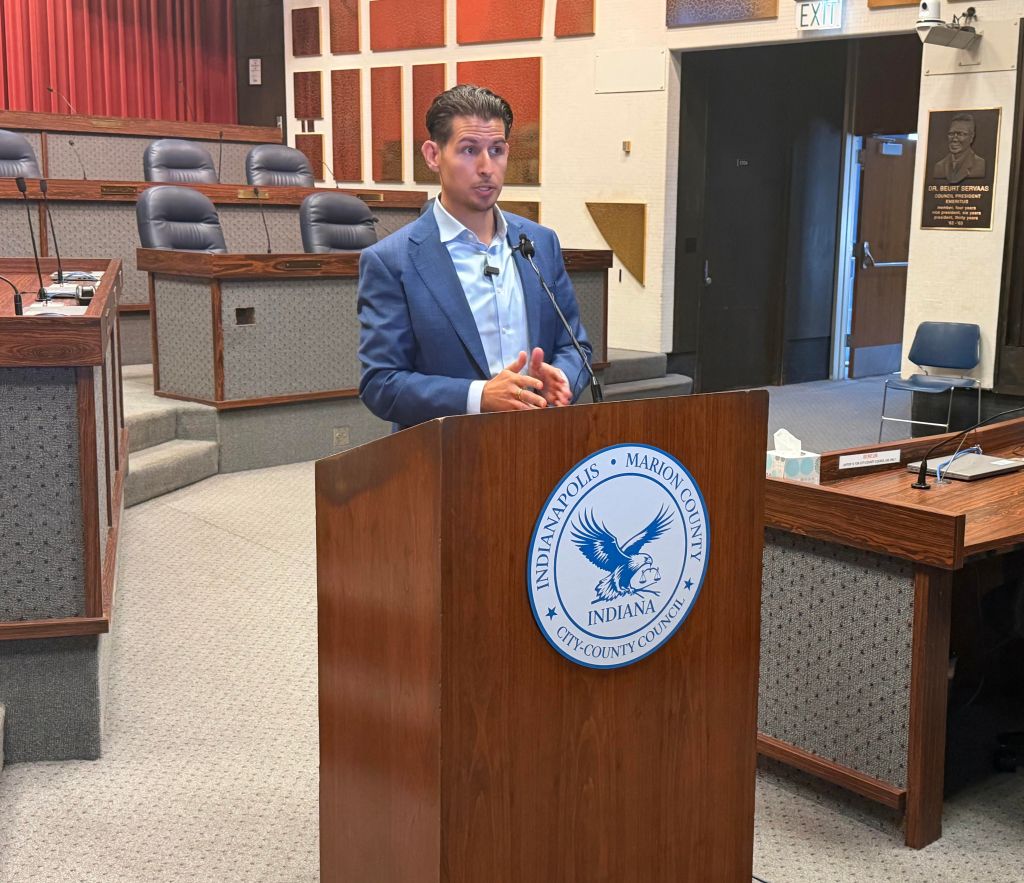
INDIANAPOLIS — Indianapolis City-County Councilor Michael-Paul Hart says the city can fix its roads without raising taxes.
Hart unveiled a four-point plan Wednesday that would use existing revenue, budget savings and future growth in Marion County income tax collections to pay for road repairs.
The proposal comes after Mayor Joe Hogsett vetoed a $100 wheel tax approved by the City-County Council. Democrats want to override that veto but currently do not have enough votes.
Hart says residents have made it clear they don’t want another tax.
“I want you, government, to go back and sharpen your pencils,” Hart said. “I want you to find some savings and find a way to make it work so we can get to work on our roads.”
Under state law, Indianapolis can receive matching road funds if the city provides its own share. Starting in 2027, the state would provide $50 million a year for local road projects, but Indianapolis would need to match that amount. The city’s required share would increase over time, reaching $100 million a year by 2031.
Hart says the city can meet that requirement without a new tax by redirecting money it already collects. His plan relies on growth in income tax revenue, budget savings, dedicating a portion of existing income tax dollars to roads and using supplemental revenue the city receives each year.
Hart says Indianapolis could also use money already set aside in the budget and explore long-term savings, including potential changes to how fire services are structured.
Hart points to previous budget cuts as proof the city can find savings.
“We have a precedent for savings in this administration,” Hart said.
The biggest debate is whether Hart’s plan meets the state’s requirement that the money be “new revenue.” Hart argues the city does not currently use income tax dollars for roads, so shifting some of that money toward repairs would qualify.
Hart says the plan also gives the city flexibility because leaders would decide each year how to fund the road match instead of locking taxpayers into a permanent increase.
“I don’t want to raise taxes, and the people I’ve talked to don’t want to raise taxes,” Hart said. “My answer today is yes, there is a way to do it without it.”
Democrats argue Indianapolis still needs a dedicated funding source, saying the wheel tax is necessary to address the city’s growing road repair needs.
The council would need to support any funding changes, and the city must meet state requirements before receiving the matching road money.