Leadership Consultant Advocates for Systems-Based Child Welfare Reform
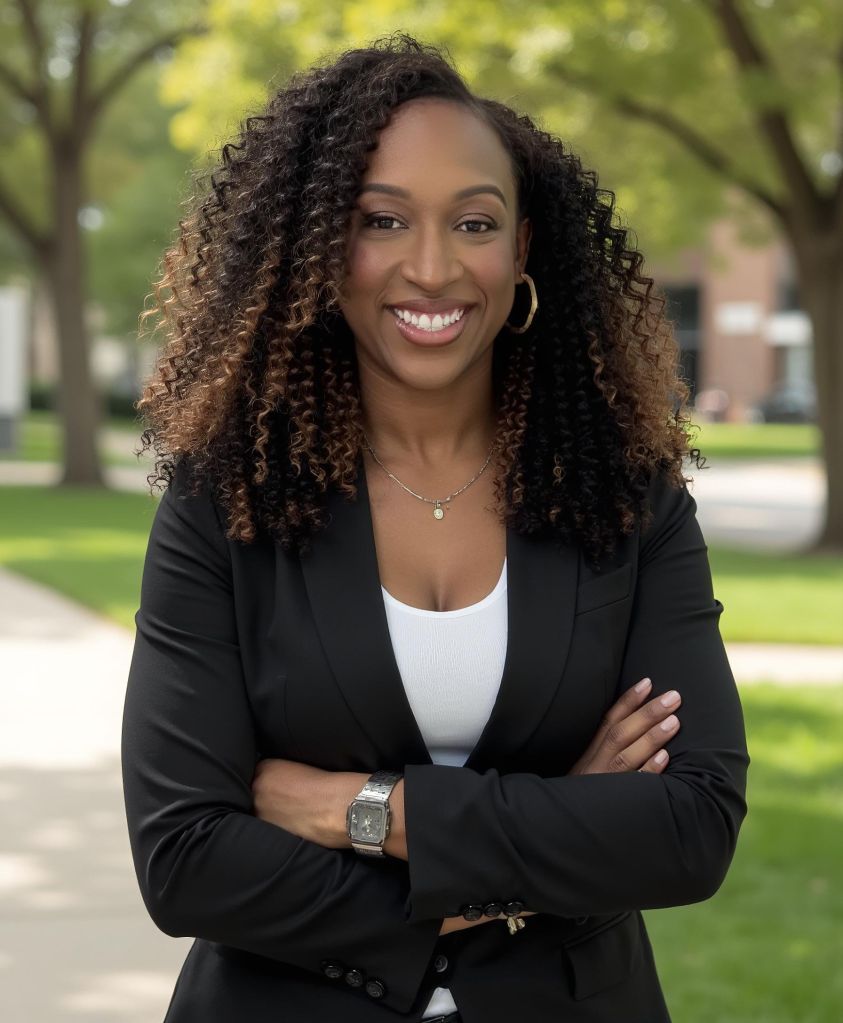
INDIANAPOLIS — When a major system fails a community, the immediate corporate response is often carefully managed damage control. But for Dr. Dominique Lache’, an Indianapolis-based clinician and organizational consultant, standard administrative updates are no longer enough to address the deeply rooted issues plaguing the Indiana Department of Child Services (DCS).
As founder of Dr. Dominique Lache’ Strategic Consulting’ and an active clinical contractor providing therapy and case management directly for DCS families, Dominique brings both organizational leadership expertise and frontline experience. She believes meaningful reform requires more than policy changes; it demands stronger leadership culture, workforce development, and community collaboration. Drawing on clinical, behavioral health, mediation, organizational leadership and systems improvement, Dr. Dominique brings a multidisciplinary perspective to child welfare reform.
She believes meaningful reform requires prevention, workforce support, accountability and community partnership not simply policy change. Dominique argues like many large public institutions, DCS can become caught in a defensive, reactive cycle that prioritizes institutional self-preservation over strengthening and preserving families. Dominique emphasizes that her work has never been about criticizing organizations, however rooted in helping organizations become stronger, not assigning blame, but in identifying opportunities for continuous improvement that benefit both professionals and the families they serve.
“The most effective leaders aren’t the ones who pretend they don’t exist, they’re the ones willing to examine them, learn from them, and build systems that produce better outcomes for the people they serve.”
Moving Beyond Institutional Defensiveness
The conversation stemmed from a previous story following a case involving a young mother who had her children removed by state workers despite showing no signs of abuse or neglect. When WIBC pushed DCS for answers regarding the questionable removal of a local mother’s children, the agency provided what many call a standard corporate response.
Dominique says that while a business protecting its image is expected, it does nothing to fix the administrative disconnect on the ground.
“Any business is going to protect themselves,” Dominique said. “And as far as, you know, to shift blame or anything of that nature is just not going to happen… However, for example you know, if there’s any wrongdoing, let’s unpack. Let’s see where the ball got dropped, because I’m pretty sure it was communication. “Every organization naturally wants to protect its reputation. That’s understandable. But when concerns arise, accountability should focus on understanding where communication broke down, where processes failed, and how those lessons can improve outcomes. Families deserve that level of transparency.”
The case that initially drew widespread community attention on social media involved a mother who was staying temporarily between family spaces. Although neighbors and local staff verified the children were clean, well-fed, and sweet-mannered, the agency removed the children. Dominique points out that the issue often comes down to individual interpretation by field staff who lack the deep, comprehensive training necessary to handle complex family structures.
“When case managers go in to assess, again, where’s their training? What authorized that, ‘Hey, we’re going to go come and take your kids’? And that’s where the lens needs to be, because now we’re going into interpretation. And when we’re talking about interpreting the law and we’re not even attorneys… It comes down to common sense, critical thinking. Everyone can follow a curriculum and gain certifications… How do you implement it? How are you communicating? Because the results are not adding up.”
A System Stuck in Survival Mode
The leadership transition at DCS, which saw a new Director step in during the spring of 2026, brings hope for a clean slate, but Dominique insists structural changes must be comprehensive. Top-down policies rarely translate effectively if the personnel executing them are detached from the communities they enter.
This was the press release that was sent from Governor Mike Braun’s office April 21, 2026:
Gov. Braun Names Dorfmeyer to Lead DCS
INDIANAPOLIS – Today Indiana Governor Mike Braun announced a leadership transition at the Indiana Department of Child Services (DCS). Jennifer Dorfmeyer is the new director of DCS. Former director Adam Krupp will serve as special advisor to the Governor on child welfare issues.
“Indiana’s children are our future and our most precious resource. I am grateful for Adam Krupp’s service and the changes he has made to improve DCS. I have every confidence in Jennifer and her ability to lead this important work at such a critical agency,” said Gov. Braun.
“Governor Braun believes Indiana’s children are our future and his support for DCS and our work is critical to protecting our most vulnerable. I am grateful the Governor has appointed me to this leadership role and am confident we will do great things together to serve Indiana’s families,” shared Dorfmeyer.
“It has been the honor of a lifetime to serve Hoosier children and families in Governor Braun’s administration. This work has been deeply personal, and I am proud of the work our team has done and will continue to do on a daily basis for Indiana’s most vulnerable. I am grateful to Governor Braun for the opportunity to continue serving Indiana by transitioning into a new role as special advisor to the Governor on child welfare related matters,” said Krupp. “Indiana’s children deserve a system that is stable, compassionate, and relentlessly focused on their well-being; I look forward to being part of that vision moving forward.”
The appointments are effective immediately.

“You can have the best person that’s capable in that position. But if the environment and the people that are there to support are not aligned with that same agenda and actually putting in the work, it takes a lot of elbow grease to turn it around,” she emphasized. “What concerns me is that too many professionals are placed into incredibly complex situations and positions before systems have provided individuals time to develop their experience, mentorship, and community understanding necessary for that responsibility.” -Dr. Dominque Lache’
Dominique notes that this disconnect reveals itself through staggering disparities, such as a disproportionate rise in adoptions within Black and minority communities, rather than the implementation of meaningful, early-stage preventative resources.
“If we’re seeing disproportionate numbers of Black children entering foster care or moving toward adoption compared with their representation in the population we have a responsibility to ask why. Is prevention reaching families early enough? Are we addressing the root causes?Where’s the prevention? Why aren’t there resources to educate rather than react? And when it reacts, who are the staff? The family case managers that are going in, what are their training? Are they brand new? Are they seasoned? And if they’re seasoned, is there biasness? Are staff adequately prepared to recognize cultural differences, trauma, and implicit bias? The national child welfare data have consistently shown that black children are disproportionately represented in foster care compared with their share of the child populations. Those are the conversations and questions that deserve our attention and that should lead to meaningful reform. It is a thoughtful, intentional system redesign that is needed.”
This training gap is further exacerbated by the agency’s notoriously high staff turnover rate. Families frequently find themselves dealing with a rotating door of case managers, leaving them to restart their legal and emotional processes from scratch with workers who are frantically trying to catch up on paperwork.
Dr. Dominique Lache’ Strategic Consulting specializes in leadership development, organizational culture, systems improvement, conflict resolution, and working strategy. For more details click HERE.