Report: Indiana Ranked 1st in US for Rising Home Foreclosure Rates

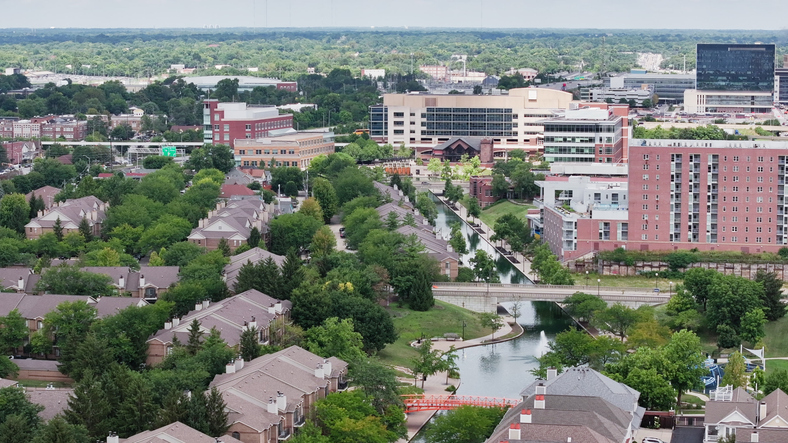
INDIANAPOLIS — A combination of rising property taxes, surging homeowners insurance premiums, and escalating utility costs is driving a spike in housing instability across Central Indiana.
According to a comprehensive new report released by the Fair Housing Center of Central Indiana (FHCCI), titled State of Fair Housing Report – Homes at Risk: Mortgage and Tax Foreclosures in Marion County, the region is facing an escalating homeownership crisis. Data reveals that Indiana recently surged nationally for its foreclosure rate.
The data paints a stark picture of the post-pandemic housing market. Statewide, mortgage foreclosure case filings in Indiana jumped to 10,585 in 2025—a 16.1% increase from the previous year. By February 2026, real estate data firm ATTOM ranked Indiana first among all fifty states for its foreclosure rate, with one out of every 1,597 housing units facing foreclosure action.
The Indianapolis metropolitan area placed third among all large U.S. metro areas during the same month, logging an active foreclosure for every 1,249 housing units. Locally, Marion County saw its foreclosure density rise from 5.9 starts per 1,000 owner-occupied households in 2024 up to 7.3 starts in 2025. Effectively, one out of every 137 owner-occupied households in the county entered the foreclosure pipeline last year.
Disproving the narrative that foreclosures primarily target corporate investors or reckless buyers, the FHCCI report highlights that individual borrowers account for nearly 92% of all foreclosure starts in Marion County. Furthermore, over 60% of those individual properties were owner-occupied.
A random sampling of 100 Marion County foreclosure filings against individual borrowers found that the crisis is deeply impacting established residents:
44% of the borrowers had owned their homes for 10 or more years before falling behind.
17% had owned their homes for five to nine years.
39% were newer homeowners, owning their properties for four years or less.
The report also identified the primary loan servicers initiating these actions in 2025, led by U.S. Bank with 253 foreclosure starts, followed closely by Freedom Mortgage with 171, and NewRez with 165. Federal Housing Administration (FHA) foreclosure filings also saw a sharp 26% annual spike, totaling 353 cases in 2025. Actual completed foreclosure sales rose 20% over the same timeframe, hitting 437 completed sales.
The risk to homeownership extends far beyond monthly mortgage payments. The FHCCI tracked a 36% year-over-year surge in tax-delinquent, owner-occupied residential properties, climbing to 883 homes in 2025.
The report identified two distinct vulnerable demographics falling into tax delinquency: long-time homeowners who completely own their properties outright but cannot keep up with skyrocketing annual tax bills, and individuals who recently inherited a family home but fell behind on taxes within a few years. The report also emphasizes that tax delinquencies and completed tax sales are concentrated in historic Black neighborhoods surrounding downtown Indianapolis, including Northwest-Riverside and Crown Hill.
In those specific areas, foreclosure starts skyrocketed to more than 24 per 1,000 households—triple the average rate of the rest of the county. As gentrification drives up baseline property values and subsequent tax assessments, the stagnant incomes of longtime residents are leaving them priced out of neighborhoods their families have lived in for generations.
When properties hit the auction block for tax sales, they are sold for a tiny fraction of their actual market value. In 2024, the median tax debt owed on a delinquent owner-occupied property was $1,750. While 75% of homeowners managed to recover their properties before or after the auction block and another 17% secured payment plans, the 3% who permanently lost their homes to third-party investor buyers owed a median tax debt of just $4,946.
The FHCCI is leveraging these findings to demand immediate, systemic intervention from Indiana lenders and policymakers. The organization is calling for robust localized assistance programs and legislative reforms to lower baseline housing costs, freeze property tax hikes for vulnerable populations, and limit the destabilizing ripple effects of displacement on Central Indiana families.


To download the full report, visit the FHCCI’s News Page here: https://www.fhcci.org/news/
The Fair Housing Center of Central Indiana (FHCCI) is a private, nonprofit fair housing organization based in Indianapolis, Indiana. Its mission is to facilitate open housing for all people by ensuring the availability of affordable and accessible housing; promoting housing choice and homeownership; advocating for an inclusive housing market; working toward stable and equitable communities; and eradicating discrimination within Central Indiana, the State of Indiana, and nationally. For more information, visit: http://www.fhcci.org