Bears Stadium Deal: Gov. Braun Says Indiana is in ‘The Red Zone’

INDIANAPOLIS — The initial euphoria surrounding the Chicago Bears’ announcement to advance a stadium development project in Hammond, Indiana, is giving way to a more measured reality check from the state’s top dealmakers.
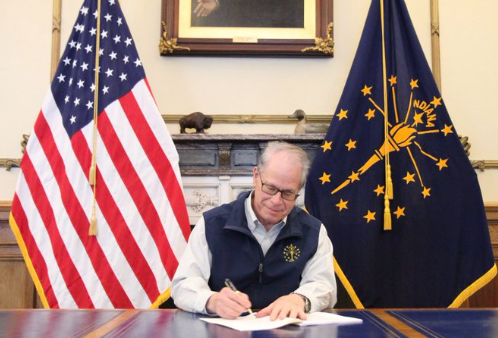
While Governor Mike Braun enthusiastically welcomed the NFL franchise to the Hoosier State on Friday, his tone shifted to a more guarded business perspective just hours later.
“I think we’re in the red zone,” Braun said in an interview with NewsNation. “In real estate, like I told you before, you don’t count it as a done deal until you ink. This is probably the most important place we’ve been to date, and it takes a lot of the uncertainty out of it. It doesn’t mean there isn’t some left, but hey, we got to this point.”
The “point” Governor Braun references may be as much about high-stakes political leverage as it is about moving vans. Analysts view the Bears’ carefully worded statement as a sharp warning shot to the Illinois General Assembly, signaling that time is running out to keep the team at its historic home. Despite the ambiguity, Northwest Indiana lawmakers are confident.
“The Bears, I’m sure, have to use very specific language, so I’m not really surprised,” said State Rep. Earl Harris Jr. (D-East Chicago) during the Indiana Democratic State Convention this weekend. “What I’m seeing, what I’m hearing in that statement, everything tells me that they’re coming to Northwest Indiana, to Hammond.”
Indiana’s current proposal is robust: a $1 billion state contribution raised through new and enhanced hospitality taxes in Lake County, matching a $2 billion private investment from the Bears to build a domed stadium just across the state line from Chicago’s south side.
Local lawmakers insist that Indiana has already put its best foot forward and will not be offering further financial concessions. State Sen. Rodney Pol Jr. (D-Gary) shot down suggestions that the state might sweeten the pot further, especially regarding rumors that Indiana could be asked to help offset the estimated $90 million penalty the Bears would face for breaking their Soldier Field lease before 2033.
“The deal that we put out there was sweet,” Pol said. “I’m not one to negotiate against myself. I don’t think there’s going to be an appetite for [more funding]. I think there’s a lot of people who are understandably concerned about spending more funding on infrastructure for the NFL, where there’s billionaires who have a lot of money.”
Rep. Harris echoed that sentiment, noting that the legislature cannot modify any financial terms until the next legislative session in 2027 anyway. “We don’t see any changes happening,” Harris added.
Across the border in Springfield, Illinois, the legislative landscape remains fractured. The General Assembly adjourned without voting on property tax breaks for a suburban stadium site in Arlington Heights. While some Illinois lawmakers are pushing for a special session to resurrect a deal, there appears to be little political appetite to return before November. Chicago Democrats remain heavily opposed to the tax breaks, and Republicans are resistant to subsidizing a billionaire owner.


Meanwhile, Indiana officials are already looking past just football. Rep. Harris confirmed that engineers have already conducted site inspections near Hammond’s Wolf Lake area. If shovels hit the dirt, the Bears might not be the only team calling the region home.
“We’re going to be putting together a plan, now that we know what the Bears are doing, that won’t be the only professional sports team we go after,” Harris said. “We’ll look at drawing others into the area or creating new teams in Northwest Indiana.”