Sister Fights for Justice in Brother’s 2019 Cold Case

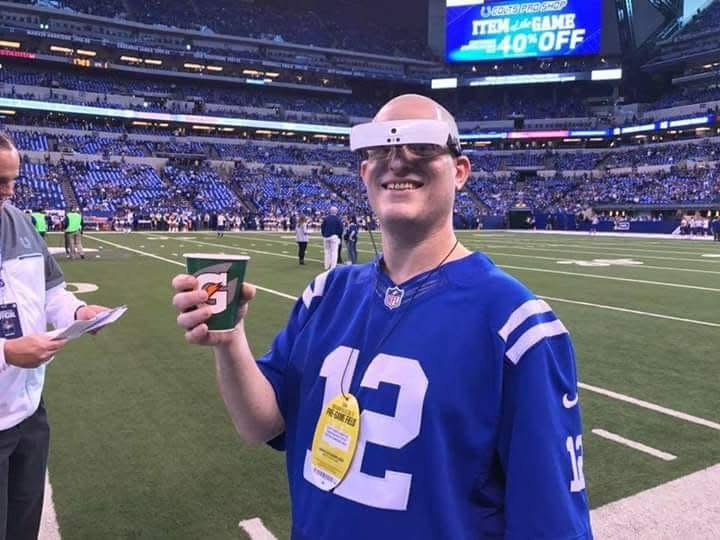
INDIANAPOLIS — Nearly seven years after Scott Reese was brutally murdered inside his Castleton apartment, his family is still searching for answers—and fighting a system they say left his case lost in a computer file.
Scott, a legally blind man who refused to let his disability define him, was a beloved figure both in his hometown of Griffith, Indiana, and within his adopted community of Indianapolis. But on October 29, 2019, his life was violently cut short.
His sister, Cathy, recalls the sudden phone call that fractured her world just two months after their father had passed away.
“The police officer called, started to ask me a lot of questions,” Cathy said. “I’m like, ‘I’m not answering anything until you tell me who you are.’ And instead of preparing me, he just blurted out who he was… ‘I’m from the Indianapolis Metro Homicide Division.’ I lost it. I started screaming.”
According to neighbors and emergency logs, a violent struggle broke out inside Scott’s apartment on Allisonville Road. Despite being stabbed, Scott managed to escape and make it up a flight of stairs to a neighbor’s door. He died on those steps while a neighbor frantically called 911 and wrapped a towel around his throat.
“All I can say is thank you, God, because he didn’t die alone,” Cathy said.
For years, the investigation went cold, but not for lack of trying on the family’s part. Cathy says she called detectives, supervisors, and anyone who would listen, but was met with total silence.
It wasn’t until this year, when the family began bombarding city officials with letters and emails, that the Indianapolis Metropolitan Police Department (IMPD) admitted to an administrative failure. Detectives claimed that during a 2020 computer system transition, Scott’s case file was simply lost in the system.
“Supposedly somehow, some way, my brother’s case got lost in the file,” Cathy said. “I don’t understand that… It took over a year and a half for them to even give me his autopsy report. Just crazy stuff.”
The family was recently assigned a new detective, Jeremy Ingram. However, Cathy was informed that due to an immense backlog of cases, the detective wouldn’t even be able to open Scott’s file until July or August. Just recently the detective was able to communicate to her that he would be able to work on the case quicker than originally expected.
Cathy fears that her brother’s disability played a role in how the case was initially handled.
“To me, it feels like he was prejudiced against my brother because he was legally blind,” Cathy said of the initial detective. “That’s how I feel… He didn’t even want to hear anything my cousin had to say.”
Remembering Scott
Before his tragic death, Scott was known as an inspiration. Born legally blind, he defied the odds to become a placekicker for his high school football team in Northern Indiana. After moving to Indianapolis through the Bosma Enterprises program—which empowers visually impaired individuals—he built an independent life.
He was an avid Indianapolis Colts fan, once receiving eSight electronic glasses sponsored by the team, which allowed him to walk out onto the field and hand off the game ball.
When he died, the community’s grief was immediate. An online fundraiser raised $5,000 within 24 hours to cover his funeral costs. For Cathy’s sons, including her autistic son, Scott was a vital anchor.
“My one son is autistic… my brother was his go-to,” Cathy shared. “So when my brother passed away, that just changed everything. Not only for me, but as well as my kids, you know, all his friends. Nobody understands why.”
With regional media outlets, true-crime podcasts, and national organizations like Project Cold Case now turning their spotlights onto Indianapolis, Cathy hopes the compounding pressure will finally force authorities to look at the evidence—including DNA found on Scott’s apartment wall and the mystery of his missing state ID, which was never recovered.
“Somebody somewhere knows something,” Cathy said. “He didn’t let anything stop him. So the only thing that stopped him was this. And I just don’t understand it.”
To see and remember the life of Scott Reese, visit this page on Facebook HERE.
When questioned about the unsolved case of Scott Reese, the Indianapolis Metropolitan Police Department (IMPD) maintained that no case files were ever lost or misplaced. Regarding the current status of the investigation, IMPD released the following statement:
IMPD recognizes that every unsolved case represents a grieving family still searching for answers. That’s not lost on us, and every case, every victim matters.
Recently, this case was moved to the IMPD Unsolved Homicide Unit and assigned to a new detective who has been in contact with the family. It is our standard practice to provide check-ins with the family’s designated contact once per year for a case of this age. However, detectives may proactively reach out should any new developments or updates occur in the meantime.
The IMPD Victim Assistance Unit, a resource available to crime victims and their loved ones, supports and helps individuals who have been impacted by crime, often acting as a liaison between families and detectives. They can be contacted 24/7 at 317-327-3331 and more information on this unit can be found here.
Solving cases can take time, but we never stop working them and often we need the community’s assistance. Some investigations come together quickly, while others may take months or even years, often relying on witness cooperation, new leads, or evidence. If anyone has any information about this incident, we urge them to contact us at 317-327-3475.