Court of Appeals Will Hear Arguments in Delphi Murder Case...
Court of Appeals Will Hear Arguments in Delphi Murder Case this September
- Allen's lawyers claim the home search and confessions were unconstitutional, but judges previously ruled against them.
- The defense's 'Odinism theory' to shift blame was rejected at trial, but they hope to revive it on appeal.
- Overturning the conviction is unlikely as less than 5% of appeals succeed, despite their lengthy 113-page brief.
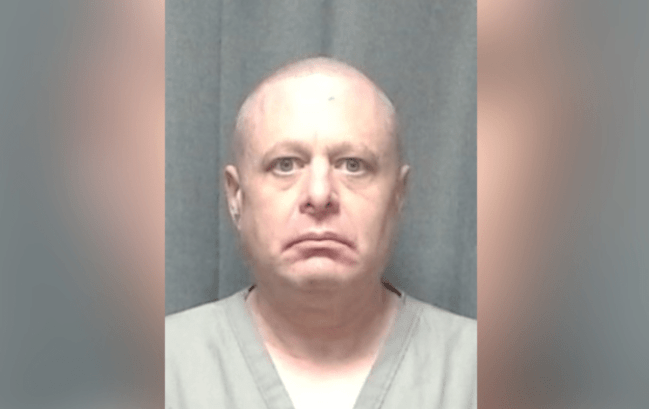
INDIANAPOLIS — Richard Allen’s attorneys will get their day in court as they continue their effort to get Allen’s 130-year double murder sentence thrown out.
Since Nov. 11, 2024, when Allen was found guilty of murdering Abby Williams and Libby German near the Monon High Bridge in February 2017, Allen and his attorneys have vowed to appeal the verdict. The appeal process has churned slowly with Allen’s lawyers submitting a 113-page appellant brief in December that lays out their argument for why the conviction should be overturned.
Allen’s team has repeatedly asked to present this argument in court. On Thursday, the Indiana Supreme Court’s Court of Appeals granted the request. An oral argument was scheduled for Sept. 21 at 10 a.m. in the Supreme Court Courtroom in Indianapolis.
According to the order, each side will be allotted 30 minutes for its argument. A narrow timeframe for Allen’s team, whose written “brief” numbered 113 pages.
Allen’s attorneys have focused on three main points in their attempt to throw out the results of a nearly month-long murder trial. Their argument centers around:
- The search of Allen’s home was unconstitutional, resulting in inadmissible evidence that should have been thrown out of the murder trial.
- The confessions made by Allen while in confinement were inadmissible due to his “gravely disabled” state.
- Allen’s trial defense team was unable to present a “complete defense” due to their Odinism alternative killing theory being thrown out by the judge.
But all these arguments have been attempted before.
In the lead-up to the highly publicized murder trial, Allen’s defense team tried several times to have the evidence collected from Allen’s home thrown out by arguing the search warrant wasn’t justified. The judge disagreed and found the search was warranted.
Allen’s lawyers also argued against the validity of his prison confessions, claiming that Allen wasn’t in his right mind due to being treated like a “prisoner of war.”
Perhaps the most highly publicized argument, however, was the defense team’s “alternate killing theory,” which sought to shift the blame for the girls’ murder off of Allen and onto an occult-backed sacrificial ritual steeped in Odinism.
But these attempts also failed. The confessions were deemed admissible, and Allen County Judge Fran Gull denied Allen’s attorneys from presenting their ritualistic killing theory during the trial. Gull ruled that the theory had no “nexus” to tie all the information to the murders or third-party suspects.
In November, Allen’s appeal team filed a 1,200-page document with the appeals court containing information about the Odinism theory. But the material wasn’t new, nor was it uncovered by Allen’s trial defense team.
The documents include a bevy of information sourced from early police investigations into the girls’ deaths. It included information and potential leads that Allen’s attorneys felt police investigators didn’t adequately consider, arguing police were too focused on Allen, even though he wasn’t even on investigators’ radar until five years after Abby and Libby’s bodies were found in the woods.
“Because the trial court prohibited the jury from hearing Allen’s side of the story, showing how law enforcement went down the wrong path, justice could not be done. The Appellant, Richard Allen, requests this Court reverse his convictions,” Allen’s lawyers argue in his appellant brief.
With an oral argument scheduled, the appeals court will now hear these arguments in person. The same arguments that failed to find footing with the trial court.
If swayed by the arguments, the jury’s murder convictions could be overturned. But that would mean the appeal court going against both the jury’s decision and Judge Gull’s decisions — an outcome that seems unlikely as less than 5% of convictions are reversed on direct appeal.