Indy Doctors Debut Hydrogel Technology to Block Amputee Pain
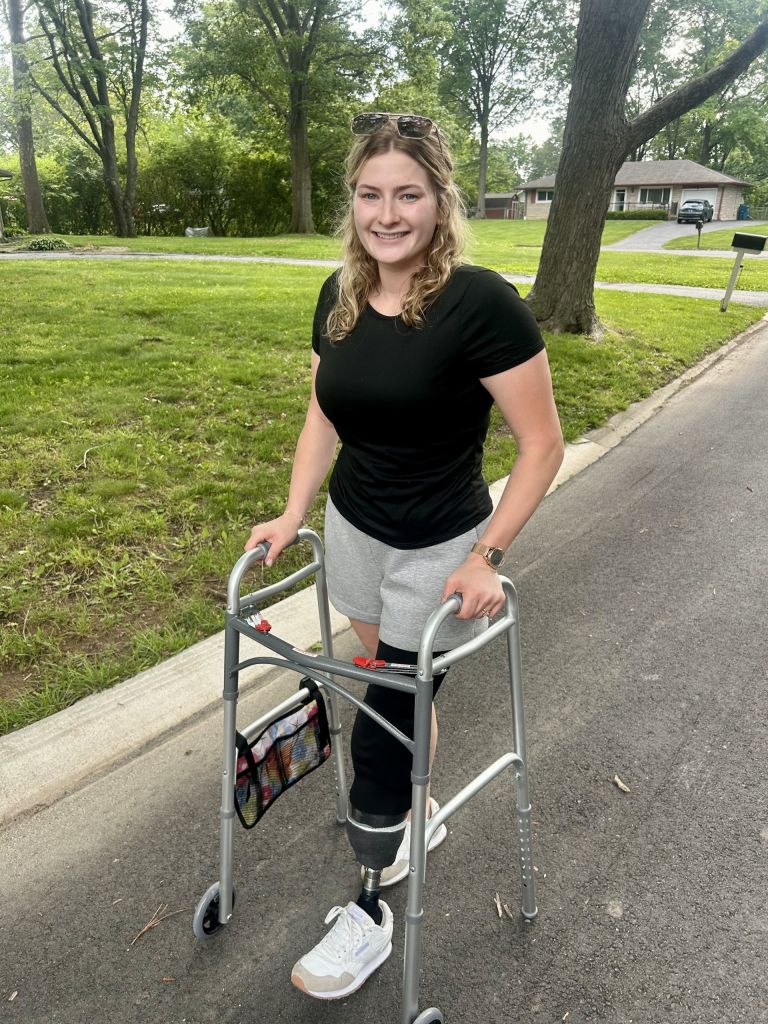
INDIANAPOLIS — After living with severe, debilitating foot pain for nearly two decades and enduring over a dozen unsuccessful procedures, a Carmel, Indiana woman made the incredibly difficult choice to undergo a lower leg amputation.
For many patients, an amputation is just the beginning of a different kind of battle—one against chronic, phantom limb pain. However, a collaborative team of local specialists at OrthoIndy and the Indiana Hand to Shoulder Center stepped in to change that narrative.
During the operation, they became the first medical team in Indiana to deploy Tulavi Therapeutics’ new allay™ Hydrogel Cap, a platform technology engineered to stop severe nerve pain before it can even start.
The Fight Against Neuromas
When a peripheral nerve is severed during an amputation, it naturally tries to heal itself. Without a destination, the nerve ends frequently form a painful scar ball known as a neuroma.
“Every nerve when it’s cut creates something called a neuroma,” explained Dr. Ian Chow, a plastic and reconstructive surgeon with the Nerve Injury and Limb Pain Program at the Indiana Hand to Shoulder Center. “A neuroma is basically a scar ball of the cut nerve ends that can become hypersensitive if there are sensory nerves. Doing something with these nerves at the earlier stage has been shown to reduce the risk of phantom limb pain.”
For Olivia, the Carmel resident who became the first patient in the state to receive the technology, the stakes were incredibly high. She had been battling a Fava lesion—a painful, vascular tumor in her lower leg—that required countless interventions but offered zero long-term relief.
A Hybrid, Cutting-Edge Approach
To give Olivia the best chance at a pain-free life, Dr. Renn Crichlow of OrthoIndy and Dr. Ian Chow performed a complex, hybrid peripheral nerve procedure alongside Dr. Sameer Puri. They combined a traditional technique called Targeted Muscle Reinnervation (TMR) with the newly available hydrogel nerve cap.
While TMR works well for major mixed nerves by re-routing them into alternative muscle tissue, the lower leg contains sensory-only nerves that are notoriously difficult to manage with older strategies. That is where the allay™ cap filled the gap.
“It’s a polyethylene glycol-based compound,” Dr. Chow said. “Basic science studies show that basically when you put this hydrogel platform on the nerve end, instead of the nerve forming a neuroma, basically it inactivates that nerve so it doesn’t form a neuroma and just kind of stays quiescent… The hope and the goal is that a neuroma is actually never formed of that nerve because the nerve kind of just burns out a little bit during that period of time.”
The cap acts as a temporary barrier for roughly six months to a year before being completely and safely absorbed by the patient’s body. According to Dr. Chow, the initial results are highly promising. The nerve pathways treated with the new hydrogel caps currently show absolutely zero sensitivity.
Reclaiming Quality of Life
Amputee recovery is notoriously non-linear, usually requiring three to four months of healing before a patient can even be fitted for a permanent prosthetic device. However, armed with a fresh medical approach and what her doctors call a “can-do attitude,” Olivia is already defying the standard timeline. She is currently utilizing a temporary prosthetic, standing, and walking short distances.
“Access to this new technology makes me hopeful I can recover faster,” Olivia shared in a statement following the procedure.
For Dr. Chow and his colleagues—which include Drs. Puri, Brandon Smetana, and Catherine Peck—the success of this procedure underscores the value of their specialized, monthly multi-disciplinary clinic. By tackling complex nerve cases, traumatic injuries, and spasticity together, they are actively bringing medical tech out of the lab and directly to Indiana patients.
“A lot of times for these patients, they’ve given up a lot of hope,” Dr. Chow said. “They’re living in chronic pain and we have options available for them.”
About OrthoIndy: OrthoIndy is one of the nation’s most respected orthopedic practices, trusted for leading-edge bone, joint, spine and muscle care. OrthoIndy is a three-time recipient of the No. 1 ranking in Indiana for joint replacement by Healthgrades, one of several national and statewide honors recognizing its healthcare quality and patient experience. With more than 100 physicians, OrthoIndy continues to expand access to high-quality, affordable orthopedic care through initiatives such as the Designated Orthopedic Network with Anthem. OrthoIndy is the official orthopedic provider for the Indiana Pacers and Indiana Fever and the preferred provider for employees of the State of Indiana, Indianapolis Public Schools and the Metropolitan School District (M.S.D.) of Wayne Township. Learn more at OrthoIndy.com.
About Indiana Hand to Shoulder Center, an OrthoIndy practice: Indiana Hand to Shoulder Center, an OrthoIndy practice, is recognized worldwide for its specialization in the treatment of upper extremity injuries and disorders. For over 50 years, its physicians have advanced patient care through a unique combination of specialized clinical expertise, academic training and innovation. The practice is home to one of the country’s most respected hand and upper extremity fellowship programs, training surgeons from across the U.S., and maintains a strong tradition of clinical research, with physicians publishing in and serving as editors for leading academic journals. Indiana Hand to Shoulder Center also operates a comprehensive Nerve Injury and Limb Pain Program, providing state of the art care for patients with complex nerve injuries, as well as one of the largest therapy facilities in the nation dedicated to upper extremity rehabilitation. Members of the Nerve Injury and Limb Pain Program include Dr. Ian Chow, Dr. Brandon Smetana, Dr. Sameer Puri and Dr. Kathryn Peck. Learn more at indianahandtoshoulder.com.