Racial Districts Are OUT!
- Ruling sets precedent for future cases, requiring clear intent to discriminate based on race.
- Decision may force states to redraw district maps, potentially shifting House control to Republicans.
- Experts debate scope and impact of Voting Rights Act in light of the court's ruling.
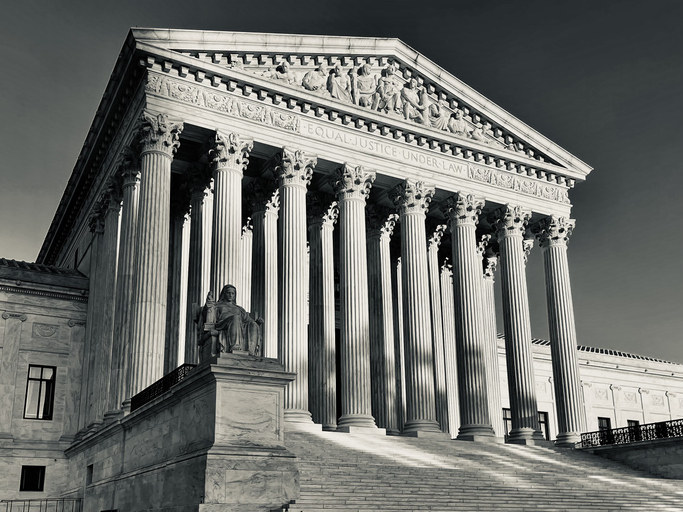
Racial Districts Are OUT!
The Supreme Court’s recent decision on racial gerrymandering has sent shockwaves through the nation, with far-reaching implications for the balance of power in the House of Representatives. Tony Katz dives into the details of the case and its potential impact on the electoral landscape.
Tony is joined by William Jacobson, a Cornell Law professor and expert on the Voting Rights Act, who breaks down the intricacies of the Supreme Court’s decision. “The majority said that it’s not so much that the Voting Rights Act can’t be used to justify using race, but it’s extraordinary and didn’t apply here,” Jacobson explains. This distinction is crucial, as it sets a precedent for future cases.
The case in question involves the state of Louisiana, which drew a congressional district that some argued was designed to create a majority-black district. The Supreme Court’s decision sends a clear message that this type of gerrymandering is not acceptable, but it also raises questions about the scope of the Voting Rights Act.
The implications of this decision are far-reaching, with potential consequences for several other states that have drawn districts with similar intentions. Jacobson notes that the plaintiffs in these cases will now have a stronger argument, as the Supreme Court’s decision establishes a clear standard for what constitutes intentional racial discrimination. “You need to have clear intent to discriminate, and it can’t be discerned just from computer models or the impact it might have,” he explains.
The timing of the decision is also significant, as several states have already drawn their maps for the upcoming elections. Jacobson suggests that it may not be too late for these states to revisit their maps and make changes, but it will depend on the specific circumstances. “California, for example, would have to go back to the three-judge panel that ruled on their maps and get a new ruling,” he notes.
The Supreme Court’s decision has already sparked a reaction from politicians, with Governor Tate Reeves of Mississippi calling a special session to address the issue. Jacobson notes that the court’s decision could have a significant impact on the balance of power in the House of Representatives, potentially shifting the balance in favor of Republicans.
Listen to the “Racial Districts Are OUT!” discussion in full here:
Listen to the show in full here:
Watch the show here:
Archived episodes here:
ABOUT THE SHOW
Tony Katz Today airs from 12-3pm ET on 93.1 WIBC/Indianapolis
What are we talking about? Politics, breaking news, political theory, art, the markets, food, libations and whatever else may come to mind.
PLEASE SUBSCRIBE TO THE PODCAST
Tony Katz Today on Apple Podcasts