Indy Group Expands Housing Efforts During Affordable Housing Month

INDIANAPOLIS — As cities across the nation mark Affordable Housing Month this May, Indianapolis finds itself at a critical housing crossroads. Faced with an acute deficit of safe, stable, and affordable options, local advocates are reshaping how community development is fueled from the ground up.
LISC Indianapolis is meeting this structural challenge head-on by executing The Recommitment (2026–2029). This comprehensive four-year initiative aims to build a more resilient housing ecosystem by aligning community partners, expanding local capacity, and deploying $100 million in flexible capital to construct 1,000 new homes and preserve 600 existing units.
A cornerstone of LISC’s approach is the Emerging Developers Growth Initiative (EDGI). EDGI focuses to systematically dismantle barriers for underrepresented for-profit and nonprofit developers rooted in the neighborhoods they serve. By arming early-stage developers with capital, direct connections to industry experts, and an intensive real estate curriculum, LISC ensures that the city’s revitalization remains locally driven rather than externally imposed.
LISC Indianapolis Exectutive Director Brandon Taylor emphasized that local empowerment is vital to addressing the city’s housing shortfalls:
“The Emerging Developers Growth Initiative of LISC Indianapolis is an effort to support emerging developers, both for-profit and nonprofit, with our development projects that are geared towards enhancing the quality of life of Indianapolis,” Taylor said. “We know that we’re simply not producing enough housing to support our most vulnerable populations.”
Turning Vacant Spaces into Vibrant Neighborhoods
The initiative recently celebrated the graduation of its second cohort, where 20 local developers pitched active pipeline projects to regional lenders and investors in a dedicated “Developer Deal Room”. According to Taylor, empowering these specific leaders opens up entirely new pathways to transform underutilized urban land:
“There is an abundance of vacant lots across the city and other underutilized properties that could be viable locations for housing or other community-centered development,” Taylor noted. “Too few emerging developers are having the opportunity, getting the chance to actually shape the future of their neighborhoods.”
To unlock this latent potential, EDGI walks hand-in-hand with participants by deploying a comprehensive three-pronged support model:
Capital: Offering flexible financial tools, equity supports, predevelopment grants, and construction financing to move ideas to execution.
Connections: Hosting “Local Learnings” expert labs on zoning, tax credits, design, and investor negotiations.
Curriculum: Providing real-world transaction labs covering the complete development lifecycle in partnership with Diversified Community Impact (DCI).
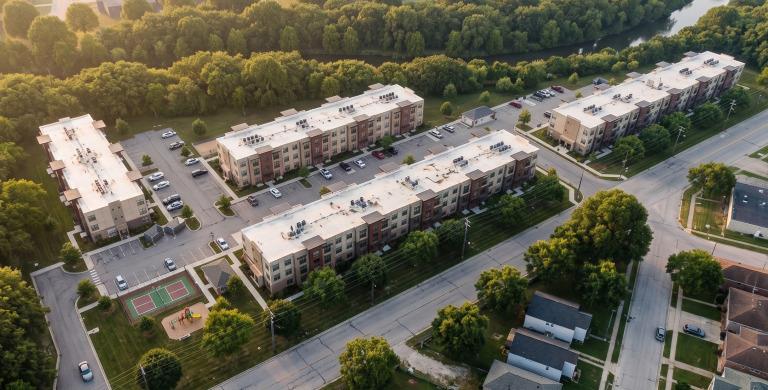
The success of the EDGI framework directly supports LISC’s overarching vision of sustainable community development. Real-world manifestations of this strategy are already taking shape, such as a recent $500,000 predevelopment loan closed for The Junction at Fall Creek—a 200-unit residential site designed for residents making 60% or less of the area median income.
Ultimately, building a lasting housing safety net requires collective community investment. As Taylor summarized, the true impact of the initiative relies on an interconnected effort:
“Overall, EDGI works best when the entire ecosystem shows up. Supporting EDGI means supporting a stronger pipeline of developers who are ready to invest in Indianapolis.