Senator Todd Young: “Time to Wrap Up” Iran War

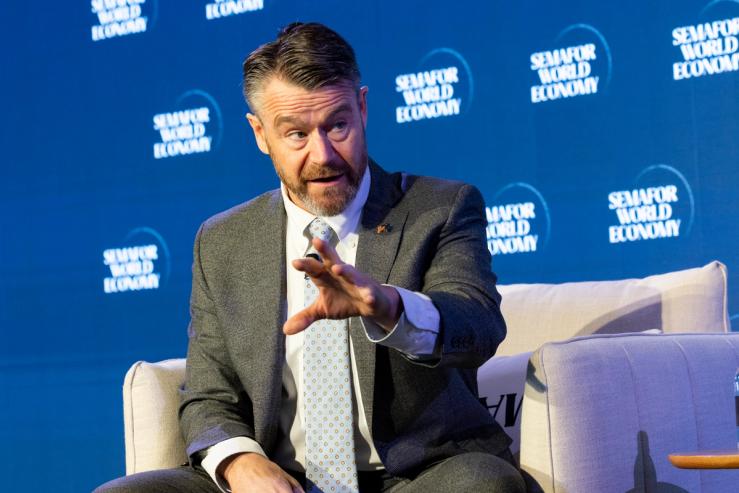
WASHINGTON – Speaking at the Semafor World Economy Summit, U.S. Senator Todd Young (R-Ind.) provided a blunt assessment of the ongoing conflict in Iran, defining the path to victory while focusing on the need for formal Congressional authorization as a critical 60-day deadline looms.
Young, a Marine Corps veteran, did not mince words regarding the current state of hostilities. “We’re at war,” Young stated during the summit. “I’ll call it what it is… and it’s important that we win it.”
While emphasizing the need for victory, the Indiana Senator expressed urgency regarding the duration of the conflict. When asked if the mission had been a success or if it was time to end the engagement, Young was direct.
“It’s time to wrap it up as quickly as we can,” Young said. “It’s time to accomplish the mission.”
However, Young clarified that “wrapping up” does not mean a quiet withdrawal, but rather achieving specific strategic milestones that have yet to be met.
Defining Victory: Uranium and the Strait
Young laid out two non-negotiable objectives that must be achieved before the U.S. can transition out of the conflict:
- Securing Nuclear Materials: The extraction or securing of Iran’s uranium supply.
- Global Trade Security: The permanent reopening of the Strait of Hormuz.
“Those two things have to happen if we can claim success coming out of this,” Young emphasized. When asked if achieving these goals would require “boots on the ground,” the Senator noted the situation remains “unclear,” tasking the administration with formulating a plan that articulates the necessary trade-offs and potential sacrifices to the American people.
The 60-Day Clock and the War Powers Act
A central theme of Young’s remarks was the looming constitutional deadline. Under the War Powers Act, the administration is approaching a 60-day threshold at the end of this month. At that point, the President must either secure an Authorization for Use of Military Force (AUMF) from Congress or begin a 30-day withdrawal period.
Young expressed a desire to be a “productive participant” in drafting a potential AUMF rather than waiting for a last-minute crisis. However, he lamented that current discussions on Capitol Hill have devolved into a “partisan political exercise.”
“The worst thing we can do is go to war without trying to unify a segment of the American people… We owe our troops, we owe the American people a solid plan. And our job is to stress-test plans.
Transparency and Accountability
Drawing parallels to past foreign policy challenges, Young criticized the lack of public hearings regarding the Iran conflict. He compared the current “awkward situation” to the Biden administration’s withdrawal from Afghanistan, which he labeled an “absolute disaster” lacking in accountability.
Young argued that open hearings are a “pedagogical exercise” necessary to give the public confidence in the system. He dismissed concerns that such hearings would leak sensitive strategy, noting that the Senate can ask “probing questions” without revealing specific war plans.
Regarding the financial cost of the war, Young indicated he is prepared to support a war supplemental bill, provided it is heavily scrutinized. He specifically highlighted the need to replenish “magazine depth”—the depleted stores of munitions used in the opening phases of the conflict.
“Whatever money it takes to replenish those stores of weapons, we need them,” Young said, though he cautioned that the Senate must continue to scrutinize “large round numbers” in any Department of Defense funding requests.