New Castle Requests Emergency Funds From Historic Flooding

NEW CASTLE, Ind. — Following severe storms that hit Henry County, New Castle officials are racing to repair crumbling infrastructure after narrowly avoiding what Mayor Greg York described as a “master catastrophe” that could have forced the evacuation of a third of the city.
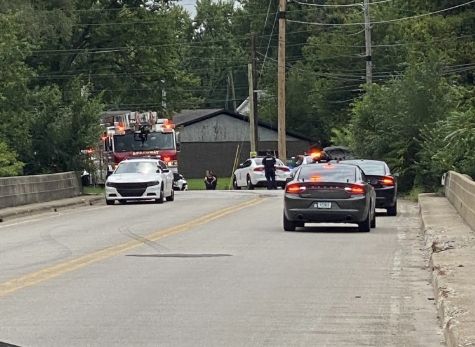
The storm’s aftermath has already turned deadly. Authorities confirmed that 31-year-old James Briar of New Castle died early Sunday morning after riding a bicycle around flood barricades and falling into a deep collapse caused by a washed-out roadway near Riley Road and Crescent Drive. Mayor York extended his deep condolences to Briar’s family during the emergency response briefing, calling the event a tragedy while crews work urgently to secure the site.
Emerging from a full weekend of emergency response, Mayor York detailed four primary sites heavily damaged by floodwaters. While emergency crews successfully repaired major washouts at Spiceland Pike and the intersection of Spring and 22nd Streets, critical threats remain along Riley Road and the century-old Bowery Brook drainage system.
The most severe long-term danger stems from a subterranean sinkhole discovered above Bowery Brook—an aging archway built of brick and glazed block that carries both storm runoff and raw sewage through the heart of the city. Bowery Brook is a natural historical stream (not a constructed building or structure) that originally ran through New Castle. It began near the National Guard Armory and flowed north toward the Blue River, later being enclosed in underground brick drain pipes and utilized for city sewer runoff.
As a natural stream, Bowery Brook was never “realized” or constructed by humans, but rather existed before New Castle, itself was platted in 1823. York revealed that a collapse would have backed up sewage along Broad Street, triggering widespread public health hazards and emergency evacuations from 15th Street to Hospital Heights.
“If this were to collapse over this weekend, everybody from 15th Street on the east side to Hospital Heights would have been evacuated,” York said. “We’re talking about a third of our community would be in big trouble… The tornado of 1917 on Lincoln Avenue would have been minor compared to this catastrophe if the top of Bowery Brook caved in.”
The emotional toll of the near-disaster was evident as York reflected on discovering the compromised structure.
“For the first time since I’ve been mayor, I got in my truck, broke out in a sweat,” York admitted. “Thankful that it didn’t give way. It would be a master catastrophe for us…”
Crews are working to clear and temporarily stabilize Riley Road, where a 6-foot-tall corrugated steel pipe collapsed. The city plans to widen the road by at least five feet on each side, install reinforced headwalls, and eventually build a permanent box culvert to handle future high-water events.
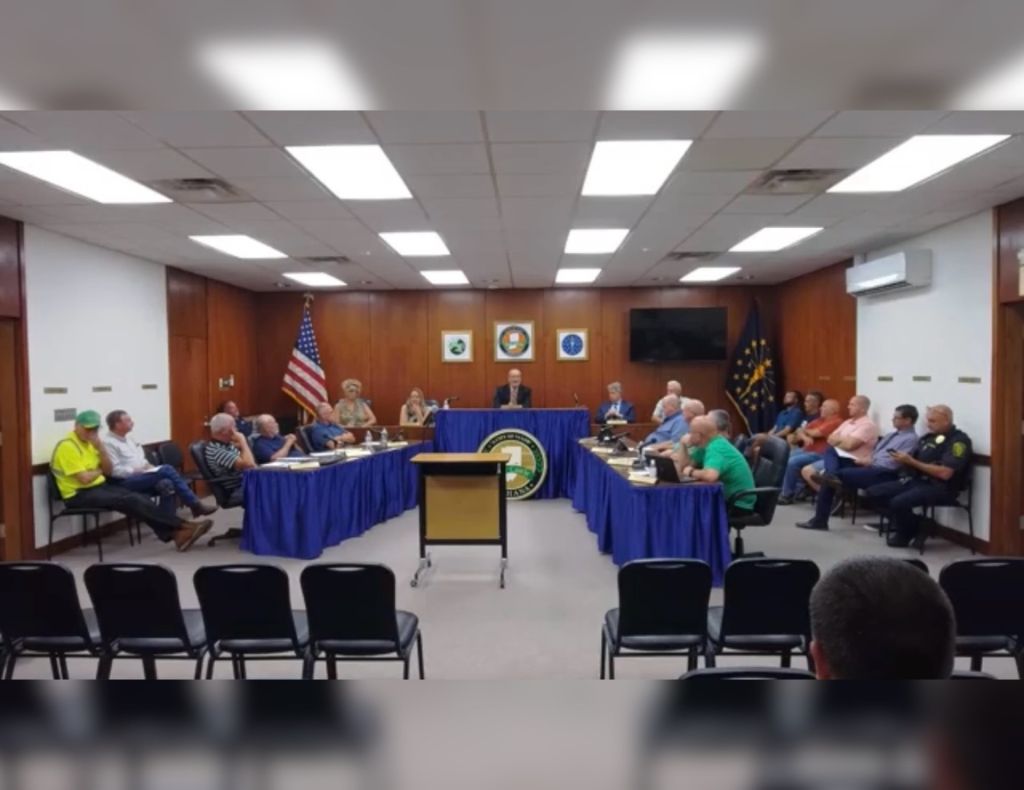
Because replacing the Bowery Brook structure will require a complete redesign and millions of dollars, New Castle is appealing directly to state and federal agencies for disaster relief. York confirmed he has been in daily contact with state representatives and congressional leaders to secure emergency infrastructure funding.
“We’re talking multi-million dollars that we don’t have to fix it,” York said. “This has got to be a FEMA, state, and federal project. But we dodged a bullet. We’ve got to get it fixed before we get another major rain”.