Greenwood 11-year-old Finds Freedom at Medically Inclusive Camp
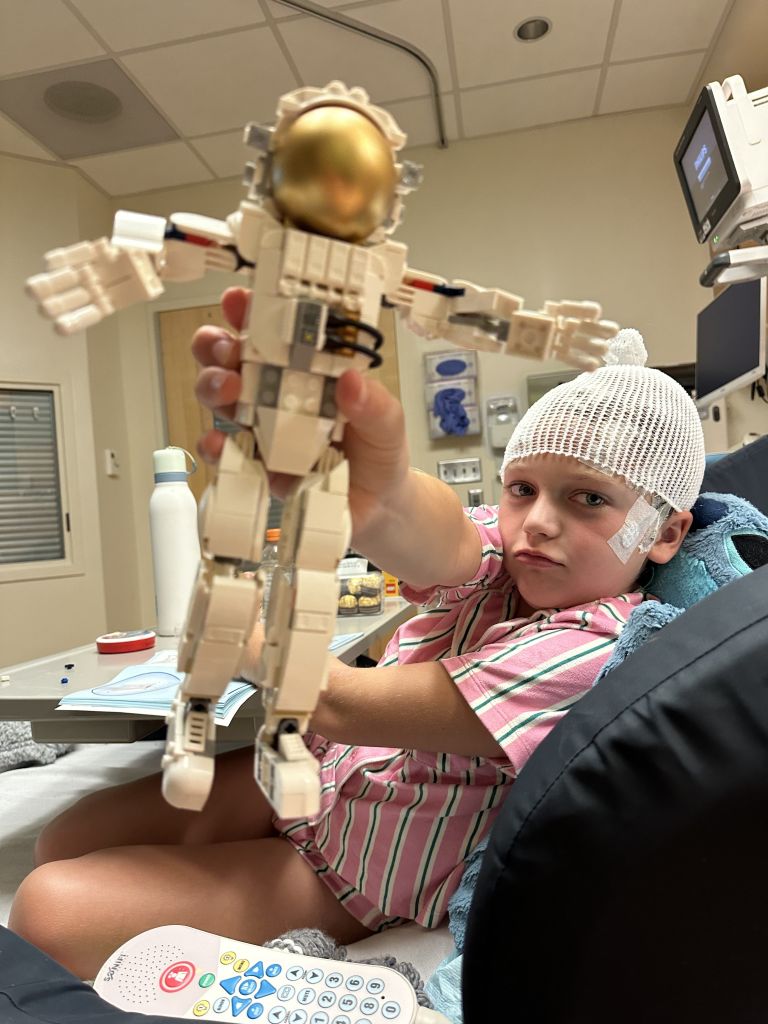
GREENWOOD, Ind. — After enduring four complex brain surgeries since last October 11-year-old Layla is finally reclaiming something she has missed for much of the past two years: the simple joy of being a kid.
The Center Grove resident, who is gearing up to start at Middle School North, has spent a portion of her childhood navigating an exhausting list of doctor visits, advanced medical procedures, and the absolute unpredictability of focal epilepsy. But for one week this July, Layla traded those appontments for archery bows and campfires at the Center for Courageous Kids (CCK) in Scottsville, Kentucky.
A Hidden Condition and Cutting-Edge Technology
Layla’s journey with epilepsy began when she was just six years old, though her condition didn’t look like the typical seizures often portrayed in popular media.
“I think it was like I heard a creepy song in my head,” Layla recalled. “And I wasn’t sure if I was rubbing my legs or not, but I think that I was, and I might have been having a scary look on my face.” Because her seizures presented as moments of pure terror rather than physical shaking, they went unrecognized for years by both teachers and family members. It wasn’t until the end of third grade, when Layla suffered a major seizure in the middle of the night, that her mother, Stephanie, knew something was deeply wrong. Just a week before fourth grade started, Layla was formally diagnosed with focal epilepsy.
Further genetic testing revealed a rare mutation known as DEP-DC5, meaning Layla’s epilepsy is entirely medication-resistant. To combat the daily threat of seizures, Layla underwent two brain surgeries last October just to map where the activity was originating. On December 29, she became the first patient at Riley Hospital for Children to have two specialized Responsive Neurostimulation (RNS) devices implanted in her head simultaneously.
The advanced tech acts like a localized pacemaker for the brain, detecting abnormal electrical patterns and delivering a pulse to stop a seizure before it physically manifests. Every single night, Layla must download data from the implants.
The road wasn’t easy; an infection in February forced another surgery and an extended stay at Riley. At one point, surgeons suggested removing a portion of her brain entirely. However, the team’s clinical psychologist advocated against it, noting it would destroy the spatial skills that allow Layla to build her beloved Legos and pursue her dreams of becoming an astronaut or a Disney Imagineer.
“We just kind of took the hand that we were dealt and ran with it, really,” Stephanie said.
Stepping Into a Safe Haven
Because travel and stress are known triggers for Layla’s seizures, sending her away to a standard summer camp was completely out of the question. That is where the Center for Courageous Kids stepped in.
Nestled in the farmhills of Kentucky, CCK is a state-of-the-art, medically inclusive camp designed from the ground up for children with complex, lifelong illnesses. Thanks to the immense generosity of donors, the experience is provided entirely free of charge to every family. The camp features a full-time medical director, a full-time nurse, and an influx of volunteer clinical staff and interns who meticulously review each child’s paperwork.
Unlike traditional camps, CCK counselors and medical staff hold comprehensive huddles every week to adjust to the specific medical profiles of incoming campers.
“A readily available blood supply and medical ecosystem serves as the backbone of modern medicine,” said Jen De Ridder, Senior Director of Camping services at CCK. “When they come to the Center for Courageous Kids, they are in a space where they can look at their peers and say, ‘Yeah, us too.’ At the end of the day, kids are kids. They just want to hang out, make friends, feel like they belong, and feel like they’re included.”
For Stephanie, dropping her daughter off in another state for a week without any direct communication was a big leap of faith. Layla was required to keep her cell phone completely turned off, saving its battery strictly for the few minutes required to execute her nightly RNS medical downloads.
“This was a huge step,” Stephanie admitted. “The first night that they posted pictures, I was scared that she was sitting all by herself and that she wasn’t making new friends. But then the pictures that they posted the next day, she was all smiles and with new friends. And so that kind of helped ease my mind.”
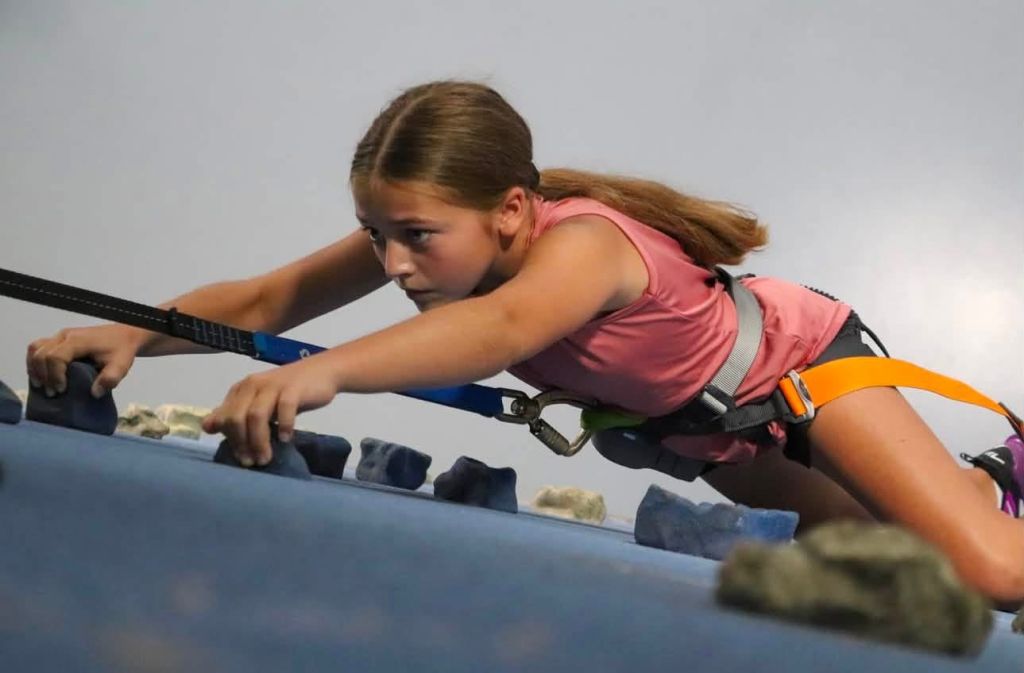
At camp, Layla fully stepped out of her comfort zone. She went boating, fishing, canoeing, horseback riding, and participated in a wild event called “messy games.” She even picked up archery, jokingly noting that while she wasn’t quite hitting the bullseye on her own target, she accidentally managed to strike the target of the person standing right next to her. Most importantly, she found a community of friends from across Kentucky who truly understood her daily realities.
Looking Toward the Finish Line
Any lingering anxiety Stephanie felt evaporated the exact moment she arrived in Scottsville to pick her daughter up on Saturday morning.
“What was the first thing that you asked me when we walked out?” Stephanie asked her daughter.”Can I go back next year?” Layla answered instantly.
The successful camp week has given the family renewed hope. Layla is also a passionate competitive cheerleader, but she had to step away from another favorite hobby—racing junior dragsters—two years ago due to her diagnosis. To legally get back into the driver’s seat of her race car, she must be completely seizure-free for six consecutive months. With her RNS devices being fine-tuned every three months, the family believes they are getting closer to that milestone every day.
For Layla, the message she wants to send to other kids facing medical diagnoses is clear and resilient. “Not every seizure is the same, and epilepsy doesn’t mean that you can’t do stuff,” Layla said. “You still can, but you just might have to wait a little bit to do it.”
About The Center for Courageous Kids:
Founded by the late Ms. Elizabeth Turner Campbell, affectionately known by campers and staff as Ms. Betty, The Center for Courageous Kids is a non-profit medical camp. Ms. Betty was inspired to create a fully accessible camp for children with a wide range of medical conditions and their families to laugh, play, and find respite—free of charge. Since our gates opened in 2008, CCK has welcomed thousands of campers and families living with disabilities or lifelong illnesses and created life-changing experiences filled with joy and fun. More details about CCK can be found here: https://www.courageouskids.org/