IndyCar Introduces New Safety Feature To Prevent Airborne Cras...
IndyCar Introduces New Safety Feature To Prevent Airborne Crashes At Indy 500
IndyCar Introduces New Safety Feature To Prevent Airborne Crashes At Indy 500
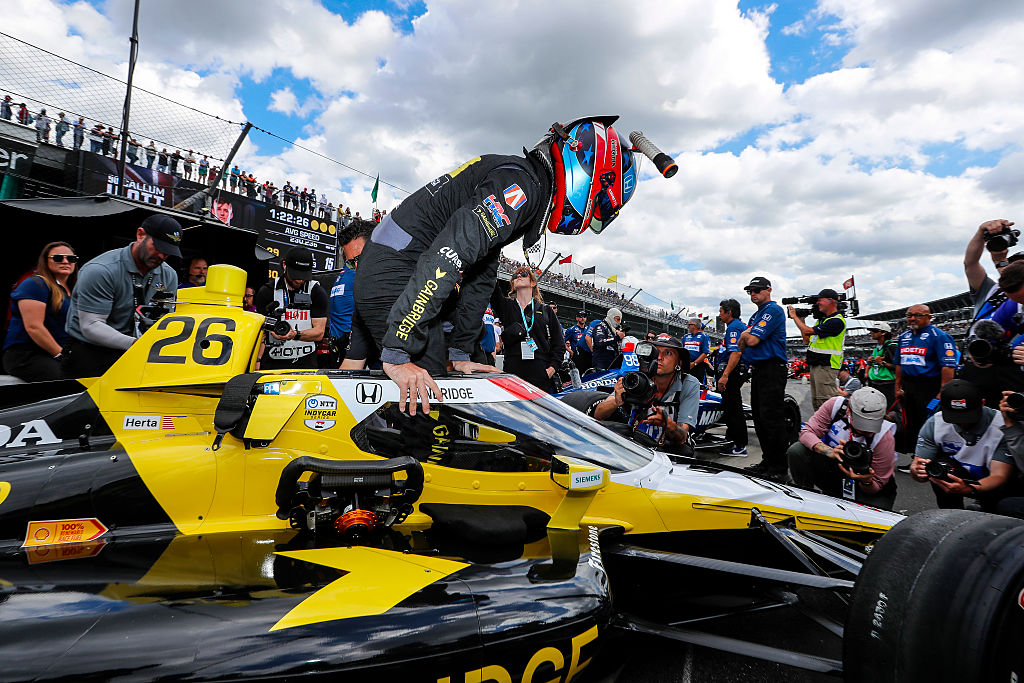
IndyCar has introduced a new safety feature aimed at reducing airborne crashes during the Indianapolis 500.
Starting this year, all cars will be equipped with carbon fiber safety flaps positioned ahead of the rear wheels.
These flaps, nearly as wide as the rear tires, are designed to deploy during high-speed spins, disrupting airflow and preventing cars from lifting off the ground.
The innovation comes after extensive computational fluid dynamics testing, which showed a nearly 9% reduction in the likelihood of cars becoming airborne during 180-degree spins.
This development is a response to incidents like Colton Herta’s crash last year, where his car flipped and hit the wall at high speed.
IndyCar’s Director of Aerodynamic Development, Tino Belli, emphasized the importance of continuous safety improvements, particularly for superspeedway events like the Indy 500.
The flaps will be mandatory for all cars in every session, starting with the open test on April 28-29.
In addition to the flaps, IndyCar has also introduced a new brake configuration developed with Performance Friction Corporation.
This update aims to provide drivers with more predictable and responsive braking, especially when slowing from high speeds to enter the pit lane.
The changes address incidents like Rinus VeeKay’s crash during last year’s race, where he lost control while attempting to slow down.
These innovations highlight IndyCar’s commitment to enhancing driver safety as competitors prepare to race at speeds exceeding 230 mph on the iconic 2.5-mile oval.
IndyCar Introduces New Safety Feature To Prevent Airborne Crashes At Indy 500 was originally published on 1075thefan.com