Former Indy Mayor Ballard Talks About Trade War and Tariffs
Source: WISH-TV / WISH-TV
INDIANAPOLIS (WISH) — U.S. stock markets took a hit Monday amid anxiety over U.S. tariffs rose and after President Donald Trump made remarks about a potential recession.
“I hate to predict things like that. There is a period of transition because what we’re doing is very big. We’re bringing wealth back to America,” Trump said Sunday.
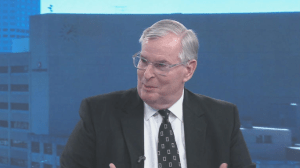
Amid the turmoil, former Indianapolis Mayor Greg Ballard discusses the potential impact, both globally and in Indiana, of the developments.
The U.S. agriculture industry faces growing challenges as China imposed new tariffs on a range of U.S. goods, including a 15% tariff on products including chicken, wheat, and corn, and 10% on items such as soybeans, pork, beef and fruit. As one of the nation’s leading agricultural states, Indiana is especially vulnerable to these trade disruptions.
“I think it’s going to make our markets tougher to penetrate,” Ballard said. “Our farmers are going to have a more difficult time exporting their products, and they’re already saying that right now. They’re hardy people, but putting tariffs on their products makes it even harder for them to export overseas.”
Indiana’s soybeans are used in markets around the world, making them especially susceptible to the effects of the tariff war. Ballard also pointed out that small manufacturers who rely on global exports will face similar challenges, potentially leading to layoffs if the situation continues.
Farmers in Indiana, who rely heavily on China as a key export partner, may face additional financial strain. While there are safety nets such as crop insurance, Ballard acknowledged that the uncertainty of ongoing tariffs could make recovery more difficult.
“The longer this goes on, the worse it’s going to be for farmers,” he said. “If the president’s comments on expecting a recession hold true, these trade wars will definitely contribute to it.”
Ballard, who served as Indianapolis mayor during the 2008 financial crisis, noted that the current economic outlook carries similarities to the conditions that led to the Great Recession from December 2007 to June 2009. He predicted that the U.S. could experience a contraction, though the exact timeline remains unclear.
“The old definition of a recession was two consecutive quarters of actual contraction,” he said. “Now it’s kind of a slowdown below 2% over a few months. So, that’s kind of how they define recession right now. I do think we’re going to get there.”
He attributed the potential for a downturn to persistently high interest rates and the ongoing trade wars.
Reflecting on his experience managing Indianapolis during the Great Recession, Ballard highlighted strategies that could help cities and states weather an economic slowdown. One approach, he suggested, is the Keynesian method, which calls for government intervention through public works projects to stimulate the economy.
“When I was mayor, we used the Rebuild Indy funds, generated by the sale of the city’s water and wastewater assets, to invest in infrastructure projects,” Ballard said. “That kept a lot of engineers, architects, and construction companies in business during a time when the private sector was slumping.”
While government intervention may not be universally popular, especially among advocates of free-market principles, Ballard believes it could be an effective tool in an uncertain economic environment.
Looking ahead, Ballard urged current leaders to prioritize job preservation during a potential recession. “Look at what you need to do to keep people working. How can you spend money to make sure the people who are going to be impacted the most are able to stay employed?”
As the trade war and fears of a recession continue to unfold, Indiana’s farmers and manufacturers may face difficult times ahead. However, Ballard’s advice could provide a road map for local governments aiming to mitigate the economic impact and protect jobs in their communities.