Rep. Porter Slams State’s Billion-Dollar Surplus During School Cuts

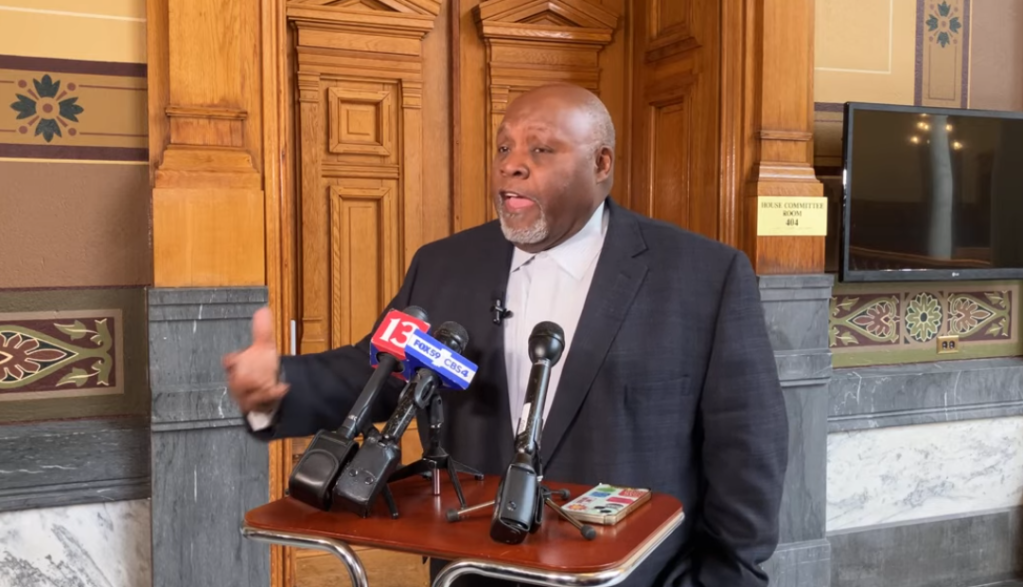
INDIANAPOLIS (July 15, 2026) — State budget leaders are celebrating a revenue windfall, but a prominent Indianapolis lawmaker argues that Indiana’s multi-billion-dollar cushion is masking an economic crisis for everyday Hoosiers.
Indiana officially closed out its 2026 fiscal year with revenues finishing $586.5 million above state forecasts. This pushes the state to a staggering $1.14 billion ahead of its current biennial budget plan. Additionally, agencies reverted approximately $187 million back to the state’s General Fund—including $98 million that went untouched from K-12 tuition support.
While state officials point to the numbers as a sign of fiscal health, State Representative Gregory W. Porter (D-Indianapolis) released a scathing response, calling the state’s massive cash reserves a “reversal of fortune” that ignores local public struggles.
“It’s not right when the government is rich, but its citizens are poor,” Rep. Porter said. “Indiana has strong reserves. But you cannot say Indiana is doing well economically when its people are not. Wages aren’t keeping up with inflation. Rising medical debt is crushing families. Underfunded public schools are losing millions as they try to invest in the next generation.”
Speaking further on the state’s fiscal status, Porter highlighted that Indiana’s combined surplus leaves the state with roughly 25% more cash in reserve than is actually required to operate the state government. He noted that just a year ago, state leaders warned of a potential $1 billion revenue deficiency. Now, he argues, those unexpectedly recovered funds are being hoarded rather than helping communities.
Porter specifically took aim at the $98 million in K-12 education funding that was reverted to state coffers instead of being distributed to classrooms. He connected these state-level savings directly to a wave of teacher layoffs across Indiana.
Teacher Layoffs: School corporations including Indianapolis Public Schools (IPS), Hamilton County, and Muncie are actively “riffing” (laying off) certified teachers due to budget constraints.
Failing Infrastructure: Funding for local K-12 programs has failed to keep pace with inflation rates, leaving physical school assets and human infrastructure underfunded.
Skyrocketing Referendums: Porter noted that local communities are being forced to pass property tax referendums at the highest rate in state history to cover the operational shortfalls left by state policy.
According to Porter, much of the structural damage dates back to the passage of Senate Bill 1 two years ago, a measure he says severely handicapped the funding capabilities of both local governments and public school systems.
Porter is urging the State Board of Finance—which includes the state budget director, the treasurer, and the comptroller—to bypass the traditional legislative budget process and deploy the surplus immediately.
Beyond education, Porter emphasized that cuts to the Child Care and Development Fund (CCDF) are actively keeping parents out of the workforce. He argued that families cannot contribute to Indiana’s income and corporate tax bases if they cannot afford the child care necessary to hold down a job.
“We hear a lot about affordability from state leaders,” Porter concluded. “But we cannot continue to talk about affordability with the right hand, while the left hand does something else that ignores the real needs of Hoosiers. This momentum must be used to lower costs now.”