SCOTUS Upholds Birthright Citizenship
- Birthright citizenship for children of illegal immigrants affirmed in 5-4 SCOTUS ruling, despite conservative dissent.
- Court's sweeping constitutional interpretation criticized for not giving meaning to 'subject to the jurisdiction' clause.
- Decision has significant implications for states' policies on transgender athletes in school sports.
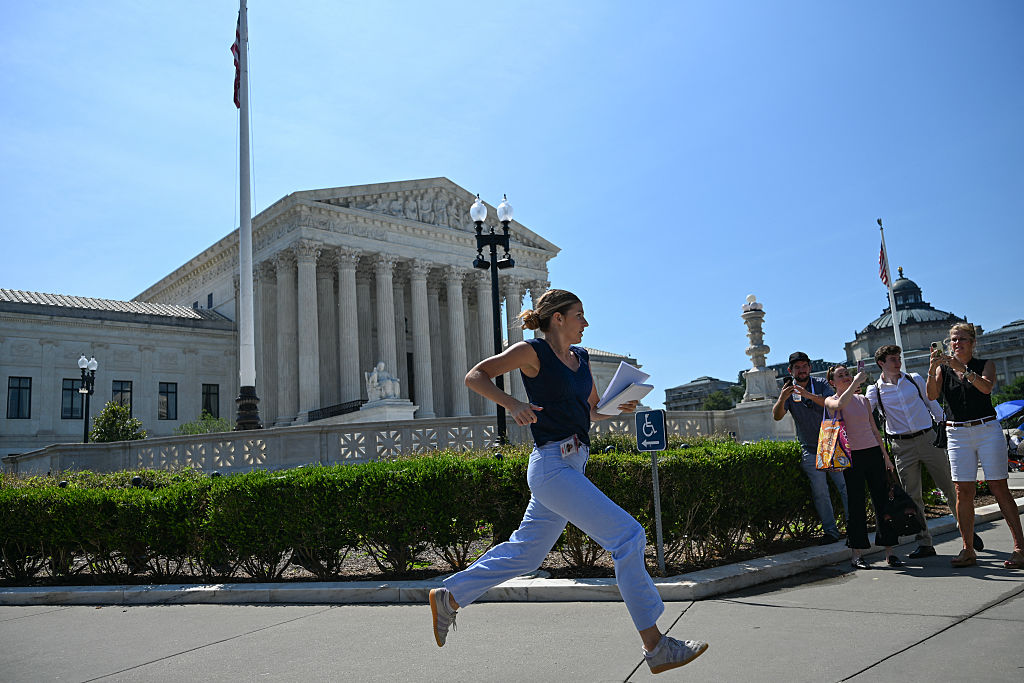
SCOTUS Upholds Birthright Citizenship
The Supreme Court’s recent decisions have left many wondering what the future holds for the country’s immigration policies and the interpretation of the 14th Amendment. William Jacobson, a law professor and the mind behind LegalInsurrection.com joins Tony Katz to break down the implications of these decisions.
The Supreme Court’s 5-to-4 ruling upholding birthright citizenship has sparked debate among legal scholars and politicians alike. According to the professor, “the core constitutional decision was that children born here to illegal parents, who are here illegally. are citizens at birth under the 14th Amendment.” This decision was a sweeping constitutional ruling, with only two of the five votes coming from self-proclaimed conservatives, Amy Coney Barrett and Chief Justice John Roberts.
The professor expressed his disappointment with the decision, stating, “I think that’s such a sweeping decision on the constitution in a supposedly conservative Supreme Court. The most of those were the liberal justices.” He believes that the court missed the mark by not giving meaning to the words “subject to the jurisdiction thereof” in the 14th Amendment, which he thinks would have required parents to be domiciled in the country and owe no allegiance to a foreign sovereign.
The professor also discussed the second decision, a six-to-three ruling that allowed schools to determine eligibility for sports based on biological sex. He stated, “I think that’s right, that definitively determines that the term sex used in Title IX means biological sex, it does not mean how you feel or how you identify or how you think of yourself.” This decision has significant implications for states that have allowed boys to participate in girls’ sports.
The professor’s analysis of the Roberts Court’s decisions highlights a concerning trend of overreach. He notes that the court’s willingness to issue sweeping constitutional arguments, rather than taking a more modest approach, is disheartening. “John Roberts is always mindful of public perception, and he presents himself as someone who doesn’t want to overstep his bounds,” he said. “But there was another way to overturn this decision, which is the argument Kavanaugh made that this actually contradicts a federal statute.”



The professor’s conversation with the host sheds light on the complexities of the Supreme Court’s decisions and their implications for the country’s immigration policies and laws. As he notes, “this argument, unless there’s going to be a constitutional amendment, as a constitutional matter, is settled. It’s resolved now.”
Listen to the “SCOTUS Upholds Birthright Citizenship” discussion in full here:
Listen to the show in full here:
Watch the show here:
Archived episodes here:
ABOUT THE SHOW
Tony Katz Today airs from 12-3pm ET on 93.1 WIBC/Indianapolis
What are we talking about? Politics, breaking news, political theory, art, the markets, food, libations and whatever else may come to mind.
PLEASE SUBSCRIBE TO THE PODCAST
Tony Katz Today on Apple Podcasts