Eli Lilly Restricts Access to Drug Discounts for Hospitals
Eli Lilly Restricts Access to Drug Discounts for Some Hospitals
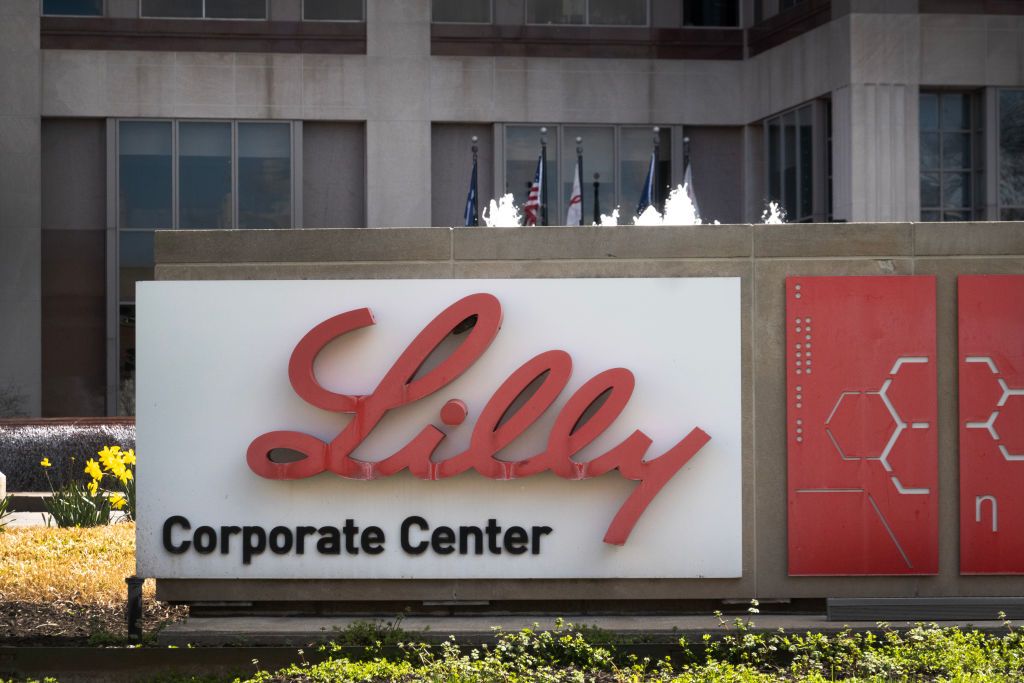
INDIANAPOLIS — Drugmaker Eli Lilly and Co. is restricting access to a drug discount program intended for safety-net hospitals in a move the company says is needed to identify waste, fraud and abuse.
The Indianapolis-based pharmaceutical company now requires hospitals to submit insurance claims data for in-house pharmacy dispensing to qualify for discount pricing through the federal 340B program — an expansion of the company’s long-standing reporting requirements.
“That data is necessary to identify unlawful duplicate discounts, audit covered entities, initiate HRSA’s dispute-resolution process, and comply with obligations under the Inflation Reduction Act,” Josh O’Harra, senior vice president and deputy general counsel for Eli Lilly, said in a June letter to the federal Health Resources and Services Administration.
O’Harra informed the agency of actions Eli Lilly took prior to discontinuing 340B pricing for a “minority” of hospital pharmacies that did not submit claims data by its June 8 deadline — reminder letters and individual contact with entities that didn’t comply. He suggested compliance should be simple as hospitals already transmit data to insurers, Medicare and Medicaid daily.
“Lilly takes this step reluctantly,” he wrote. “For months, Lilly worked tirelessly to avoid this outcome and resolve any legitimate concerns. But Lilly cannot allow a coordinated holdout — orchestrated by powerful hospital trade groups that oppose 340B transparency in any form — to defeat a lawful, modest integrity measure that is essential to ending what Secretary (Robert F.) Kennedy has described as the 340B ‘boondoggle.’”
Eli Lilly is among the largest pharmaceutical companies in the world.
The American Hospital Association protested Eli Lilly’s decision to withhold discount pricing from entities that did not meet the company’s June deadline, calling the action “extraordinary.”
“Congress should immediately use its oversight authority and demand (Health and Human Services) take a position on drug companies’ attempts to hijack the 340B program through burdensome claims-data demands,” AHA President and CEO Rick Pollack said in a June 18 statement.
“These manufacturer-imposed requirements would drain scarce resources from 340B hospitals and threaten patients’ access to lifesaving drugs. HRSA and HHS cannot continue to stand by while Eli Lilly and others rewrite the rules for their own benefit and skirt their obligations.”
A spokesperson for Eli Lilly declined to comment when asked whether any of the hospitals now suspended from the company’s 340B pricing are based in Indiana.
Public officials seek transparency for drug discounts
Congress enacted the 340B drug discount program in 1992 so safety-net hospitals could purchase outpatient drugs at a discount from drug makers that participate in Medicaid.
Hospitals may then bill patients and insurers at a higher rate — even the full cost of the drug in some cases — a provision designed by Congress to assist hospitals serving the poorest Americans in paying for critical services and costly medications.
Critics allege the program is rife with abuse as it has expanded.
Hoosier lawmakers responded by adopting transparency requirements for hospitals purchasing drugs at 340B prices, with the first transparency reports due back in April.
Secretary Mitch Roob, head of the Indiana Family and Social Services Administration, took the effort a step further when he proposed a rule change, set to take effect in July, to discontinue Medicaid reimbursement for drugs purchased through 340B. He later exempted federally-qualified health centers from the rule.
Congress too is debating expanded federal oversight of the program.
Now, drug makers are adopting their own transparency measures to prevent misuse of 340B.
Lilly alleges ‘coordinated boycott’
In his letter to HRSA, O’Harra said 70% of the 2,350 entities purchasing Eli Lilly medications at 340B prices submitted in-house claims data — totaling nearly 800,000 claims since Jan. 1.
This includes claims from a majority of participating STD clinics, federally-qualified health centers and critical-access hospitals, he wrote.
“If submitting standard, de-identified claims data were truly burdensome, unlawful, or operationally infeasible, thousands of covered entities — including many with far fewer resources than the holdouts — could not be doing it without complaint,” O’Harra wrote. “But they are.”
The primary holdouts are “the largest and most sophisticated participants in the 340B program,” including ten major disproportionate-share hospitals that submitted zero claims between Jan. 1 and June 1 “despite earning between $8 million and $16 million in 340B profits on Lilly’s medicines,” he wrote.
Pollack called the action “unlawful” and “harmful” to patients in a statement alleging Eli Lilly gave advanced notice to news media on the condition reporters not provide it to hospitals.
The trade association sent Eli Lilly a letter prior to the June deadline “offering to work together in good faith on a common solution,” he said in a statement.
The letter suggested using a neutral third-party data clearinghouse overseen by the federal government to identify any duplicate discounts or diversion, an option Pollack said would be less burdensome for hospitals to comply.
He said two hospitals temporarily lost access to 340B pricing because Eli Lilly “submitted incorrect or incomplete” pricing files to wholesalers.
“This decision will undoubtedly harm America’s most vulnerable patients and communities, forcing hospitals to divert resources away from care and toward onerous and expensive administrative burdens,” Pollack said.
O’Harra called the hospitals’ privacy objections a “pretextual” boycott “organized through the same hospital trade associations that have repeatedly run this play against federal transparency initiatives,” telling HRSA the company cannot identify individual patients using the claims data.
“Lilly cannot allow a coordinated holdout to defeat a lawful, modest, and necessary integrity measure that two federal courts of appeals and HRSA itself have endorsed,” he wrote.