Sanders and AOC Propose Nationwide AI Data Center Freeze
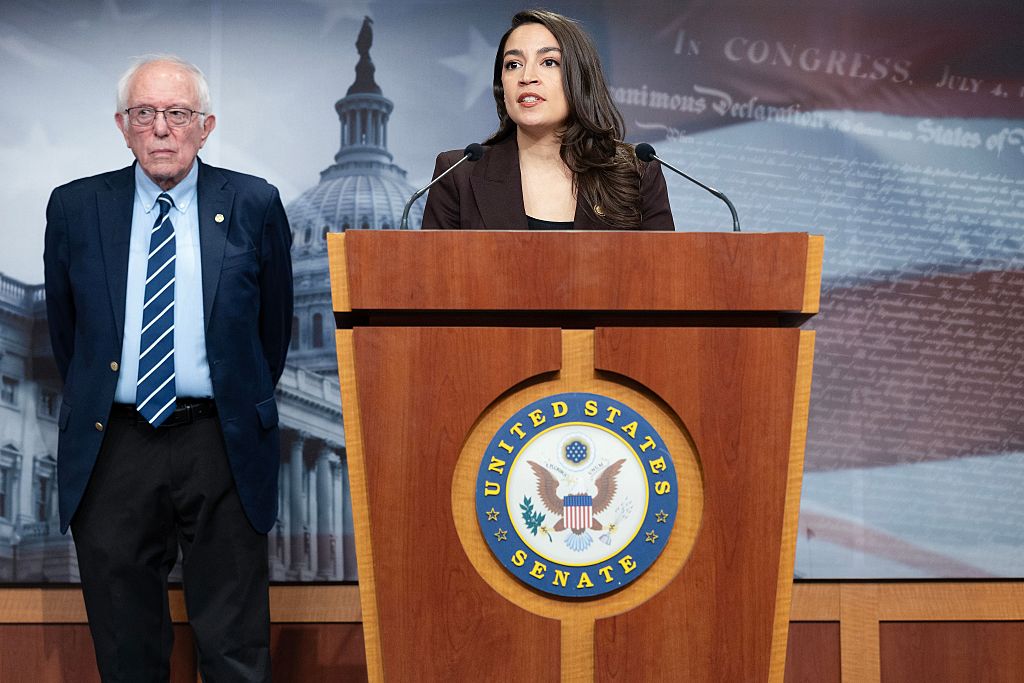
Construction of AI-focused data centers across the United States could be put on hold under new legislation introduced Wednesday by Sen. Bernie Sanders (I-VT) and Rep. Alexandria Ocasio-Cortez (D-NY).
The proposal calls for a nationwide moratorium on building or upgrading AI data center projects until Congress enacts sweeping regulations governing artificial intelligence. According to the bill’s text, “A moratorium is hereby imposed on the construction or upgrading of all new AI data center projects until Congress passes comprehensive AI legislation that ensures the safety and prosperity of the American people.” It adds that the pause would remain in place until such legislation is passed and explicitly lifts the restriction.
If approved, the measure would halt infrastructure development tied to the rapidly evolving AI sector for an unspecified period. While it’s unclear whether Republican lawmakers will support the bill, some GOP members have also advocated for a unified federal framework to regulate AI.
A major concern for the bill’s Democratic sponsors is the strain AI data centers place on energy systems, potentially driving up electricity costs for consumers. The legislation states, “New or upgraded AI data centers must not increase the electric and utility bills of consumers, harm the environment, or make climate change even worse.” The moratorium would be lifted once federal regulations address these issues.
Earlier this month, President Donald Trump reached an agreement with major tech companies, including Google and Microsoft, aimed at shielding consumers from increased energy costs tied to AI infrastructure. Lawmakers now seek to codify similar protections into law.
The proposed moratorium could also end if rules are implemented covering federal oversight of AI systems, job displacement caused by automation, and requirements for union labor in data center construction, among other provisions.
Sanders is expected to formally introduce the bill on the Senate floor this week. In a post on X, he warned, “AI and robotics are going to bring cataclysmic changes to our society. Sadly, Congress has done virtually nothing. AI must work for working families, not the billionaires. Today, I’m introducing a moratorium on new data centers until we protect working people.”
The proposal has already drawn opposition from industry leaders. The Data Center Coalition criticized the plan, arguing it would harm the economy and limit digital access. “A moratorium would limit internet capacity, slow critical services, eliminate hundreds of thousands of high-wage jobs, drain billions in local tax revenue, and raise costs for American families and small businesses,” said Cy McNeill, the group’s senior director of federal affairs. He noted that in 2023, U.S. data centers supported 4.7 million jobs and generated $162 billion in tax revenue, funding essential public services.
McNeill also warned that halting construction could weaken the country’s global competitiveness and disrupt everyday digital services, while reaffirming the group’s willingness to work with policymakers on AI infrastructure.
The legislative push comes shortly after the White House unveiled a national AI policy framework. That plan aims to streamline permitting for data centers, including allowing facilities to generate their own power, while promoting a federal standard over a patchwork of state regulations. However, it does leave room for states to enforce protections related to children.
Meanwhile, Congress continues to face pressure from both the administration and the tech industry to override state-level AI laws—an effort that has previously encountered bipartisan resistance.
On the same day the bill was introduced, Trump also named Meta CEO Mark Zuckerberg, Oracle co-founder Larry Ellison, and other industry leaders to the President’s Council of Advisors on Science and Technology, which will help guide federal AI policy.