Strait Of Hormuz: Perception Is Reality
- Perception of US control over Strait of Hormuz is undermined by Iran's ability to disrupt shipping.
- US has capability to block Iran but lacks regional partners to share the risk.
- Emerging regional pacts may undermine US strategy as intermediaries start to lead instead of follow.
Strait of Hormuz: Perception Is Reality
Tony Katz isn’t buying the victory narrative on Iran. “Perception is reality,” Katz said flatly — and right now, the perception is that the U.S. looks weaker in the standoff over the Strait of Hormuz than the White House wants to admit.
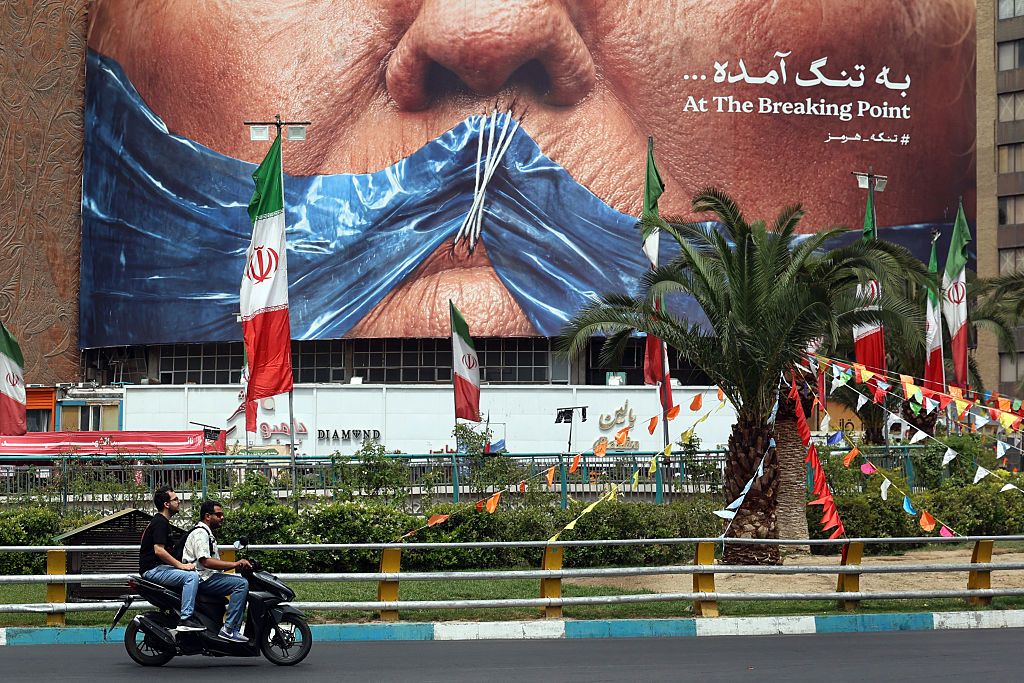
The dispute centers on who actually controls the vital oil chokepoint. President Trump has claimed the U.S. controls the strait “one hundred percent.” Iran claims the same. Meanwhile, oil has climbed back above $80 a barrel — in some places $85 — a fact Katz says undercuts the administration’s tidy talking points.
Katz put the question to Steve Yates of the Heritage Foundation, a China policy expert with deep roots in Middle East geopolitics dating back to his time in the George W. Bush White House under Vice President Cheney. Yates didn’t dodge it: “We’ve got a sort of perfect muddle,” he said, explaining that shipping traffic is higher than trackers show because many vessels are running dark, escorted by the U.S. military, for security. Translation: the ships moving through Hormuz aren’t showing up on the public radar, which makes it look like less is happening than actually is.
But Yates was blunt about the limits of that military “control.” Iran, he said, is “still completely capable of engaging in economic terrorism” — spooking insurers, rattling regional actors, and buying time through selective strikes and threats. “This is the textbook definition of terrorism,” Yates said, arguing that a handful of well-placed threats can shape an adversary’s behavior without a single decisive battle.
That’s where Katz zeroed in. If the U.S. and its allies really have the strait locked down, why isn’t there a wall of destroyers — American, Saudi, or otherwise — physically blocking Iranian interference? “This is what people are asking,” Katz said. “How is this not happening already?”
Yates didn’t have a clean answer. “It’s exactly what I would have done months ago,” he admitted, arguing the U.S. has the capability but hasn’t pushed regional partners hard enough to share the risk — the same “free rider” problem, he noted, that plagues NATO burden-sharing on Russia.
The conversation also turned to reports that Saudi Arabia, Turkey, and Pakistan may be exploring their own regional pact — a potential hedge against a post-Iran Middle East reshaped by the Abraham Accords. Yates called it “not a happy or friendly signal to Washington,” warning that intermediaries emboldened during the crisis could start dragging U.S. strategy instead of following it.
Katz’s bottom line: financial pressure and quiet military maneuvering aren’t nothing, but if the administration can’t show the win, voters and markets will assume there isn’t one.
Hear Tony Katz break it down live weekdays on Tony Katz Today on WIBC 93.1 FM, or catch the full segment on-demand.
Listen to the “Strait of Hormuz: Perception Is Reality” discussion in full here:
Listen to the show in full here:
Watch the show here:
Archived episodes here:
ABOUT THE SHOW
Tony Katz Today airs from 12-3pm ET on 93.1 WIBC/Indianapolis
What are we talking about? Politics, breaking news, political theory, art, the markets, food, libations and whatever else may come to mind.
PLEASE SUBSCRIBE TO THE PODCAST
Tony Katz Today on Apple Podcasts