Tips and Tricks to Avoid Ticks in Indiana and Elsewhere
- Ticks are surviving longer and expanding their habitat due to warmer winters from climate change.
- Prompt tick removal is important to reduce disease transmission, but ticks can be hard to detect.
- Lyme disease and alpha-gal syndrome are two serious tick-borne illnesses that are on the rise in Indiana.
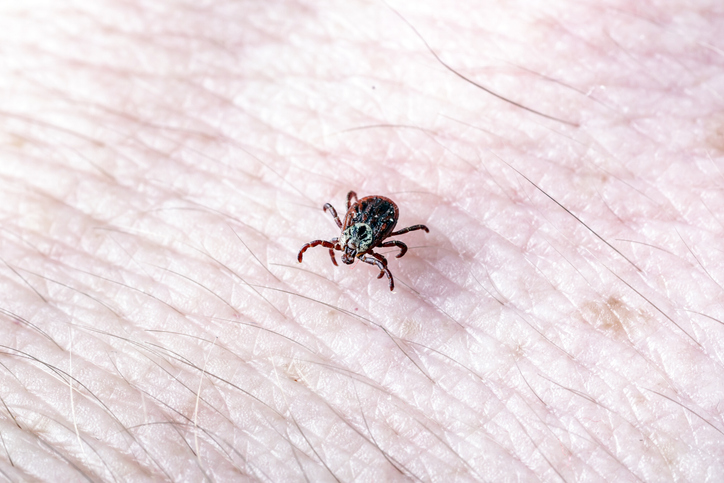
STATEWIDE–Ticks are a tricky thing to deal with in Indiana and throughout much of the Midwest.
A tick is a small, blood-feeding arachnid that acts as an external parasite on mammals, birds, and sometimes reptiles, capable of transmitting diseases to humans and animals.
“Prevention is the best thing that you can do to keep you and your family safe, especially with it being nicer outside. Ticks are more prevalent in warmer months, so late spring to early fall when we’re outside also, so it kind of aligns with the seasons of when we’re coming in contact with them,” said Heather Lents, Advanced Practitioner Lead with Community-GoHealth Urgent Care.
Lents says ticks are hanging around longer than they previously did.
“With climate change and it being warmer in the wintertime, the ticks are living longer because they can survive more and are active longer because it is warmer and moister. And with the milder winters, their habitats are expanding and their food sources are expanding as well as hosts. They like to live on mice and deer. So with those populations growing, the tick population is growing as well,” said Lents.
Getting bitten by a tick can cause some tricky scenarios.
“If you try to remove the tick and can’t get all of the tick out or you are just terrified and don’t want to try and remove it yourself, we’re more than happy to remove it for you. I do encourage patients to try to remove the tick at home because you don’t want to delay care to get the tick removed. You want to remove it as soon as possible to help decrease the chance of having any disease transmission,” said Lents.
Lyme disease is a tick-borne illness. Based on 2023 Lyme disease case data — the best available proxy for tick bite incidence — Indiana ranks 16th among U.S. states with 167 reported Lyme disease cases. This is significantly lower than the national average of about 88,672 Lyme cases, but higher than some states with very low tick activity.
Lents also wants you to be aware of Alpha-gal syndrome. Those can come from tick bites as well as other parasites.
“Obviously, Lyme disease is a bigger factor in Indiana, but we are seeing numbers in alpha-gal syndrome increasing, which is an allergic reaction that happens if you’ve been bitten by the lone star tick. What happens is the allergic reaction is triggered by an immune reaction to the sugars in mammals. So, then when you eat red meat, you can have an allergic reaction from something mild like rash, itching, all the way up to severe anaphylaxis. If you are somebody that’s having worsening symptoms every time you eat red meat, that’s when you need to seek emergency care,” said Lentz.
Tick-borne illnesses can also just be tricky in general.
“So, tick-borne illnesses are hard to diagnose initially because sometimes the patient will not know that they’ve been bitten by a tick. They’ve never seen a tick. I have friends that both have alpha-gal syndrome and Lyme disease that have never seen a tick, don’t know where they got it from. The symptoms are also nonspecific for Lyme disease. Fever, body aches, headaches, chills, all of those things can just be a general virus. So, I feel like most practitioners a lot of times overlook it if you aren’t coming and saying, hey, I’ve had a tick bite. It can just get treated as just a general virus at first until those symptoms are kind of lingering or it expands into something greater,” said Lents.
In order to avoid ticks, Lents advises you to stay on trails and keep out of deep brush or tall, grassy areas because that’s where ticks love to congregate.