The Everyday Expenses Straining Americans Most
President Trump delivered his 2026 State of the Union address Tuesday night, focusing heavily on the economy — a pressing concern for millions of Americans worried about the rising costs of food, housing and health care.
Highlighting his first year back in office, Mr. Trump declared that “inflation is plummeting, incomes are rising fast, the roaring economy is roaring like never before.”
By traditional measures, the economy appears steady. The unemployment rate stands at 4.3%, inflation has moderated and gross domestic product continues to grow. The U.S. economy has largely withstood tariffs that some economists warned could spark a recession. Consumer confidence has also ticked up, supported by a surge in job creation in January.
Yet many Americans say they continue to struggle with persistently high prices for necessities, creating a disconnect between encouraging economic indicators and everyday experience — and presenting a political challenge for the president.
Mr. Trump has proposed several measures aimed at improving affordability. However, some highly visible efforts, including a proposal to cap credit card interest rates at 10%, have not yet delivered measurable results, according to Bankrate senior economic analyst Mark Hamrick.
Polling conducted by the Pew Research Center in January found that Americans’ top economic concerns remain the costs of food, housing and health care.
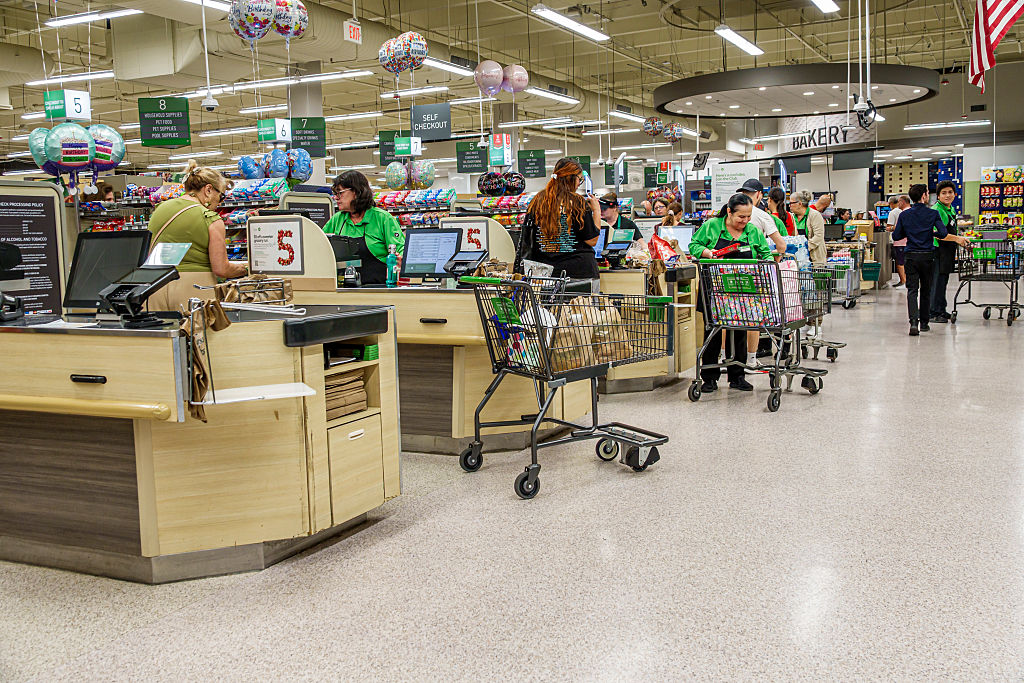
Grocery costs have been a source of frustration since inflation reached a 40-year high in 2022. Elevated food prices also troubled former President Biden, leading Mr. Trump to promise on the campaign trail to end what he called the “inflation nightmare.”
Since returning to office in 2025, food prices have continued to increase, though at a slower rate than during the Biden administration, when pandemic-related supply chain disruptions drove significant spikes.
Still, shoppers often focus more on the actual price tags they see than on the pace of inflation. Over the past year, some staples have seen sharp increases: ground beef prices are up 17.2% compared with a year ago, while coffee has climbed 18.3%.
To address rising grocery bills, the Trump administration has exempted items such as beef, coffee and bananas from tariffs. Earlier this month, Mr. Trump announced plans to increase U.S. beef imports from Argentina in an attempt to ease costs.
However, experts told CBS News that because Argentine beef accounts for just 0.6% of total U.S. beef supply, the move is unlikely to significantly affect prices.
Housing remains another major financial strain. A CBS News poll conducted in early February found that more than 8 in 10 Americans believe buying a home is harder today than it was for previous generations. Similarly, Pew reported that 62% of Americans are concerned about housing costs.
According to data from the Federal Reserve Bank of Atlanta, today’s homebuyers must earn 43% more than the average worker to afford a typical home. The “qualified income” benchmark — the amount needed to keep housing expenses below 30% of income — now far exceeds median earnings.
The Trump administration has floated several proposals to address the issue, including prohibiting institutional investors from purchasing single-family homes. The president has also directed the federal government to purchase $200 billion in mortgage-backed securities, a move intended to lower mortgage rates.
While experts say such steps could provide some relief, they caution that the underlying issue is a shortage of affordable housing. Construction activity dropped sharply during the Great Recession of 2008-09 and has not kept pace with demand since.
Analysts at Goldman Sachs estimate the U.S. would need to build as many as 4 million additional homes beyond the normal rate of construction to meaningfully reduce the housing deficit.
Health care expenses have emerged as Americans’ leading financial concern after Congress declined last year to extend enhanced Affordable Care Act subsidies, resulting in premium increases for millions, according to a recent poll by health policy research firm KFF.
Workers covered by employer-sponsored insurance are projected to see premium hikes of 6% to 7% in 2026 — more than twice the current inflation rate. Since 2008, the cost of private health insurance has nearly doubled, KFF data show.
Nearly two-thirds of Americans receive coverage through private insurers, where per-enrollee spending has risen faster than in Medicare or Medicaid programs since 2008.
Those who purchase insurance through Affordable Care Act marketplaces have experienced even sharper premium increases after enhanced subsidies expired on Dec. 31. Some individuals told CBS News they planned to forgo coverage this year due to unaffordable premiums.
The Trump administration has introduced the TrumpRx website, which offers lower direct-to-consumer prescription drug prices. Mr. Trump described it as “one of the most transformative health care initiatives of all time.”
Experts note, however, that the platform primarily serves consumers paying out of pocket and does not assist insured patients or count toward insurance deductibles.
Additionally, Republicans’ “big, beautiful bill” legislation financed tax cuts in part by significantly reducing spending on Medicaid and other social programs, Vanessa Williamson, senior fellow at the nonpartisan Urban-Brookings Tax Policy Center, said in an email.
“When you add to that the refusal to extend the Affordable Care Act credits, which caused health insurance premiums to double for millions of Americans, and the cuts to affordable energy programs, you can see Americans were really hit in their wallets over the last year,” she said.