Indiana Brings in More Revenue Than Expected
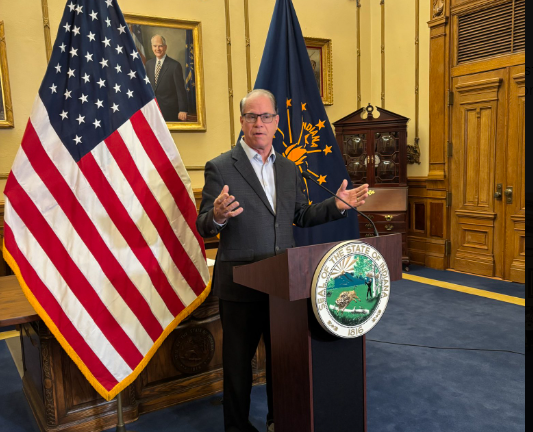
INDIANAPOLIS — Indiana is bringing in more money than expected, even after a 5% spending cut, Gov. Mike Braun says. He points out that the extra cash shows earlier predictions were off and that it pays to manage money carefully before looking for more.
Braun, a Republican who took office this year, said the spending reduction was requested after a cautious revenue forecast. But he said actual cash flow has since come in stronger than projected.

“In my opinion, the forecast was faulty,” Braun told All INdiana Politics. “We’re already exceeding expectations on the cash flow end.”
The governor said the experience should serve as a lesson for governments at all levels, including local governments and school districts. He argued that balancing budgets should start with examining how programs are run rather than defaulting to tax increases.
“You can’t just keep raising taxes without looking at how you run things more efficiently,” Braun said. “Some local governments, especially school districts, need to look at the total array of what they’re doing and live within the current paradigm.”
Braun pointed to higher education as an example of cost control, noting that the state asked public universities — with the exception of Purdue University — to freeze tuition and certain expenses for the next two years. He said the institutions agreed, calling it an example of leadership producing results.
“Sometimes you’ve got to have leadership to get that kind of stuff done,” Braun said.
The governor also framed the budget debate within Indiana’s broader political shift. He noted that parts of the state that once elected conservative Democrats now send some of the most conservative Republicans to Congress, helping give the GOP supermajorities in the Statehouse.
“If you’re going to lay back and do nothing with that, and not address kitchen-table issues, you’ll lose the clout you currently have,” Braun said.
Braun said his administration is focusing on issues he believes resonate across party lines, including health care costs, agriculture, affordable education and expanding parental choice in education.
“Making sure parents are the drivers of their kids’ education with full choice — that’s what I’m focusing on,” he said.
Democratic leaders have said they support fiscal responsibility but caution that budget decisions should not come at the expense of public services, particularly in education and health care. The next state budget debate is expected to test those competing priorities as lawmakers weigh updated revenue forecasts against agency requests.