Indiana Senate leader to step down in November

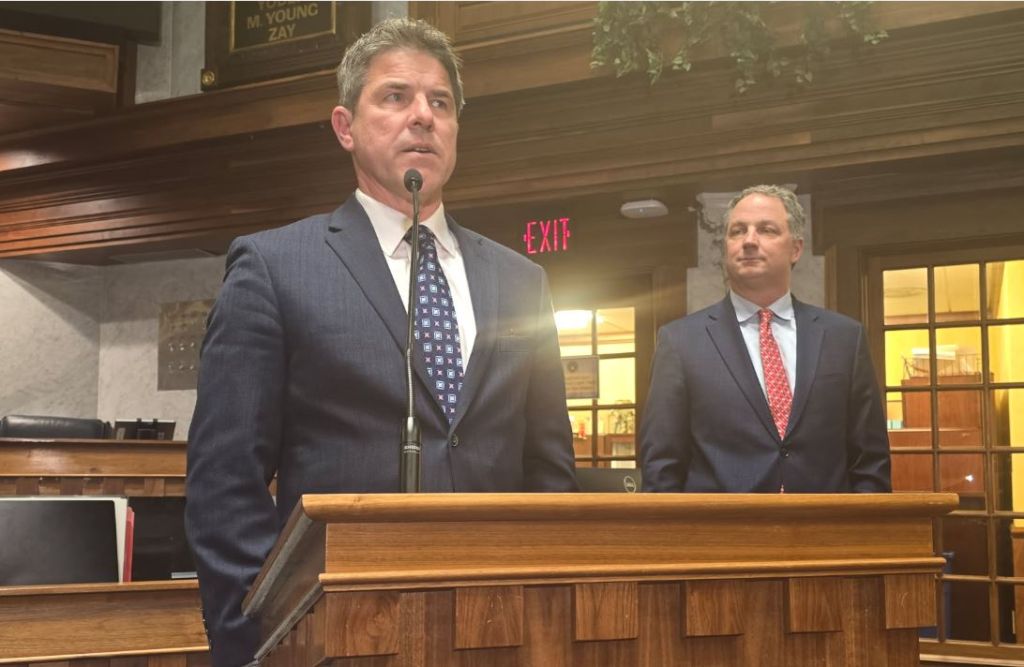
STATEHOUSE — Indiana Senate President Pro Tem Rodric Bray says he will step away from the chamber’s top Republican leadership role after eight years, a decision that could open the door to a competitive race for control of the Senate.
Bray announced Friday he will not seek another term as president pro tem when lawmakers choose new leaders in November. He said he made the decision because he did not want to put fellow Republican senators in the middle of a leadership battle.
Former state senator Jim Merritt says Bray’s decision could signal a major shift inside the Senate Republican caucus.
“There are three members of the Senate that could decide they want to be the caucus chairman, the majority leader and the president pro tem,” Merritt said. “It’s either already set up where there’s new leadership that’s already been decided, or it’s going to be chaos for the next 90 days.”
Merritt says Bray may have decided the numbers were not there for him to continue leading the chamber.
“Rod Bray was going to be the next pro tem of the Senate. He had to have a vote with 40 members of the Republican caucus. All you need is 21 votes,” Merritt said. “Maybe it just came down to the fact that Rod had the 21 votes, but not the 19 extra, and the caucus was fractured.”
Bray said serving as president pro tem was one of the greatest honors of his career. During his time leading the Senate, he pointed to lawmakers’ work on tax cuts, health care, literacy, election security, women’s sports, restrictions on foreign ownership of Indiana farmland and Indiana’s abortion law.
Merritt says Bray’s decision fits the way he has approached leadership.
“I can see him making the comment, ‘I just don’t want to be in the way. I don’t want to be the issue here,’” Merritt said.
Bray will remain Senate president pro tem until lawmakers elect a replacement in November. He will continue representing Senate District 37, which includes Morgan County and parts of Johnson, Owen and Putnam counties.
Merritt says Republicans could either rally around a leadership slate or see a competition for the top positions.
“You could see a leadership slate, if you will, of three people in those three offices, or you could see competition with the caucus and the pro tem and a majority leader appointed later,” Merritt said.
The new Senate leadership team will help set the agenda for the next legislative session.