Drowning is Silent: Free Safety Badges Offered for Indiana families
INDIANAPOLIS — As Hoosier families gear up for holiday cookouts, pool openings, and summer vacations, safety experts are issuing an urgent warning to parents and caregivers: drowning is fast, it is completely silent, and it can happen in a matter of seconds.
May is National Water Safety Month, serving as a critical reminder to evaluate seasonal safety habits before children head to neighborhood pools, lakes, or beaches. According to federal data, unintentional drowning remains the leading cause of accidental injury death for children ages 1 to 4 across the United States.
Grayson Purtlebaugh, the Prevention Education Coordinator for Prevent Child Abuse Indiana (PCAIN), emphasizes that many families accidentally take water safety for granted, underestimating how little water it takes to create a tragic situation.
“It can take just a couple of inches of water for a drowning to occur,” Purtlebaugh said. “And so we want to think not just about large bodies of water or pools, but drownings can happen in bathtubs, they can happen in small amounts of standing water. Drowning happens very quickly, and often drowning is silent.”
The Crucial Need for Undistracted Supervision
To combat this threat, PCAIN is heavily promoting its national “Eyes on the Child” campaign. The initiative drives home the message that active, entirely undistracted supervision is the absolute best defense against child drowning.
Safety experts point out that the vast majority of child drownings occur when a supervising adult is nearby but briefly distracted by a phone call, a text message, checking a grill, or chatting with another party guest.
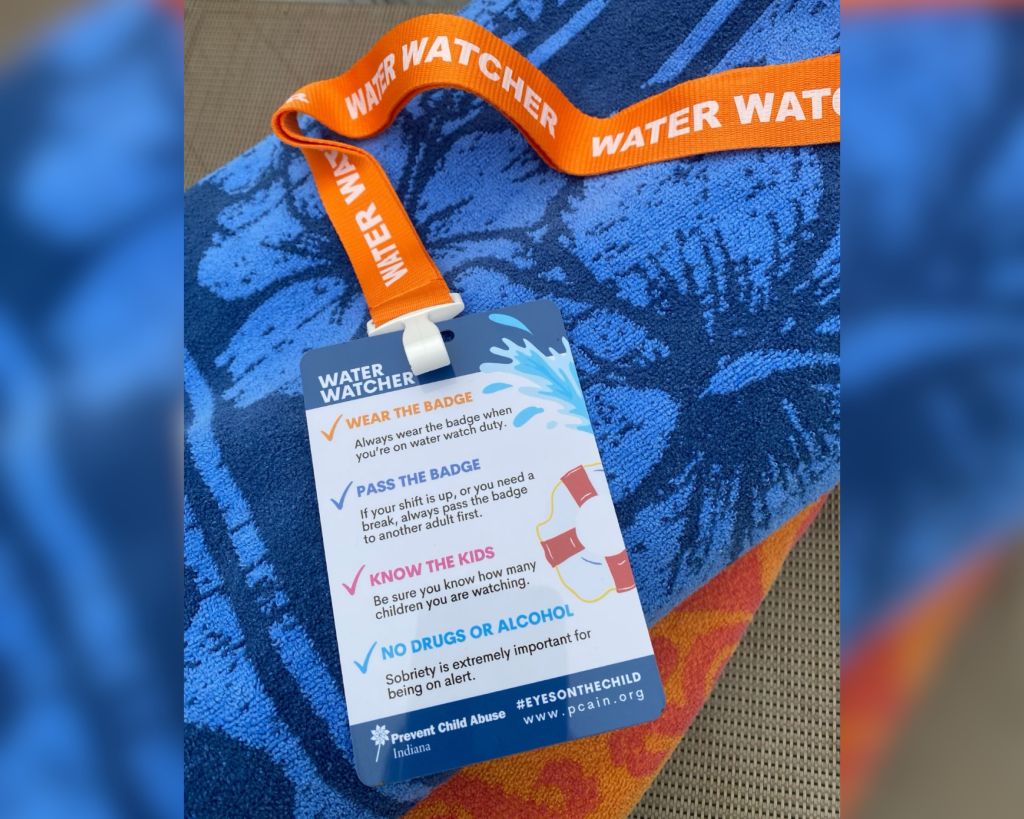
To solve the dangerous problem of adults assuming “someone else is watching the pool,” PCAIN has introduced a simple, physical tool: The Water Watcher Badge. The tool consists of a laminated badge attached to a highly visible, bright orange lanyard. When an adult puts it on, they become the designated “Water Watcher”—the person solely responsible for keeping constant eyes on the swimming children.
“What that water watcher badge does is designate to them and also to everyone around them that they’re the ones that are actively supervising the kids,” Purtlebaugh explained. “They’re not scrolling on their phone. They’re not taking a nap. They’re not having a side conversation and looking away from the body of water, but they are actively supervising at all times.”
PCAIN recommends that adults pass the badge off to another responsible adult every 15 minutes to prevent fatigue and maintain continuous, sharp supervision. Furthermore, the designated Water Watcher must remain completely sober, avoiding alcohol or drugs.
Layering Proactive Safety This Summer
While active supervision is paramount, PCAIN urges parents to build multiple layers of protection around children this summer:
Enroll in Swim Lessons: The American Academy of Pediatrics supports swim lessons for children as young as one year old. Once a child can walk, they can easily wander into harm’s way.
Secure the Pool: Homeowners should install four-sided fencing with self-closing, self-latching gates, utilize lockable safety covers, and install pool alarms.
Ditch the Inflatables: Families should use U.S. Coast Guard-approved life jackets around open water and on boats. Inflatable water wings and plastic toys are not life-saving safety devices.
Prep the Home: Empty all plastic kiddie pools, buckets, and bathtubs immediately after use, turning them upside down so they cannot collect rainwater.
Get Trained: Every parent, babysitter, and caregiver should be trained in basic water safety and CPR.
Hoosiers looking to safeguard their families can order a Water Watcher Badge completely free of charge. PCAIN packages and ships the lanyards to families and caregivers across the state. The organization also hosts free, virtual public safety webinars every month covering water safety and abuse prevention. To request a free badge or sign up for an upcoming training session, visit pcain.org.