Bill Restricting Youth Social Media Use Includes Degree Cuts
Bill Restricting Youth Social Media Use Includes College Degree Cuts
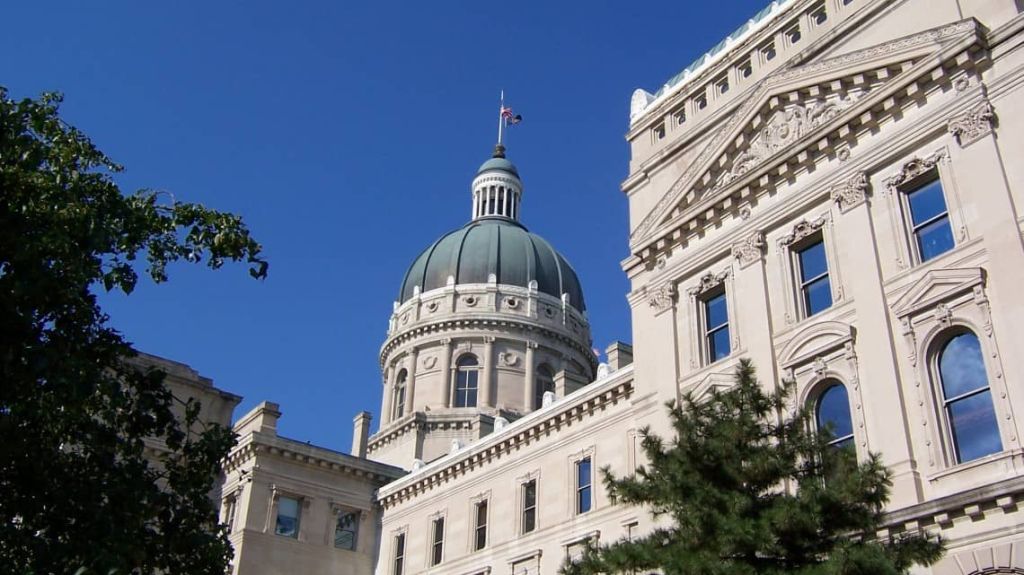
STATEHOUSE — An education package with a blend of youth social media restrictions and new state authority over college degree programs cleared the Indiana House in a 67-28 party-line vote Tuesday, sending the contentious proposal back to the opposing chamber for final deliberations.
Senate Bill 199 would require certain social media platforms to provide parents greater access and oversight of their minor children’s accounts and require parental permission for Hoosiers under 17 before opening accounts on platforms that meet specific criteria tied to addictive algorithms and company size.
The measure also directs state officials to scrutinize and potentially eliminate certain low-wage college degree programs offered at Indiana’s public institutions.
House sponsor Rep. Bob Behning, R-Indianapolis, said the bill’s social media provisions — which were amended on the chamber floor on Monday to exclude messaging apps that don’t have addictive algorithms — won’t apply to all platforms.
“We’re trying to be fairly narrow and focus it,” Behning said Tuesday. “Clearly, this doesn’t hit everybody. There’s a significant number of apps out there … We’ve deliberately tried to keep the universe relatively tight.”
Another amendment adopted Monday raised the age threshold from 16 to 17 for the bill’s prohibition on minors opening accounts on covered social media platforms. Under the current version, Hoosiers under age 17 would need “verifiable parental consent” to open certain social media accounts, like Facebook, Instagram and TikTok.
Behning said apps like Snapchat might “possibly” be excluded, though.
He also acknowledged germaneness concerns that could again jeopardize the social media language when the bill returns to the Senate. The upper chamber previously stripped similar social media provisions earlier this session.
Debate continues over more college degree eliminations
Separately, Democrats’ efforts to remove higher education language from the bill have failed.
Rep. Ed DeLaney, D-Indianapolis, said he supported raising the social media age threshold and called the social media portion “a good piece.”
But he ultimately voted against the bill because of provisions to require state review of public college degree programs and permit the state to further restrict or eliminate programs whose graduates’ median earnings fall below those of high school graduates, as measured by federal data.
The proposal, he said, still carried too much “baggage.”
“They should not be told by the state that they can’t learn this,” DeLaney said of college students. “Not everyone goes to college for a specific career — many go there to find their career.”
Rep. Matt Pierce, D-Bloomington, said he also supports the goal of protecting minors online but questioned why the legislature combined that policy with new higher education mandates.
“I’m not sure this approach is going to get us actually where we need to be,” Pierce said, emphasizing that the social media language “should have been its own bill.”
On the higher education language, Pierce said lawmakers were “micromanaging our universities.”
“I don’t understand why we’re not trusting the trustees who are completely appointed — at least at IU — by the governor,” he continued. “The governor controls a majority of the trustees … and yet we have to continually micromanage … and most of the time we don’t even know what we’re doing.”
“Why can’t we trust students to decide which degrees they want to get? Now, we’re going to tell them,” Pierce added.
Rep. Cherrish Pryor, D-Indianapolis, and other Democrats raised further concerns about whether certain humanities programs could be swept up under the earnings-based review.
Rep. Vernon Smith, D-Gary, pointed to African American studies and similar disciplines. Rep. Renee Pack, D-Indianapolis, an educator, pressed Behning on whether majors like African American Diaspora studies, women and gender studies, archaeology or philosophy could survive.
Behning replied that programs falling below the federal earnings benchmark — which compares the median earnings of program graduates to the median earnings of Hoosiers with only a high school diploma several years after completion — “might get cut,” emphasizing that “the whole focus is trying to help students understand that investing in higher ed … what they study could affect their income/earnings.”
Pack pushed back.
“I didn’t know that in the legislature, we’re the business of snatching dreams,” she said. “We’re on the wrong side of this one.”
‘We ought to do that’
Still, other Democrats, including Rep. Victoria Garcia Wilburn, D-Fishers, said the social media language is “extremely important” to constituents who are worried about the impact of addictive platforms on children.
Republicans defended the measure as necessary consumer protection.
Rep. Jim Lucas, R-Seymour, tied the higher education review to student loan debt and said lawmakers have a responsibility to address the financial consequences of certain degrees.
“We have a student loan crisis in this country,” Lucas said. “If we can give students better information and keep them from taking on debt for a degree that doesn’t lead to a sustainable wage, then we ought to do that.”
Rep. Joanna King, R-Middlebury, also rejected arguments that the bill limits speech.
“This doesn’t limit speech,” King said. “It focuses on harmful algorithms and the way these platforms are designed to keep kids engaged.”
She noted that the state already regulates numerous activities for minors and said protecting children online fits within that tradition.
“This is about protecting kids and giving parents tools,” King said, “not about taking something away.”