“Working Hoosier Agenda” Targets Utility Costs and IEDC Transparency
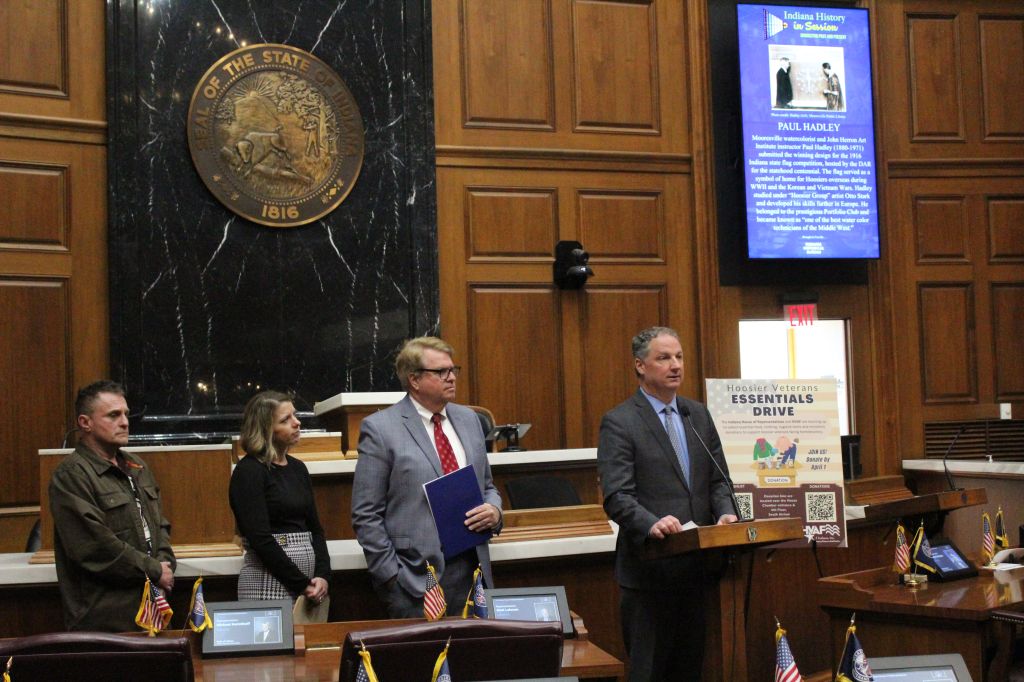
INDIANAPOLIS — Following the adjournment of Thursday’s House session, House Democratic Leader Phil GiaQuinta (D-Fort Wayne) addressed a flurry of legislative activity, warning members that bills are moving “pretty quickly” and risk slipping through without proper vetting.
With only 70 days left until the mandatory adjournment, GiaQuinta highlighted a growing consensus among lawmakers—regardless of party—that the Indiana Economic Development Corporation (IEDC) requires much tighter oversight.
Transparency as a ‘Top Priority’
GiaQuinta threw his support behind recent calls for a legislative probe into the IEDC, an agency that has faced scrutiny following an $800,000 forensic audit that revealed potential conflicts of interest and lack of transparency.
“I think any time that we can sort of shed more light on what’s happening… it’s a good thing,” GiaQuinta said. “We talked about transparency a lot on all issues; I think this one, which involves so much money, should be right up there at the top.”
GiaQuinta noted that both Democrats and some Republican lawmakers on the Budget Committee are on the “same wavelength” regarding the agency’s spending. He emphasized that even in a non-budget year, the legislature has the time and responsibility to act.
“I think it’d be well worth it for the taxpayer to follow these millions of dollars and saying how they’re being spent.”
Local Reforms and ‘Stickler’ Bills
While the state budget isn’t up for a full overhaul this year, GiaQuinta pointed to local government reform—specifically township consolidation (SB 270/HB 1315)—as a potential flashpoint.
“I think these local government reform bills… end up being maybe the real sticklers,” he observed, noting that such bills often carry deep local consequences that complicate their passage. He also highlighted concerns from cities like Carmel and Westfield regarding House Bill 1001, which deals with housing matters and local permit fees.
Tax Breaks: Overtime vs. Data Centers
The Democratic Leader also addressed the Senate’s move to exempt overtime pay and tips from state taxes (SB 243). While he noted that many in his caucus are “inclined to support” the break for workers, he raised concerns about the impact on state revenue needed for other priorities.
“That’s certainly a concern when we’re trying to find other revenue for things that we feel are important… like access to child care,” GiaQuinta said.
GiaQuinta drew a sharp contrast between tax breaks for individuals and those given to large corporations. Specifically, he called for the state to extend the same 7% sales tax exemptions currently enjoyed by data centers to everyday Hoosier utility ratepayers.
“We would love to see the same tax exemption that data centers get—we’d like to see the ratepayers get that same tax break.


