The Flu: Shari Hall’s Warning
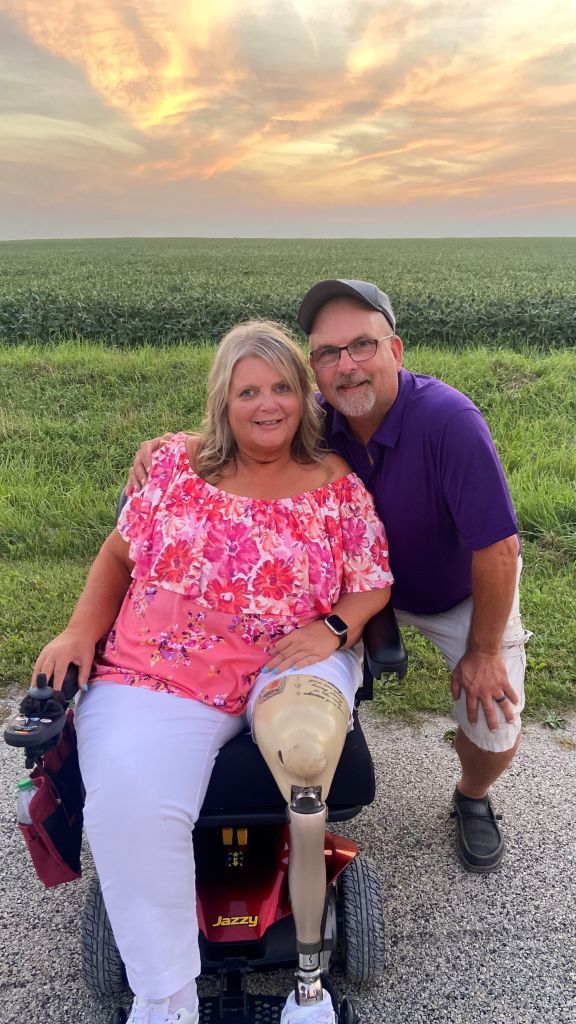
BROWNSBURG, IN – In February 2018, Shari Hall was busy. Between running a home daycare and helping her daughter move, the Brownsburg native barely noticed she had missed her annual flu shot. When she started feeling ill, she assumed it was a familiar foe: bronchitis.
It was a mistake that nearly cost her life.
As Indiana enters another flu season—one following a year where the state saw 662 flu-related deaths—Shari and her husband, Bill, are sharing their harrowing journey to warn others that the influenza virus is far more than a “bad cold.”
“Something’s Not Right”
Shari’s symptoms began after a weekend trip to southern Indiana. Initially dismissed by an immediate care center as bronchitis, Shari spent a week on antibiotics while her condition silently deteriorated. By Friday morning, the situation turned critical.
“I was like, something’s not right… I couldn’t breathe, I felt like I couldn’t stand up,” Shari recalled. Her husband and 18-year-old son rushed her to a local emergency room. Within minutes, she tested positive for Influenza B. What followed was a medical nightmare. The virus began attacking Shari’s heart. As her blood pressure plummeted, she was rushed to a major hospital in Indianapolis.
A 5% Chance of Survival
By Saturday morning, Shari’s heart was failing. Bill remembers the terrifying moment the doctors gave him the grim reality: Shari had coded four times and her only hope was ECMO (Extracorporeal Membrane Oxygenation)—a form of life support that acts as an external heart and lungs.
“The doctor came back in and said that we really didn’t have too many options,” Bill said. “He said she probably only got about a 5-10% chance of surviving.”
Shari remained on life support for nine days. While the ECMO saved her life, the lack of circulation to her extremities caused her toes, fingers, and left leg to turn black with gangrene.
The Long Road Home
Shari beat the 10% odds and survived, but the physical toll was permanent. To save her life, surgeons had to amputate:
Her left leg above the knee.
All the toes on her right foot.
One of her fingers.
“From the time she got sick till the time she came back in the house was a total of nine months,” Bill said. The journey included 41 days in the ICU and five months in physical rehab just to gain enough strength to return home.
A Changed Life
Five years later, the Halls’ lives remain defined by that one flu season. Shari now lives with multiple autoimmune diseases—which doctors believe were triggered by the trauma to her system—and requires daily caregiving support.
The financial and emotional weight has been immense. The family had to renovate their home and purchase a specialized vehicle to accommodate Shari’s prosthetic leg and mobility needs. “It is a life-changing event,” Bill said. “It’s not just spending those nine months in the hospital… it changes your entire life.”
The Halls, who had always been diligent about vaccinations until they “got busy” in 2018, now advocate for everyone to take the flu shot seriously.
“I would tell them to read up on it… they can look at me and see what happened,” Shari said. “You may get the flu and not even make it out, because a lot of people don’t.”
Bill echoes the sentiment, emphasizing that the vaccine is as much for the family as it is for the patient. “Don’t put your family through what we had to go through,” he urged. “Follow your gut. If something doesn’t seem right, it’s probably not right.”
As the 2025-2026 flu season continues, the Halls hope their story serves as a reminder that a simple doctor’s visit can be the difference between a minor illness and a life-altering tragedy.