Next 2 Weeks Critical to Chicago Bears Stadium Choice
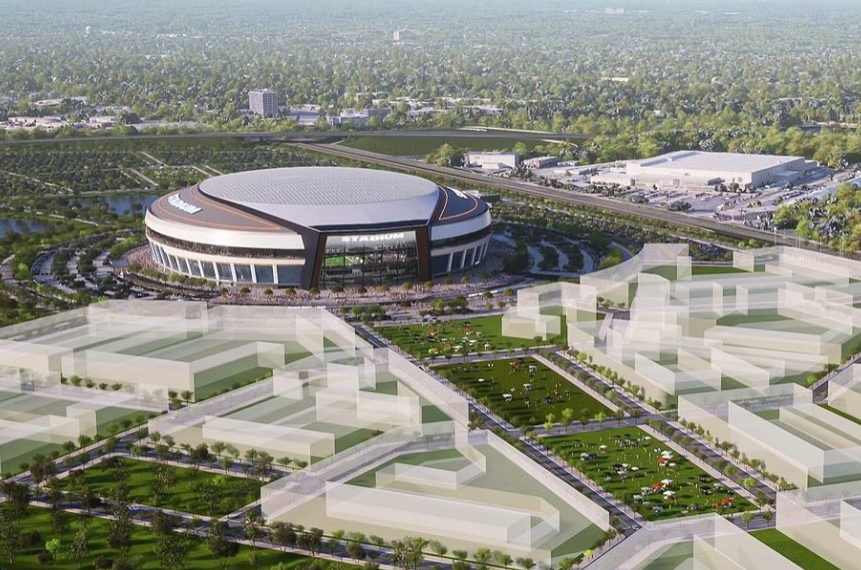
CHICAGO — The next couple of weeks appear crucial to whether the Chicago Bears decide the franchise will cross the state line and build its new stadium in northwest Indiana.
The Illinois Legislature is set to wrap up its session at the end of this month and keeps haggling over a bill intended to persuade the Bears to pick a site the team already owns in the northwestern Chicago suburb of Arlington Heights.
Those talks continue nearly three months after Indiana lawmakers pushed through — and Gov. Mike Braun signed — a financing plan for a Hammond stadium location that would direct about $1 billion in taxpayer money toward stadium district infrastructure.
Illinois deal in negotiations
The Illinois Senate is now considering a bill approved by House members last month that would allow developers of so-called “megaprojects” to negotiate their property tax bills under a payment-in-lieu-of-taxes agreement with local governments.
Illinois Gov. JB Pritzker told reporters Monday in Chicago that the details are “in the Legislature’s hands.”
“I put the structure of a deal together with the Bears and now the Senate has some work to do,” Pritzker said. “I think they’re going to make changes to the bill, no doubt. But I would expect that we’ll see something before May 31 and that both houses, the Senate and the House, would vote on that.”
Pritzker dismissed a proposal from Chicago Mayor Brandon Johnson aimed at keeping the Bears in the city at a new stadium along Lake Michigan, saying the mayor had “no plan” viable to pull that off.
Bears officials have maintained that a new Chicago stadium is no longer in play.
“There are only two viable stadium locations under consideration — Arlington Heights and Hammond — and a decision is expected between the two later this spring or early summer,” the team said in a Friday statement.
A team spokesman told the Indiana Capital Chronicle on Monday that it had no additional comment.
Indiana offer includes tolling revenue
Indiana officials have maintained optimism in recent weeks that the Bears will ultimately prefer the financial benefits of the Hammond site near Wolf Lake, which straddles the Indiana-Illinois state line and is bisected by the Indiana Toll Road just a few miles before the highway enters Chicago.
The Indiana financing plan calls for capturing taxes from a new stadium development district, along with revenue from a 12% admissions tax on stadium events, a doubling of the current 5% hotel tax in Lake County (where Hammond is located) and a 1% food-and-beverage tax in both Lake and Porter counties.
Money for stadium-related work could also come from a $700 million payment from the Indiana Toll Road’s private operator to the state under an agreement reached in April allowing the highway toll increases on all vehicles by at least 1.5% twice a year. That money is going into a special fund for infrastructure projects in seven counties across northern Indiana, including Lake County.
Braun said recently that Bears officials were through their “due diligence” before making a stadium decision.
“I think it will boil down to where they want to be for the next 50 years in terms of a good business partner,” Braun said.