Truckers Slam Indiana Roads as Nation’s Worst
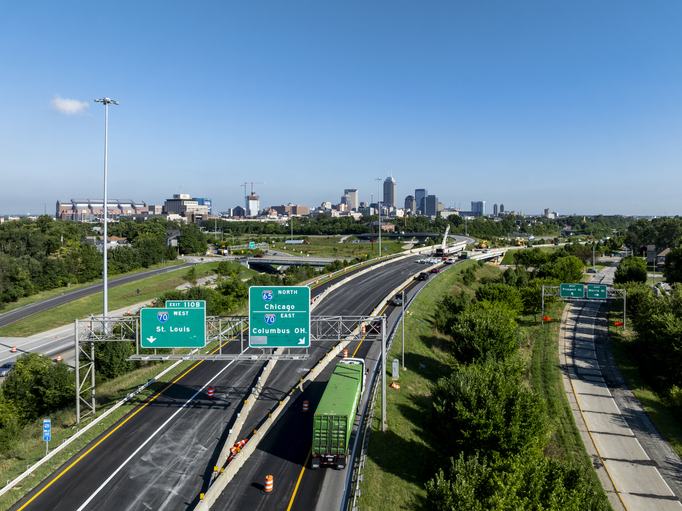
A recent survey of professional truck drivers and owner-operators places Indiana at the bottom of the national rankings for road quality.
According to Overdrive’s newly released Truckers’ 2025 Highway Report Card, Indiana ranks first for having the worst highway conditions in the United States. Nearly 600 truck drivers and owner-operators took part in the survey, with 32 percent identifying Indiana as the state with the poorest roads.
The survey also identified the 10 worst highway routes in the country, three of which are located in Indiana:
- I-70 in Indiana
- I-40 in New Mexico
- I-40 in Arizona
- I-10 in Louisiana
- I-20 in Louisiana
- I-95 in New York
- I-5 in California
- I-80 in Indiana
- I-65 in Indiana
- I-70 in Colorado
Drivers cited deteriorating pavement as their biggest concern, calling the “pavement condition is terrible.” The second most common complaint was a “clear lack of road maintenance.”
WRTV reached out to the Indiana Department of Transportation (INDOT) for comment on the findings. The agency noted that the percentages referenced in its response apply specifically to state-maintained roads and bridges.
In a statement, INDOT said:
“Indiana has been recognized by transportation and industry groups for having top-rated roads and bridges. Recent data from the Federal Highway Administration shows just over 94% of Indiana roadways in fair or better condition, and more than 97% of Indiana bridges being well-maintained.
However, INDOT is aware of concerns on state-maintained roadways, like I-70, and is working to address those through current and future construction projects, as well as regular maintenance operations. INDOT has several projects in progress or scheduled for construction on I-70 to address aging pavement and bridges, as well as safety.”
INDOT spokesperson Natalie Garrett said several factors contribute to roadway deterioration, including heavy freight traffic and harsh freeze-thaw cycles.
Garrett explained that I-70 carries significant freight traffic—at least 50 percent of total vehicle volume—which accelerates wear and tear.
“Extreme temperature swings, which we typically see in Indiana, can also affect not only the pavement surface (potholes), but also the subgrade,” said Garrett in an email to WRTV. “This week is an example of extreme temperature swings — single digits to close to 60 in a matter of days!”
Survey participants shared firsthand experiences with Indiana’s roads.
“From Indianapolis to the Ohio line is just unbearable,” wrote one respondent. “Potholes that’ll kick the cruise control off.”
Another driver added:
“From the Ohio line to Indy never seems to stay smooth. The state repairs/resurfaces and not long after it is just as bad or worse than before.”
Garrett said INDOT has spent several years developing a 20-year asset management plan aimed at improving road and bridge conditions statewide and ensuring every asset on INDOT’s system is addressed.
“This plan helps inform both capital construction and maintenance projects,” Garrett said in an email to WRTV.
INDOT’s Project Map, which shows current and planned work on state-maintained roads, is available online and can be filtered by district, geographic area, project status, program year, and program type.
WRTV Investigates has also reported on issues with concrete pavement across Indiana in its investigation titled “Concrete Cracking.” INDOT says it is studying the cause of the cracking and has identified a newer type of cement as one contributing factor.
The cement, known as Type 1L or Portland Limestone cement, is considered more environmentally friendly and produces fewer CO2 emissions. However, experts say it is softer and more porous than traditional cement.
As of September 10, INDOT implemented a 10 percent cap on limestone content in cement used for state contracts. Garrett cautioned against linking overall road conditions to Type 1L cement, noting it did not become widely used in Indiana until 2022.
“Midwest weather (freeze-thaw cycles), volume of freight traffic, future funding, increased load weights of permitted and non-permitted trucks, maintaining roadway capacity during construction, and safety of the public and road workers in construction zones are all challenges INDOT faces in building and maintaining state highways, U.S. routes, and interstates in Indiana,” Garrett said in an email to WRTV.
The American Cement Association (ACA) has criticized the 10 percent cap, calling the decision “arbitrary” and “knee jerk.”