FedEx Sues For Refund After Supreme Court Ruling on Tariffs
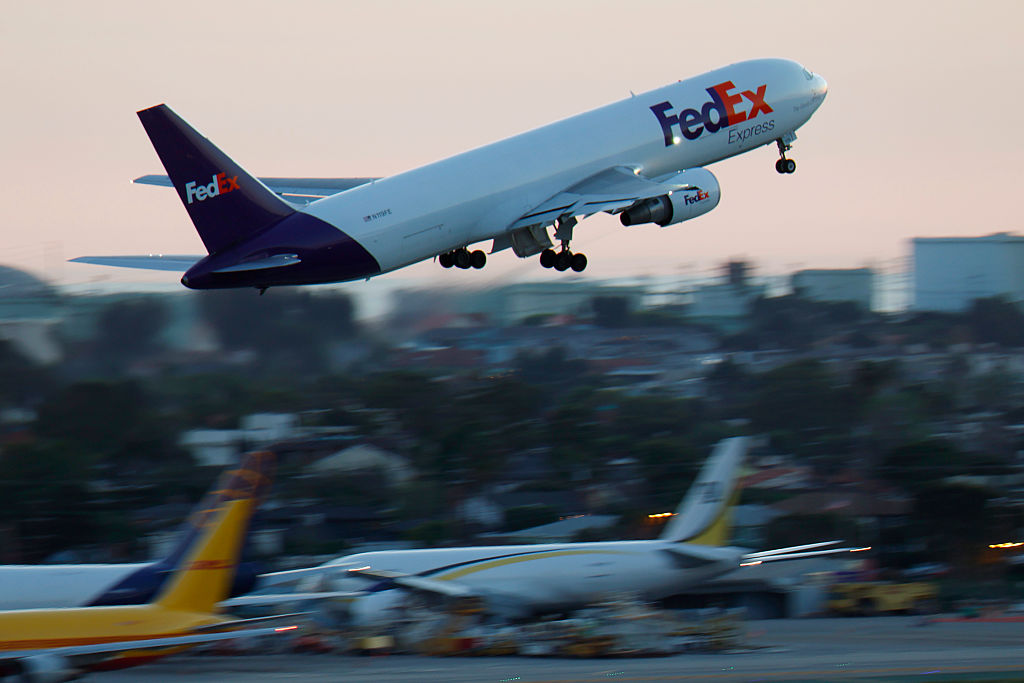
Federal Express on Monday filed a lawsuit against the U.S. government, demanding a “full refund” of tariffs it paid after they were unilaterally imposed last year by President Donald Trump. The move comes days after the Supreme Court of the United States ruled the tariffs were illegal.
The lawsuit appears to be the first from a major American corporation seeking reimbursement following Friday’s high court decision.
Other companies had already filed claims for refunds before the Supreme Court determined that the tariffs, enacted under the International Emergency Economic Powers Act, were unlawful.
Those earlier cases — including one brought by retail warehouse giant Costco — are still pending before the U.S. Court of International Trade in New York, the same court where FedEx submitted its complaint.
In its Friday ruling, the Supreme Court stated that the Court of International Trade holds “exclusive jurisdiction” over tariffs issued under IEEPA.
“Plaintiffs seek for themselves a full refund from Defendants of all IEEPA duties Plaintiffs have paid to the United States,” Federal Express Corp. and its affiliate, FedEx Logistics, wrote in their 11-page complaint.
The suit names U.S. Customs and Border Protection — the agency responsible for collecting tariffs — along with its commissioner, Rodney Scott, and the U.S. government as defendants.
The complaint does not specify how much FedEx has paid in IEEPA tariffs since they were applied to most U.S. trading partners last year.
However, in September the company said it anticipated a $1 billion hit to fiscal-year earnings due to U.S. trade policies, though not all of that sum was tied to IEEPA duties. That figure represented 16% of its total earnings from the prior fiscal year.
In a statement posted on its website, FedEx said, “While the Supreme Court did not address the issue of refunds, FedEx has taken necessary action to protect the company’s rights as an importer of record to seek duty refunds from U.S. Customs and Border Protection.”
“At this time, however, no refund process has been established by regulators or the courts,” the company added. “We will communicate any relevant information and updates in a timely manner, and we appreciate your patience as we wait for additional guidance and clarity from the U.S. government and the courts.”