Cancer Survivor Fights for Medical Debt Relief at Statehouse
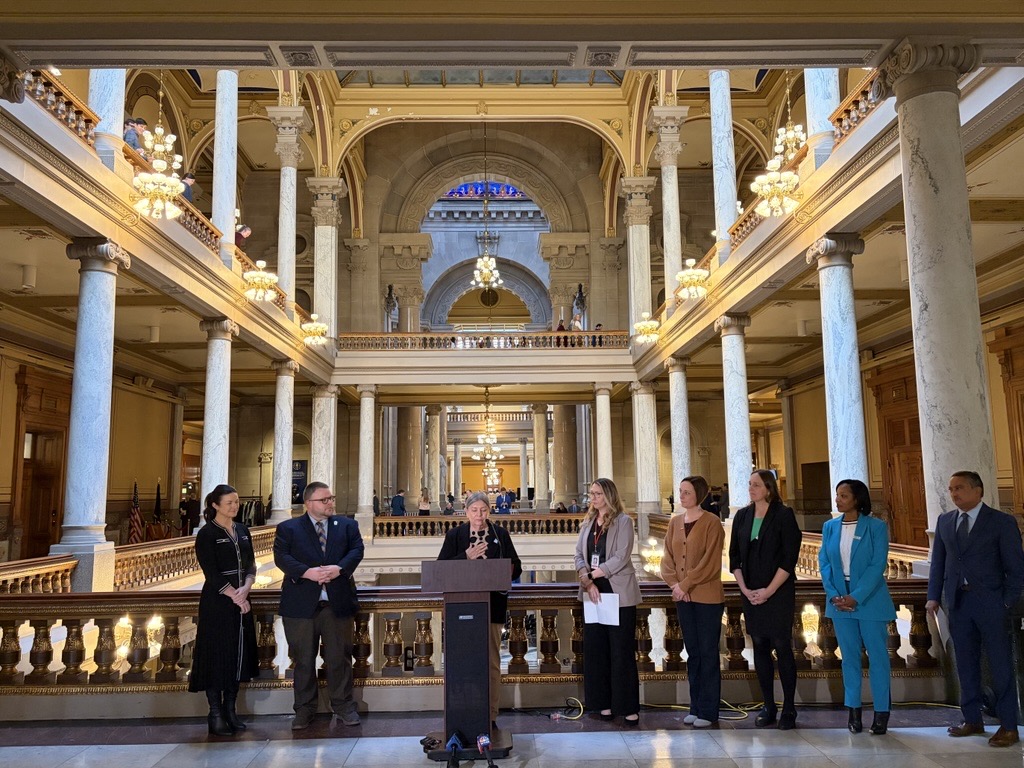
INDIANAPOLIS — Standing in the Third Floor North Atrium of the Indiana Statehouse on Wednesday, Christine Yoder didn’t just speak as an advocate; she spoke as a witness to the “fragile” nature of time and the crushing weight of medical bills that can reshape a family’s future forever.
Yoder, a Breast Cancer survivor and State Lead Ambassador for the American Cancer Society Cancer Action Network, joined a bipartisan coalition of nearly 25 organizations to urge lawmakers to pass Senate Bill 85. The legislation aims to prevent hospitals from placing liens on primary residences and caps wage garnishment for low-income Hoosiers.
A Tale of Two Nightmares
For Yoder, the fight for medical debt relief is deeply personal, rooted in the parallel struggles of her 13-year-old grandson, Ollie, and her late brother, Mark.
Ollie’s battle began with a brain tumor diagnosis at age eight. The treatment required out-of-state “proton therapy” and intensive rehab in Chicago. Yoder described the specialized non-emergency transport needed to move him between facilities—a 20-minute drive that her daughter, a NICU nurse, knew was medically necessary to prevent him from aspirating.
She came home to an over $30,000 ambulance bill,” Yoder told the crowd. “She reached out to the insurance company and said, ‘surely there’s a mistake.’ And they said, ‘no, we’re not paying because it’s not an emergency.’”
Despite constant advocacy and tears, the bill ended up in collections. “I don’t know if you know how many bake sales it takes to pay that,” Yoder said. “We don’t either. We ran out of time.”
He Died Because of Medical Debt
The timeline turned even darker when Yoder spoke of her brother, Mark, a truck driver who needed a kidney transplant. As his health failed, he avoided missing work for fear of losing his insurance. When he eventually lost his job, he lost his coverage, too.
Yoder described a haunting scene in Mark’s home: a dining room no longer used for meals, but filled with three large laundry hampers and a table piled high with unopened medical bills.
My brother died two years ago. His death certificate says that he died from cardiac issues. I promise you he died because of medical debt and putting things off until he just didn’t have any choice,” Yoder stated.
The Call for Legislative Action
The rally highlighted a startling statistic from the Urban Institute: nearly 20% of Hoosiers have medical debt in collections, totaling $2.2 billion across the state. Dave Almeida of Blood Cancer United noted that many patients are currently making treatment decisions based on their bank accounts rather than their health.
Yoder concluded her testimony by presenting a petition with hundreds of signatures to lawmakers, urging them to choose “people over paperwork.”
“Medical debt does not care if you did everything right,” Yoder said. “It arrives very quietly, it grows very quickly, and it reshapes families’ futures forever. Legislators can choose healing over hardship.”
As of this month, Senate Bill 85 has successfully crossed the first major legislative hurdle and is currently under review in the House. After passing the Indiana Senate with a bipartisan 33–15 vote on January 29, the bill was officially referred to the House Committee on Public Health on February 2. The bill
is now awaiting a formal hearing in its assigned House committee before it can move toward a full floor vote and, eventually, Governor Braun’s desk.
About ACS CAN
The American Cancer Society Cancer Action Network (ACS CAN) advocates for evidence-based public policies to reduce the cancer burden for everyone. We engage our volunteers across the country to make their voices heard by policymakers at every level of government. We believe everyone should have a fair and just opportunity to prevent, detect, treat, and survive cancer. Since 2001, as the American Cancer Society’s nonprofit, nonpartisan advocacy affiliate, ACS CAN has successfully advocated for billions of dollars in cancer research funding, expanded access to quality affordable health care, and advanced proven tobacco control measures. We stand with our volunteers, working to make cancer a top priority for policymakers in cities, states and our nation’s capital. Join the fight by visiting http://www.fightcancer.org.