One Woman’s Fight Against a Broken Safety Net
INDIANAPOLIS — Kelly Humphrey doesn’t consider herself a victim. To her, a victim is someone who waits for help that may never come. Instead, she is angry—and she has every reason to be.
For more than a year, Humphrey says she has lived in a cycle of arson, stalking, and financial fraud at the hands of her ex-husband, David McDonald. But according to Humphrey, the terror of McDonald’s actions has been compounded by a judicial and law enforcement system that she says has failed her at every turn.
The “Switch” and the Escalation
The nightmare began not with violence, but with “shadow” crimes. Humphrey and McDonald married in 2019, but by November 2021, Humphrey discovered McDonald had been using Cash App to funnel money from her accounts and opening credit cards in her name.
“I don’t know what I’m doing wrong in allowing myself to be so vulnerable,” Humphrey said. After a brief separation and an attempt to help McDonald following a series of strokes in 2023, the behavior turned physical. On July 8, 2024, a judge issued a permanent protective order after McDonald was caught on video busting out the windows of Humphrey’s son’s home. The order was explicit: McDonald was banned from her home, her street, her son’s street, and her workplace.
It didn’t stop him.
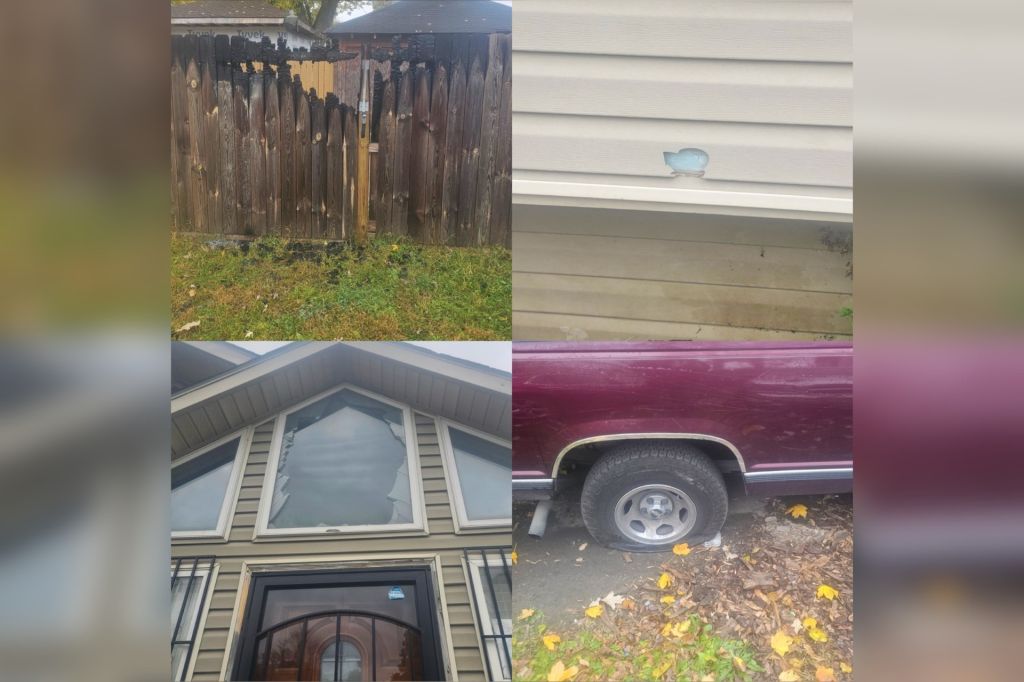
By October 2024, Humphrey says McDonald was “relentless.” He graduated from throwing golf balls with notes written on them to throwing bricks. He smashed car windows and house windows. Then, on October 12, he set two fires at her home.
A System of “No Eyeballs”
During a contempt hearing on December 1, 2025—nearly 18 months after the initial protective order—the frustration in the courtroom was palpable. Humphrey arrived with a mountain of evidence: dozens of police reports, a flash drive of video footage, and records of dozens of 911 calls made this year alone. “The record doesn’t have eyeballs,” the judge told her, asking her to explain why McDonald was in contempt.
“He has busted out every window in my house and my son’s home… he has flattened my tires… he is currently incarcerated for the third arson that he has set at my house,” Humphrey testified.
Despite having a certified protective order, Humphrey says that every time she called the police, she was met with the same argument: they couldn’t find the order in the system, or they claimed he hadn’t been served. “Every single time the police have come out, I have argued and argued and argued,” Humphrey said. “I’ve given them the copy of the certified document… They say that he’s not been verbally given that when he was given it in court.”
The “Double Jeopardy” Deadlock
The December 1 hearing took an unexpected turn when the judge—a 25-year veteran of the bench—expressed hesitation to hold McDonald in civil contempt because of a legal concept called “double jeopardy.” Because McDonald is currently facing felony arson charges and other criminal cases in a different court (Court 25), the judge feared that a civil contempt ruling for the same conduct might jeopardize the criminal prosecution.
“The purpose of civil contempt is to coerce compliance… The purpose of a criminal case is to punish,” the judge explained. “There are double jeopardy implications if this coercion were to be punitive.” The judge’s decision to let the criminal cases “run their course” left Humphrey feeling more vulnerable than before. In the transcript, the judge admitted the system had failed to flag related cases, leading to a “retaliatory” protective order being granted to McDonald against Humphrey without her even being served. “The judge admitted that they had failed,” Humphrey said. “But nobody can actually give me an answer as to what their failure is, other than failure to respond and to listen.”
“It Needs to be Forever”
The details of the December 1 hearing revealed a terrifying escalation. McDonald reportedly listens to police scanners; the moment Humphrey calls 911, he flees. Humphrey testified that his stated goal is “murder-suicide.” Currently, McDonald is sitting in jail on a “no bond” hold for the third arson, but Humphrey knows that jail is often temporary. When the judge mentioned that the current protective order lasts for two years, Humphrey’s response was chillingly certain.
“It needs to be forever,” she said. “Otherwise, one of us will be dead.” “I followed all the proper protocol,” Humphrey said. “I don’t know what you want me to finally do other than to sit and just be a victim. I can’t do that.”
Where Things Stand
The legal battle for Kelly Humphrey took a controversial turn in just this month. Despite Humphrey’s mountain of evidence—including video footage and documentation of three separate arsons—the judicial process has moved toward a “global plea agreement” that Humphrey says was negotiated without her meaningful input.
Humphrey discovered through her own constant monitoring of the case file that prosecutors had offered her ex-husband, David McDonald, a plea deal that effectively trades jail time for probation. The agreement, which covers multiple incidences of stalking and arson, reportedly includes a suspended sentence and approximately two years of probation.
“Nobody has taken into consideration what I’ve been living through for the past four years,” Humphrey said, recounting her confrontation with a proxy prosecutor in court. “You guys are acting like there’s one arson. There are three arsons. I have 17 busted windows… and you guys are wanting to give him two years of probation. That just gives him two years of plotting.”
Humphrey also reports that as McDonald was being led away, he turned to her in open court and made a threatening gesture—mimicking a gun with his fingers while looking directly at her. “The deputy saw what happened,” Humphrey said. “He’s like, ‘I [expletive] got you.’ That’s what he did.” While a male prosecutor in the room also witnessed the act and insisted it be put on the record as a violation of the no-contact order, Humphrey says the lead prosecutor appeared “nonchalant” about the incident.
Next Steps: February 4th Sentencing
While McDonald remains in jail on a “no bond” hold for now—after the judge denied a request for home detention—his fate will be decided on February 4, 2026. Humphrey is currently drafting her own documentary-style evidence file to submit directly to the judge, refusing to let the probation department or prosecutors “write the narrative” for her. “I don’t trust any of them to write a narrative for me,” she said.
The Response from IMPD: Bridging the Gap in Protection
Following the pattern of violence and the systemic “visibility” issues Humphrey encountered, Officer Tommy Thompson of the Indianapolis Metropolitan Police Department (IMPD) provided clarity on how the department manages protective orders and what victims can do when the system fails to populate a record.
- The “Certified Copy” Solution
One of the most significant hurdles in Humphrey’s case was the claim by officers that her protective order was “not in the system.” Thompson acknowledges that while the system is designed to populate orders automatically once entered by the courts, “human error” can occur—especially with name variations or hyphenated surnames. To counter this, Thompson says that victims should not rely solely on the digital system. He advises that having a physical, certified copy (often stamped by the Clerk’s Office) serves as an undeniable proof of protection that an officer on the street can verify instantly, even if the database is lagging. - The Power of the “Cause Number”
Thompson notes that “Cause Numbers”—the unique identifiers assigned by the prosecutor or court—are the most effective way for officers to locate a record that isn’t appearing under a name search.
Steps for Victims
Thompson outlined a clear protocol for those who feel the system is failing them:
Demand a Report: If an officer claims they can’t see an order, Thompson urges victims to “demand the report” anyway to ensure the encounter is documented.
Utilize Outreach: He points victims toward resources like Victim’s Assistance, Indy Champions, and the Indy Public Safety Foundation, which provide advocacy that goes beyond standard police response.
We also reached out to the Prosecutors office for comment and never heard back.
If you or someone you know is experiencing domestic violence, the National Domestic Violence Hotline is available 24/7 at 1-800-799-SAFE (7233).


