The Invisible War: Fighting Against the Bite That Changed Everything
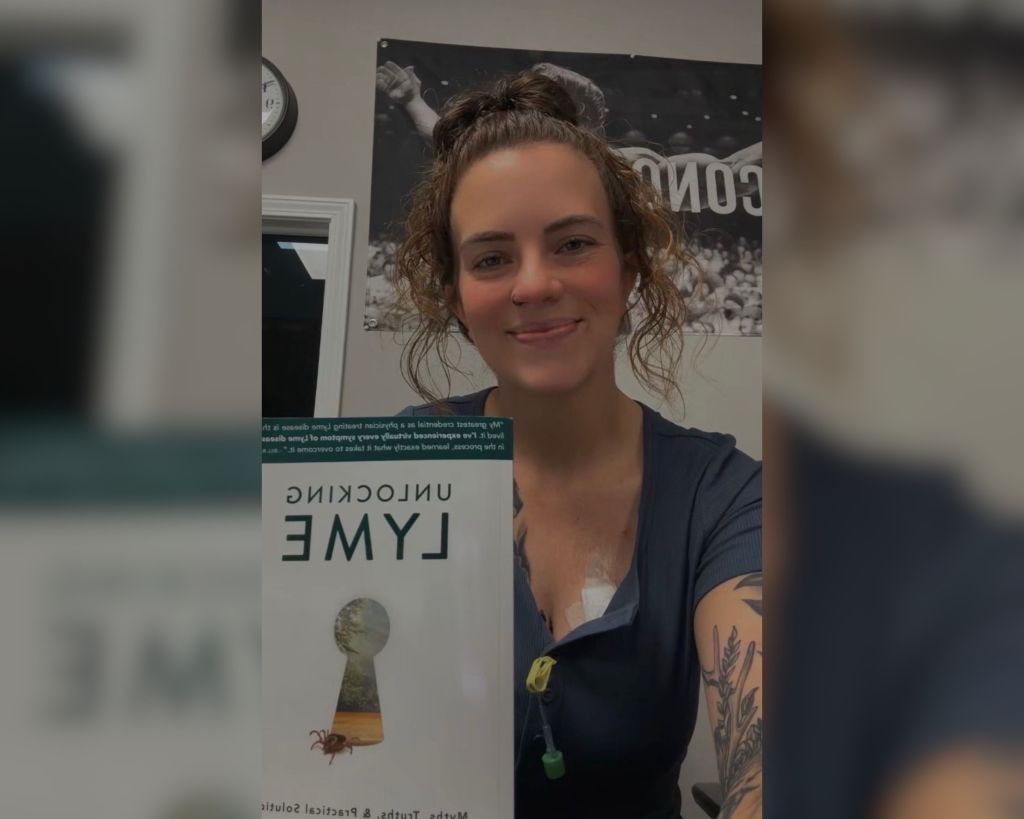
INDIANAPOLIS, Ind. — In 2017, Brandy Moorhead was a vibrant young woman in her early 20s, balancing the demands of motherhood with the rigors of nursing school.
She was the person others turned to in emergencies—an ER/Urgent Care Nurse trained to spot the subtle signs of illness. But when her own health began to unravel, the medical system she served didn’t have the answers. Instead, it offered a diagnosis that many women with chronic illness know all too well: “It’s just anxiety.”
Now, as National Lyme Disease Awareness Month hits, Brandy is sharing her story to serve as a warning and a lifeline for others navigating the treacherous waters of tick-borne illnesses in Indiana.
A Slow-Motion Collapse
The decline wasn’t instant. It began with “odd symptoms” that were easy to blame on the stress of college and a busy life. “I just kind of brushed a lot of my symptoms to the side and didn’t think a whole lot from it,” Brandy recalls. But the symptoms refused to be ignored. Over the next five years, her body became a catalog of inexplicable pain and neurological dysfunction.
“I started to have really strange symptoms from headaches, dizziness… I would have like these episodes where I would pass out without a true cause. I would have flutters in my eyes. Sometimes it was very difficult to see, ears ringing, shortness of breath, heart would race a lot.”
By the time she hit the five-year mark, the situation turned dire. The woman who once spent her days running through a busy emergency room began to experience slurred speech, facial spasms, and a loss of motor control in her hands—symptoms that mimicked devastating diseases like MS or ALS.
Brandy’s journey through the healthcare system was a grueling marathon. She consulted 60 different doctors across Indiana, Tennessee, Florida, and Ohio. She underwent spinal taps, imaging, and countless blood tests.
Despite her neurological decline, the answers remained frustratingly vague. Specialists at Vanderbilt diagnosed her with POTS (Postural Orthostatic Tachycardia Syndrome), but as her symptoms intensified into seizure-like episodes, the medical community defaulted to a psychological explanation.
“I kind of always got that same answer of, you know, you’re young, it’s anxiety. Anxiety can present very different in a lot of people and can manifest in physical symptoms. I needed to slow down and sleep more and eat better and all the things.”
Even when doctors placed her on a “laundry list” of anti-seizure medications—despite her tests showing no signs of a seizure disorder—Brandy knew something was being missed.
The Diagnostic Gap: Why Standard Tests Fail
The turning point came when Brandy took her health into her own hands, researching online and finding others with identical stories. She realized that the standard PCR tests used by most major labs often fail to detect tick-borne illnesses unless the “bacterial load” is exceptionally high.
Standard testing for tick-borne infections is often criticized for limited sensitivity, particularly in early infection. Many standard tests rely on detecting the body’s immune response rather than directly identifying the organism itself, which can result in false negatives if antibody levels have not yet developed or if a patient is immunosuppressed. In addition, many standard tests only evaluate for specific strains or limited co-infections.
Specialty laboratories, such as IGeneX, test for a broader range of species and co-infections, which may reduce the likelihood of missed infections. Some specialty testing methods are also capable of detecting bacterial DNA directly rather than relying solely on antibody production, which can improve detection in certain cases.
She eventually paid nearly $4,000 out of pocket for specialty testing through Igenex. The results were a revelation. She didn’t just have Lyme disease (Borrelia burgdorferi); she was battling a “cocktail” of co-infections, including Bartonella, Ehrlichia, Anaplasmosis, and Rickettsia.
“Not only did I have Lyme, but I had multiple of these co-infections that the standard test did not cover or find… Most people with these infections will not test positive for the PCR.”
A New, Fragile Normal
Today, Brandy’s life is dictated by medical lines and infusions. She has an IV port surgically placed in her chest, through which she administers daily medications for hours at a time. The energetic ER/Urgent Care Nurse who once worked out and spent every weekend at her son’s sports games has had to retreat from the world.
The illness has left her with narcolepsy and severe cognitive limitations. “If I’m putting my socks on, I can’t talk,” she explains. “Because my brain doesn’t allow me to do those things at one time.” Her medications have also made her extremely photosensitive, requiring her to wear long sleeves, pants, and sun hats even in the peak of summer to avoid severe chemical burns.
The heartbreak deepened this year when her 13-year-old son began showing similar symptoms and tested positive for Bartonella.
“It doesn’t matter. It doesn’t have to be a tick. It can be a flea. It can be a mosquito. It very well can be passed through childbirth… Any one of us can have these things and pass these things along and not know it until you get to a point of where I’m at right now.”
What most people don’t know is that tick-borne infections can be spread through methods other than just a direct tick bite. Lyme disease has been documented as transmissible from a pregnant woman to her fetus. Some tick-borne illnesses can also be transmitted through blood transfusions or even contracted through handling infected animals or eating undercooked meat from an infected animal.
There has also been evidence of these pathogens on insects and fleas as well. Bartonella is another commonly overlooked infection. Many people know it only as ‘cat scratch disease,’ but Bartonella can be transmitted through scratches, bites, or saliva from an infected cat coming into contact with an open wound.
The Message for May
Indiana is home to multiple tick-borne threats, including the newly recognized Alpha-gal syndrome, which can cause a life-threatening allergy to red meat. As Hoosiers head outdoors this month, Brandy urges them to look beyond the “bullseye rash”—which many patients, including herself, never see.
Her final piece of advice is for those still searching for answers in a system that often dismisses the invisible: Advocate for yourself.
“When one person says no, you keep fighting that battle… do your own research. As females, it’s anxiety and it’s in your head—that is not a sufficient answer.”
Brandy remains in treatment, hoping to reclaim whatever pieces of her former life she can. While she may never be the person she was before 2017, her voice is now a powerful tool in the fight for better testing, better recognition, and a cure for the thousands of Hoosiers living in the shadows of Lyme.
How You Can Help:
Brandy has established a GoFundMe to help cover the massive out-of-pocket costs for the treatments and specialty doctors that insurance refuses to cover.
RESOURCES:
CDC Tick Bite Tracker: https://www.cdc.gov/ticks/data-research/facts-stats/tickbite-data.html
Find a Provider: https://www.ilads.org/patient-care/provider-search/