Justice Ketanji Brown Jackson Is Not Good At Her Job
- Court ruled government can't ban therapists from expressing certain viewpoints, even on controversial topics.
- Case highlights tension between protecting citizens and safeguarding individual freedoms.
- Justice Brown Jackson's dissent criticized as 'petty' and 'embarrassing' for attacking her colleagues.
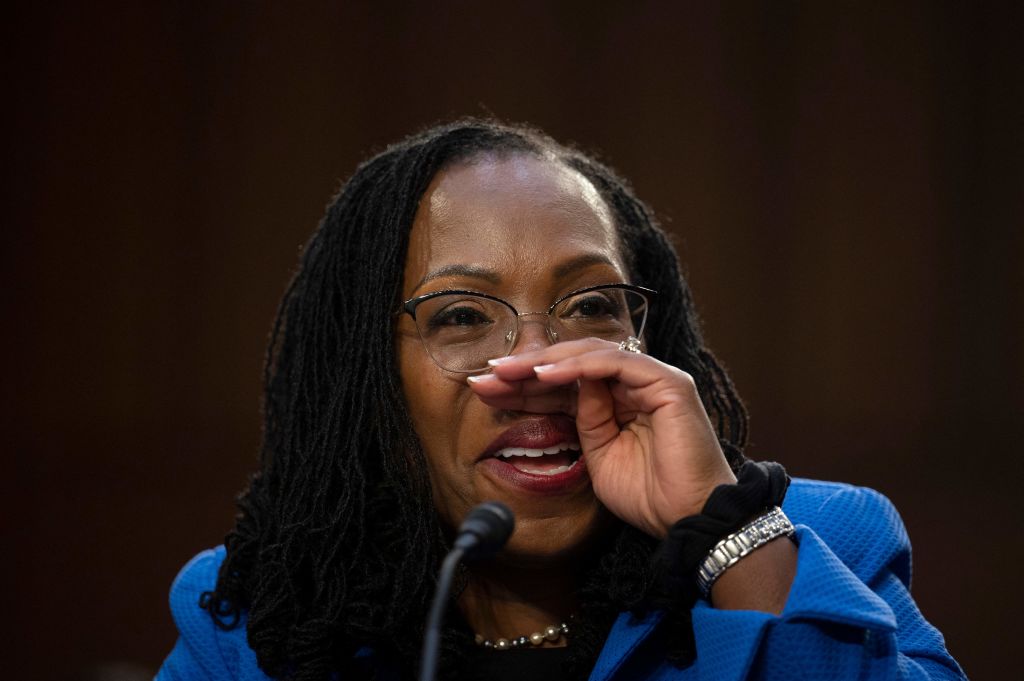
Justice Ketanji Brown Jackson Is Not Good At Her Job
The Supreme Court’s recent decision on Colorado’s conversion therapy ban has left many wondering about the implications for free speech and the role of the judiciary. Tony Katz is joined by William Jacobson, a Cornell Law professor and the mind behind LegalInsurrection.com, to break down the case and its significance.
The Supreme Court’s eight-to-one decision, with Justice Ketanji Brown Jackson dissenting, has sparked heated debate about the limits of government power and the protection of individual rights. As William Jacobson explains, “This was a case in which Colorado passed the law banning broadly speaking, conversion therapy. The only part of that that’s before the court is whether that conversion therapy can be banned if it’s merely words, if it’s merely talking.” The court made it clear that if the law involved physical conduct, such as abduction or medication, it might be upheld, but the issue at hand was the prohibition on therapists expressing a particular viewpoint.
The case raises important questions about the balance between government regulation and individual freedom of speech. As Jacobson notes, “This was meant not to cure physical abuses or medical abuses. It was meant to regulate viewpoints. You can talk about it with them, but you can’t hold a certain viewpoint.” The court’s decision highlights the tension between the government’s desire to protect its citizens and the need to safeguard individual rights and freedoms.
One of the most striking aspects of the case is Justice Brown Jackson’s dissent, which has been widely criticized for its tone and content. Jacobson describes it as “vindictive” and “petty,” with Brown Jackson attacking her colleagues in a way that’s “embarrassing” and “unusual.” As Jacobson puts it, “She’s I saw somebody refer to it on Twitter, so it’s not my original idea, but basically what she’s done is she has turned her dissenting opinions into the equivalent of blog posts that it’s you know, opinionated and attacking people.”
The implications of this case go beyond the specifics of conversion therapy. As Jacobson notes, “When Brown Jackson approaches it, she seems to find the political result that she wants, and that’s why it seems to be inconsistent.” The case highlights the challenges of navigating complex issues and the importance of considering multiple perspectives. As we explore the intricacies of this case and its broader implications, we’re joined by William Jacobson, a leading expert on the Supreme Court and its decisions.
If you’re interested in understanding the Supreme Court’s recent decision on Colorado’s conversion therapy ban and its significance for free speech and individual rights, this episode is a must-listen. Join us as we delve into the details of the case and its implications with William Jacobson, Cornell Law professor and the mind behind Legal Insurrection dot com. Listen to the full episode to gain a deeper understanding of this complex issue and its far-reaching consequences.
Listen to the “Justice Ketanji Brown Jackson Is Not Good At Her Job” discussion in full here:
Listen to the show in full here:
Watch the show here:
Archived episodes here:
ABOUT THE SHOW
Tony Katz Today airs from 12-3pm ET on 93.1 WIBC/Indianapolis
What are we talking about? Politics, breaking news, political theory, art, the markets, food, libations and whatever else may come to mind.
PLEASE SUBSCRIBE TO THE PODCAST
Tony Katz Today on Apple Podcasts