Rejected Lungs Revived in Indy: A U.S. First Saves Local Man
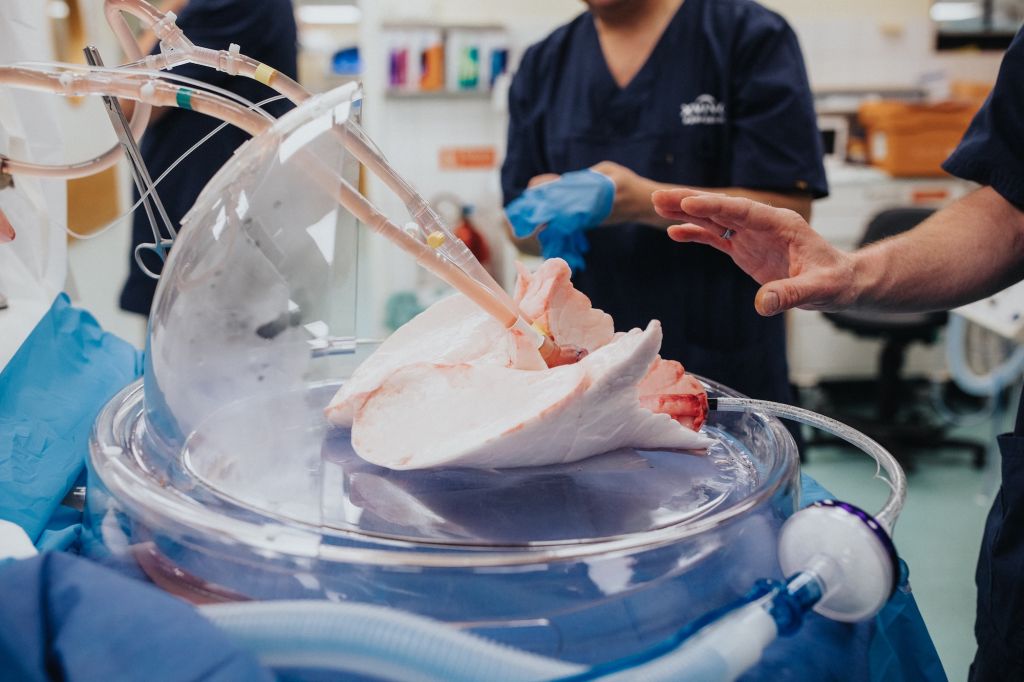
INDIANAPOLIS — A groundbreaking medical procedure in Indianapolis has turned a rejected organ into a lifesaving miracle, marking a major milestone for organ transplantation in the United States.
On January 29, 2026, the Indiana Donor Network became the first organ recovery organization in the nation to successfully use an in-house mechanical lung perfusion system to save a marginal organ that had been turned down by multiple transplant centers.
The journey began when an Indiana donor passed away at a hospital in the northeastern part of the state. While the donor was registered to give the gift of life, several regional transplant centers initially rejected the lungs due to “marginal performance”—meaning their function wasn’t strong enough to guarantee a successful transplant.
Rather than accepting the loss of the gift, the Indiana Donor Network activated a new high-tech partnership with Sweden-based XVIVO and Wisconsin-based Perfusion Solution.
The lungs were transported to the network’s recovery center in Indianapolis, where they underwent Ex-Vivo Lung Perfusion (EVLP). For five hours, the lungs were placed on a platform that simulates the human body, pumping them with oxygen and nutrients to stabilize and enhance their health.
The result was immediate: The once-marginal lungs showed significant functional improvement. By the end of the day, a transplant center accepted the “revived” organs, and they were successfully transplanted into an Indiana man, saving his life.
A First for the Nation
The Indiana Donor Network is now the only organ procurement organization in the U.S. to host this specific technology in-house. This allows clinical teams to act faster and travel further to save organs that might otherwise be discarded.
“Advancements in technology are transforming organ transplantation at every stage,” said Sherry Quire, Indiana Donor Network Director of Organ Services. “We are committed to preserving and enhancing organ vitality outside the body so each transplant has the greatest possible opportunity to succeed.”
Machine perfusion is changing the math of organ donation. By keeping organs “breathing” and functional outside the body, doctors gain critical time to:
Reassess organs that show initial weakness.
Improve organ health through therapeutic intervention.
Expand the geographical distance an organ can travel, reaching patients who previously lived too far from a donor.
“Our vision is that nobody should die waiting for a new organ,” said XVIVO CEO Christoffer Rosenblad. “Strategic partnerships like this are crucial in making that vision a reality.”
As of today, the Indiana Donor Network’s new model is fully operational, providing a blueprint for how innovation and collaboration can maximize every donor’s legacy.