Former Sergeant Exposes Abuse in Indiana Prison System

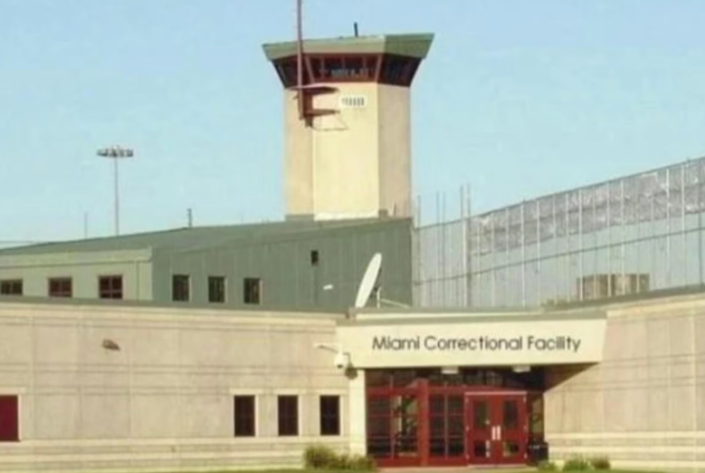
BUNKER HILL, Ind — In a harrowing whistleblower testimony that paints a portrait of a correctional system in freefall, former Sergeant Zandra Parker is breaking her silence.
Her account describes a world where staff members are “thrown to the wolves,” reports of sexual harassment are systematically erased, and inmates are driven to gruesome acts of self-mutilation by staff-led starvation.
Parker, a military veteran who served at the Miami Correctional Facility from June 2023 to late 2024, describes her experience not as a career in law enforcement, but as a descent into a “sea of demons” that nearly cost her her life.
Promoted to Fail: The Staffing Crisis
Parker’s entry into the system was fueled by a desire to “bridge the gap” and humanize the correctional environment. However, the systemic decay was immediate. Despite a standard two-year requirement for promotion, the facility’s desperate turnover rates saw Parker promoted to sergeant in just six months.
“I thought that was a compliment,” Parker said. “But I was wrong. They were just promoting people left and right because of the turnover… people were so unwilling to be in that position because of how you’d be treated.”
The lack of experience extended to the newest recruits—often 18- and 19-year-olds fresh out of high school. Parker says these “kids” are given “unrealistic” training and that instructors are explicitly ordered to withhold the truth about the job’s dangers to prevent them from quitting before they start.
Working Unprotected
Parker detailed a staggering list of safety lapses during her tenure:
The First Two Months: She worked in street clothes without pepper spray, a radio, or a duty belt.
Safety Denied: She reports going a full year without a protective vest because the facility claimed they lacked her size or prioritized other staff.
The Blind Leading the Blind: Parker was frequently left to manage entire units with 12 unarmed, untrained recruits.
Starvation and the “Plastic Fork” Incident
The most chilling portion of Parker’s testimony involves the Restrictive Housing Unit (RHU). She claims that supervisors used food as a weapon of compliance. In one instance, she was ordered to sit in front of an inmate’s door to ensure no food passed through the cuff port until the man complied with orders.
“They were starving him,” Parker recalled. “In response, the man took a plastic fork and ripped open his stomach until his intestines fell out on the floor. He kept doing it over and over… his end goal was to get transferred to a mental facility.”
Parker claims the same inmate was begging to speak to the Indiana State Police regarding information on murders committed by his late father. She says the administration denied him access to investigators. “He wasn’t asking for favors; he was asking to report a murder, and they denied it.”
The “Delta” System: Systematic Erasure of Misconduct
Parker’s accusations of corruption extend to the Delta system, the digital platform used for official incident reports. She claims the system is manipulated by leadership to hide liability.
“You’re submitting it, but it’s getting submitted for approval,” Parker explained. She said she was coached by a lieutenant to change paperwork to make it “look better” or sound “less guilty.”
When Parker filed formal sexual harassment charges against high-ranking officials—including the warden and deputy warden—she says her paperwork was intercepted. Because supervisors must approve reports before they go “downstate,” those she accused were the very ones deciding if the complaint moved forward. Her claims were eventually summarized by the state as: If you don’t like it, quit.
A Psychological Toll: “I Went on Suicide Watch”
The environment eventually fractured Parker’s personal life. She recounts being subjected to physical assaults—having feces put in her mouth and being urinated on—and then being harassed by her own peers for treating inmates with “humanity.”
The pressure led to a severe mental health crisis. “I still have trauma just from walking up and down the hall,” she said. Parker revealed she eventually went on suicide watch at home and had to manipulate hospital staff to be released so she could follow through with an attempt. “I gave up everything for that place. My family quit talking to me… I almost killed myself.”
The Call for Reform
Despite her exit, Parker is calling for a total overhaul of prison leadership. She believes the current administration rewards those who “shut up and keep the inmates quiet,” regardless of the human cost.
“If we could get an entire new administration, that place… you wouldn’t hear from us,” she said. “The inmates are tired of watching the good officers and good sergeants get ridiculed and harassed for doing the right thing.”
We reached out to both the Miami Correctional Facility and the Indiana Department of Correction regarding Parker’s accusations; however, we have not yet received an official response.