Indiana lawmakers push bills to combat AI deepfake porn
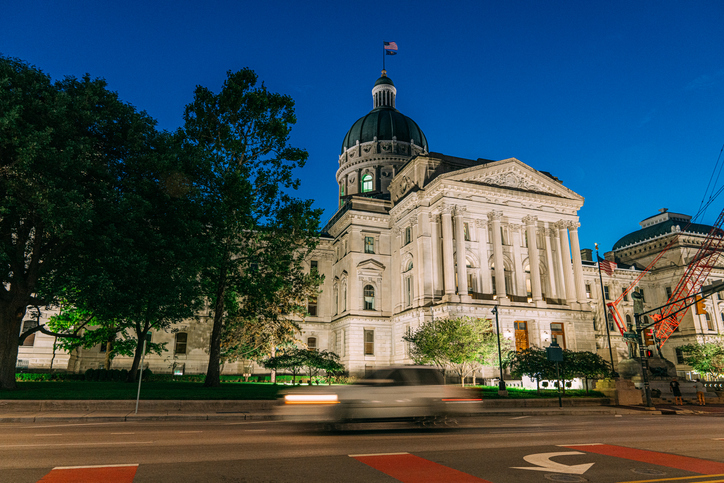
With the start of the new year comes a return to work at the Indiana Statehouse, where lawmakers are scheduled to begin the 2026 legislative session on Monday, Jan. 5.
For several weeks, legislators have already been submitting proposed bills. Among them are at least two measures focused on artificial intelligence and pornographic content.
The lawmakers behind those proposals say the issue is personal.
Rep. Craig Haggard (R-District 57) and Rep. Maureen Bauer (D-District 6) typically sit on opposite sides of the aisle, but this session they are united around one concern: the rise of AI-generated deepfake pornography.
Each has authored legislation addressing the issue, and both have signed on as co-authors of the other’s bill.
“There’s a lot of good with AI, but there is bad,” Haggard said.
Haggard’s interest in the issue intensified last fall, when his wife was potentially targeted by a deepfake video that allegedly depicted her topless.
“I still don’t publicly put blame on any one person or entity because I think that’s unfair. Somebody drug my wife into this, whether it was real or not real, and that part still upsets me,” Haggard said.
His proposed legislation would align Indiana penalties for creating and distributing AI-generated pornography with federal standards, allowing for sentences of up to three years in prison and fines.
Haggard said the harm caused by deepfake content can be devastating.
“We’ve seen not only in the U.S., but we’ve seen overseas, individuals that they’ve used this stuff to blackmail, where people have taken their lives as adults or young kids,” he said.
Under federal law, knowingly publishing non-consensual intimate images — including AI-generated deepfakes — without consent is already a crime.
Bauer says she experienced the impact of that kind of abuse firsthand in September, when someone altered a photo of her without permission and used it to harass and intimidate her.
The incident prompted an investigation by state police and the FBI.
This legislative session, Bauer authored House Bill 1182, which would create a new offense in Indiana law covering the creation, possession and distribution of AI-generated sexual images made without a person’s consent.
She said existing statutes fall short in addressing what she described as a rapidly expanding form of abuse.
According to Bauer, the bill establishes what she called “clear accountability” at the point where the images are created — not just when they are shared.
“This issue is one I now know can happen to anyone at anytime,” Bauer said. “As artificial intelligence advances faster than our laws, people are having their likeness exploited in ways that violate their privacy, safety and dignity.”
She said the legislation is designed to ensure consent and responsibility remain central as technology evolves.
“This bill is about consent and accountability,” Bauer said. “No one should have their body or identity weaponized by technology. Indiana law must keep pace with emerging threats, and HB 1182 is a necessary step to protect Hoosiers from this form of digital exploitation.”
For Haggard, the takeaway is simple: both proposals aim to shine a spotlight on a growing problem.
“We’re behind on regulating this kind of stuff,” he said. “I want people to realize this is a big deal.”