“I Want to Live”: Family Blames Prison Neglect for Inmate’s Death
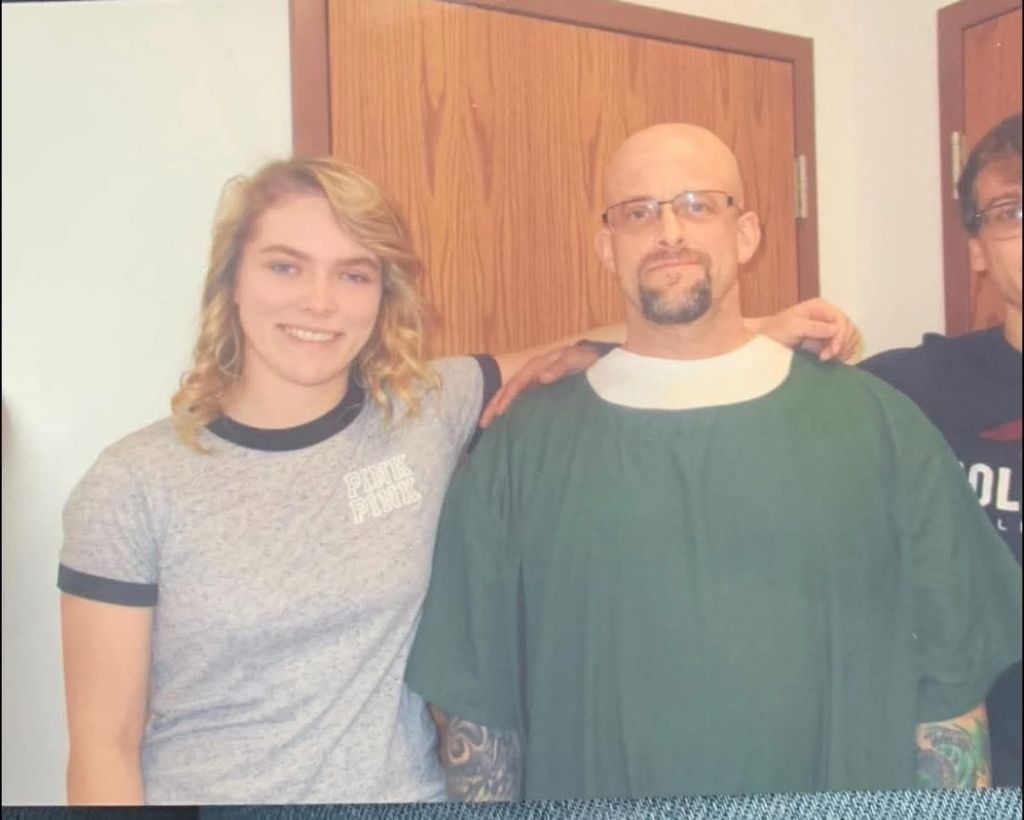
NEW CASTLE, Ind. — For over fifteen years, Halie Fancil counted down the days until her father, Douglas Wayne Fancil, would walk out of prison. That homecoming was set for the fall of 2025.
Instead, in September 2024, Halie received the call every inmate’s family dreads. Her father was dead at age 50, found unresponsive in a segregation cell at the New Castle Correctional Facility.” I’ve been waiting for my dad to come home since I was just nine years old — I was only a little girl,” Halie said. “We were finally so close to that moment, and instead I lost him forever.”
Now, Halie is speaking out, claiming that her father’s death was not an inevitable consequence of illness, but a result of “deliberate neglect” within a facility she claims ignored his repeated pleas for life-saving medical care.
A “Downward Spiral” in Lockup
Douglas Fancil was serving a 17-year sentence for drug-related charges. While he had been moved between several Indiana facilities, he had only been at New Castle—a private prison managed by the GEO Group—for about a year.
According to medical records and Halie’s own account, Douglas suffered from a laundry list of chronic conditions: COPD, diabetes, anemia, high blood pressure, and ulcerative colitis. The latter was particularly aggressive; Halie, who suffers from the same condition, knew exactly how dangerous his symptoms were.
“I’ve had my hemoglobin drop as low as 6. I’ve needed blood transfusions,” Halie explained. “So when I read my dad’s forms saying he was going to the bathroom 40 times a day, losing blood, and feeling weak… I knew how fast it can become life-threatening when no one helps.” At the time of his death, Douglas was in “segregation”—a lockup unit where he was confined to a cell and entirely dependent on staff for every basic need, including medical attention.
The Final Pleas: “Help Me”
In the weeks leading up to his death, Douglas used his prison tablet to send a series of increasingly desperate messages to his daughter. Because his phone privileges had been revoked for 30 days due to a disciplinary issue, these digital “kites” were his only lifeline.
September 5, 2024:
“Help… You need to contact the Human rights place… They have done me wrong the whole time I’ve been here… Love you all get someone that can help you deal with it!!!!”
September 12, 2024:
“I’m passing out and falling down some times must be having seizures im low on blood like we have talked about.”
September 22, 2024 (Seven days before his death):
“Please contact some one that will help. Not gonna live much longer losing too much blood need transfusion for sure keep passing out… I want to live.”
Halie says she didn’t see the most desperate message until it was too late. “It felt really bad,” she recalled. “He was begging me to contact somebody that would help, and I didn’t see the message until it was too late… he couldn’t even call us to tell us what was going on.”
A Conflict Between Staff
The investigation into Douglas’s death revealed a harrowing disconnect between the correctional officers guarding the unit and the medical staff assigned to treat him.
Halie reports that the day before he died, Douglas asked to go to the hospital twice. He was reportedly visibly in pain and struggling even to stand. “A corrections officer reportedly requested that he be pulled from his unit for medical care, but nothing was done,” Halie said. “When the officers told the medical staff about his condition, they were told, ‘He’s fine. He’s been doing this all week.’ But he wasn’t fine. They didn’t even check on him.”
On September 29, 2024, Douglas was found unresponsive in his cell at approximately 1:18 p.m. Records indicate there was no log of anyone checking on him for at least three hours prior to the discovery.
The IDOC Response and the Search for Justice
When asked for a formal response regarding the accusations of medical neglect and the circumstances surrounding Douglas Fancil’s death, the Indiana Department of Correction (IDOC) declined to provide details. In a statement denying a public records request, the IDOC said:
“The information you have requested is non-disclosable under state law, which prohibits the Indiana Department of Correction from releasing personal medical information.”
Halie attempted to pursue legal action, but two different attorneys—including one specifically requested by her father before he died—told her that while the prison clearly failed to provide adequate care, it was legally difficult to prove that the lack of a hospital visit was the definitive “cause” of death versus his underlying conditions.
A Legacy of “What Ifs”
For Halie, the statistics and the legal jargon don’t fill the void left behind. Douglas died without ever meeting his two granddaughters, ages five and two.
“He never got to meet them. He was excited to get out and get to meet them,” Halie said. “He never got to build that car for me like he promised.”
Halie’s mission now is to ensure her father’s story serves as a warning. She has already connected with another family from her hometown of Warsaw who lost a loved one at the same facility.
“Incarcerated people are still human beings,” she said. “They deserve to be treated with basic dignity and care. I’ll keep fighting in my dad’s name. Please share my dad’s story and help be his voice.”