The Market’s Wild Rollercoaster Ride
- Market reacts positively to short-term benefits of deal, but doubts Iran's long-term stability.
- VIX 'fear index' drop signals market confidence, but may overlook potential risks.
- AI used for practical business efficiency, not just ambitious tech growth.
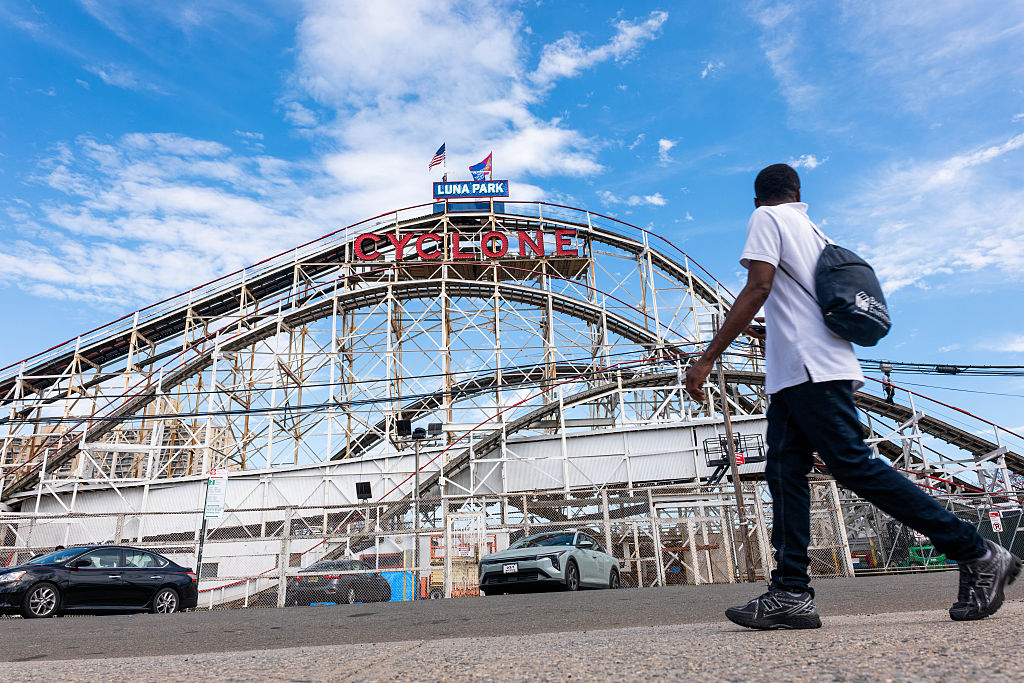
The Market’s Wild Rollercoaster Ride: How the Iran Deal Impacts the Economy
The recent announcement of a cease-fire with Iran sent shockwaves through the markets, with the Dow futures jumping 1,200 points and oil prices plummeting. But what does this mean for the economy? Tony Katz is joined by Dr. Matt Will, an economist at the University of Indianapolis, to break down the implications of this deal and what it says about the market’s behavior.
Dr. Will points out that the market’s reaction is all about uncertainty. “The market wants certainty,” he explains. “They’re like a Trump whisperer, and they said, ‘Trump is saying he’s gonna follow through. There’s not gonna be a big war, there’s not gonna be continued violence.'” The market is essentially saying, “Okay, if Trump says it’s going to be okay, then it’s going to be okay.”
But is the market’s optimism justified? Dr. Will is skeptical. “I don’t think the buying in to the President’s implication that Iran is going to be stable,” he says. “I don’t think anybody believes that.” Instead, the market is reacting to the short-term benefits of the deal, such as the potential for increased oil production and reduced tensions.
One of the key indicators of the market’s behavior is the VIX, also known as the fear index. When the market is uncertain, the VIX tends to rise, and when it’s confident, it falls. In this case, the VIX dropped significantly, indicating that the market is feeling more confident about the future. Dr. Will explains that the VIX is “strictly uncertainty. It’s risk. It’s the ultimate measurement of risk.”
But what about the long-term implications of the deal? Dr. Will is cautious. “I don’t mind Trump trying,” he says. “I think that there are a lot of political maneuvers that can be made when Iran fails.” He points out that the market is not thinking about the long-term consequences of the deal, but rather the short-term benefits.
The episode also touches on the topic of AI and its impact on the market. Dr. Will argues that while AI is often seen as a driver of growth, it’s actually being used in more practical ways, such as optimizing supply chains and improving efficiency. “Businesses aren’t using AI to be super Google,” he says. “They’re using it to make better boxes, quicker things, writing letters faster.”
If you’re interested in understanding the intricacies of the market and how the Iran deal is impacting the economy, this episode is a must-listen. Dr. Will’s insights offer a unique perspective on the market’s behavior and what it says about the long-term implications of the deal. Tune in to hear more about the VIX, the market’s reaction to uncertainty, and the role of AI in the economy.
Listen to the “The Market’s Wild Rollercoaster Ride” discussion in full here:
Listen to the show in full here:
Watch the show here:
Archived episodes here:
ABOUT THE SHOW
Tony Katz Today airs from 12-3pm ET on 93.1 WIBC/Indianapolis
What are we talking about? Politics, breaking news, political theory, art, the markets, food, libations and whatever else may come to mind.
PLEASE SUBSCRIBE TO THE PODCAST
Tony Katz Today on Apple Podcasts