The 75th Running of Little 500
Little 500
BLOOMINGTON, Ind. — Somewhere between the hum of spinning bike wheels and the bustle of spring crowds, the Little 500 continues to stand out as one of Indiana University’s most enduring traditions part athletic competition, part campus-wide event.
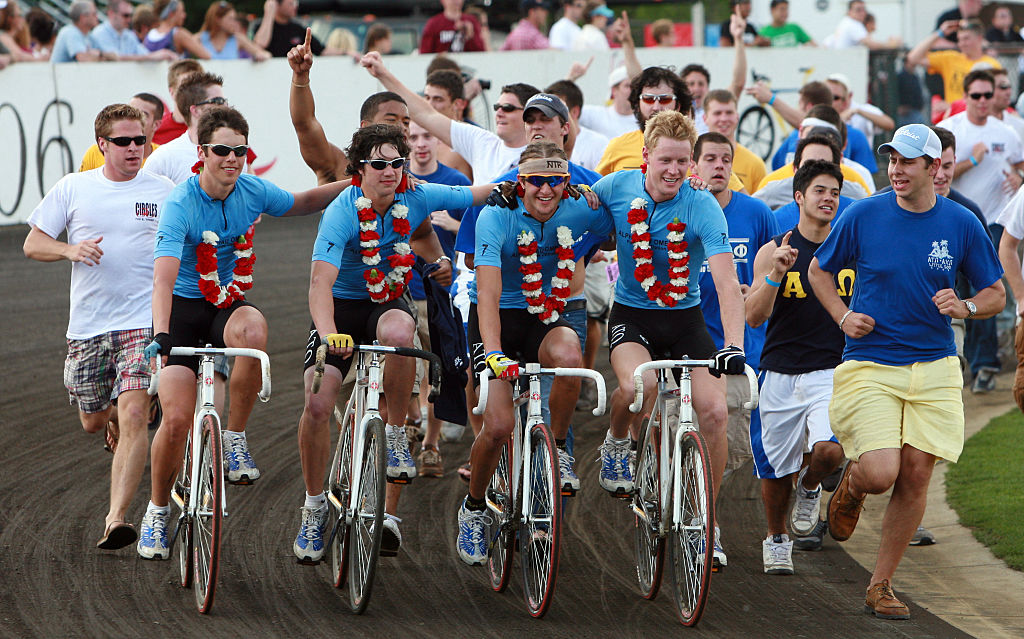
The 75th running of the Little 500 is scheduled for April 24 and 25 at Bill Armstrong Stadium, with tickets priced at $35. The event will feature 33 men’s and 33 women’s teams competing on Schwinn Paramount bicycles in a relay-style cycling race that has remained largely unchanged for decades.
At its core, the Little 500 is a track race. Teams of four riders rotate in and out, completing laps on a quarter-mile oval. The men’s race spans 200 laps, while the women’s race covers 100, demanding both endurance and precise coordination during high-speed exchanges.
In the days leading up to the race, Bloomington sees a significant influx of activity as students and visitors gather for a week of events and celebrations tied to the competition. The race itself serves as the focal point of a broader set of traditions that have developed alongside it over the years.
Despite the scale and energy surrounding the weekend, the event’s origins are rooted in a philanthropic purpose. The Little 500 was established in 1951 to raise funds for student scholarships, a mission that continues today. Over time, the race has generated millions of dollars to support Indiana University students.
Attendance regularly reaches into the tens of thousands, with more than 25,000 spectators filling the stadium and surrounding areas. The crowd plays a visible role in the atmosphere, contributing to the event’s reputation as one of the largest collegiate sporting weekends in the country.
While the racing remains central, the Little 500 has evolved into a multifaceted tradition combining competition, community engagement and fundraising. Organizers and participants alike point to this balance as a key factor in its longevity.