9/11: When Indianapolis Int’l Airport Became a Parking Lot for Planes
Interview by Terri Stacy
INDIANAPOLIS–Being an air traffic controller is a difficult job. You have to talk constantly and keep track of sometimes hundreds of aircraft while they land and take off. On the morning of 9/11, the controllers in Indianapolis were called upon to do a job for which they had never been trained.
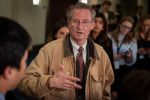
“I always describe it as…organized chaos,” said former Indy air traffic controller Kevin Brown.
WIBC will air the special 9/11: The Hoosier Call to Courage, Thursday at 7.
He remembers being at home, trying to get some sleep with a new baby girl in the house. The phone rang and he learned of the first attack. Brown was already preparing to come into work when his wife starting banging on the bathroom door to tell him about the second plane.
“I knew then it was an intentional attack. So, I threw on some clothes.” Brown drove to work. “I knew it was truly hitting the fan when I walked in the building. I walked up to mark in the radar room and I grabbed my headset and said, hey, where do you want me to go?”
Because of the timing of the federally-ordered stop to all commercial flights, Indianapolis was about to handle a lot of air traffic and a lot of landings.
“So, they had ordered the ground stop and airplanes were being forced down to land at the nearest suitable, available airport. Well, that put Indy right as a prime target for diversions,” he said. “Indianapolis had the most divert aircraft of any airport in the country.”
Actually arranging for the safe landing of all the planes was a tough job, and required more concentration than Brown had ever mustered.
“I was probably in about the seventh year of my career here. I was comfortable working busy traffic. I had worked a number of race days and special events. I knew what the facility looked like and sounded like and felt like when it was running at full capacity. But, this was well beyond that,” he said.
Once the planes were landed, the sky was empty and quiet and Brown walked outside.
“As far as you could see there were airplanes. There were 150 airplanes of carriers that do not land here. I remember seeing Turkish Air; Air Lingus; China Air,” he said.
And there was an added difficulty for the airport and the passengers.
“The airport didn’t have the infrastructure to get them off the airplanes. So they’re parked at the airport with the doors locked. Thousands of people are being now held hostage. Some of them sat there for like 12 and 14 hours,” said Brown.
When they were finally let off the planes, the airport became a campground, with the Red Cross helping find bedding so the people could sleep.
Getting the planes back up in the air toward where they needed to be was equally as tough. But, Brown said his story is not unique and praised the thousands of air traffic controllers who did that job across the country that day.
“I have the same dread and sorrow that every other American has. But, there’s this little tiny piece inside of me that has pride for the three hours that we did something right when it mattered,” he said.
Brown said he believes the hijackers may have had other hijackings planned, but that getting the four to five thousand airplanes down that day may have saved more lives.