Carson Questions FAA on DOGE Cuts in Indy
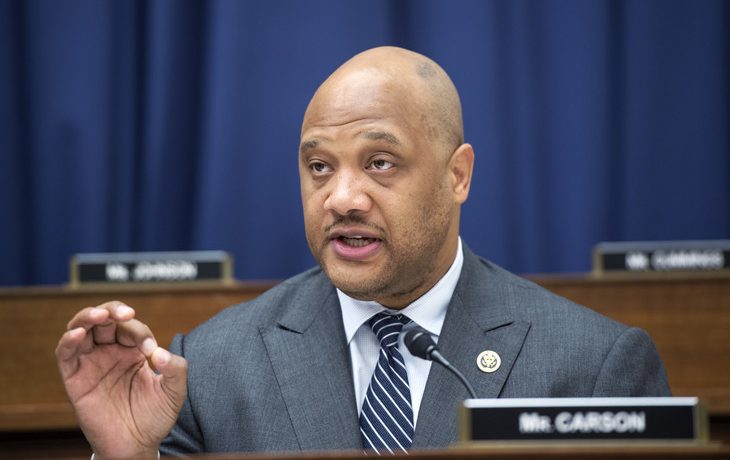
WASHINGTON — Rep. Andre Carson on Tuesday pressed the Federal Aviation Administration’s administrator over what he called shortsighted cuts to aviation grant funding made under the Department of Government Efficiency (DOGE), including the termination of funds for upgrades to the solar farm at Indianapolis International Airport.
During a subcommittee hearing, Carson said DOGE was created to “cut waste and fraud,” but argued that its actions instead targeted “very important staffing and grant funding” that support airport operations and aviation safety.
“Improving airport operations improves aviation safety. I think we can all agree,” Carson said. He pointed to the canceled grant for Indianapolis International Airport’s solar farm as a prime example. “One example was the very shortsighted cancellation of funding to improve the solar farm at the Indianapolis International Airport.”
Carson described the airport’s solar facility as the largest of its kind and noted that it has enjoyed bipartisan support since its inception. He said the project improves the efficiency of the airport’s electrical grid and lowers operating costs, benefits he said ultimately accrue to passengers and the aviation industry.
“This facility is the largest of its kind — very remarkable — and has enjoyed bipartisan support since its first because it improves the operation efficiency of the airport’s grid and lowers costs, which benefits passengers and industry,” Carson said.
The Indiana Democrat asked the FAA administrator to provide additional transparency around the funding decisions.
“District administrator, will you please provide the subcommittee with a full list of FAA grants that were terminated or not dispersed?” Carson asked. “And secondly, please provide the rationale, sir, for the terminations, and whether these decisions can be reviewed for the restoration of funding in the future.”
In response, the FAA administrator said the grant decisions stemmed from a broader review that typically occurs during a change in administrations.
“It’s my understanding that whenever there is a change in administration, it’s customary for the incoming administration to evaluate the priorities of the prior administration,” the administrator said. “I believe that that is something that’s been consistent… not unlike previous changes that we’ve seen.”
The administrator added that the current administration holds a different view on solar, wind, and other alternative energy projects, and that the Indianapolis program was likely affected by that reevaluation


