End of an Era: The Final U.S. Penny Rolls Off the Line
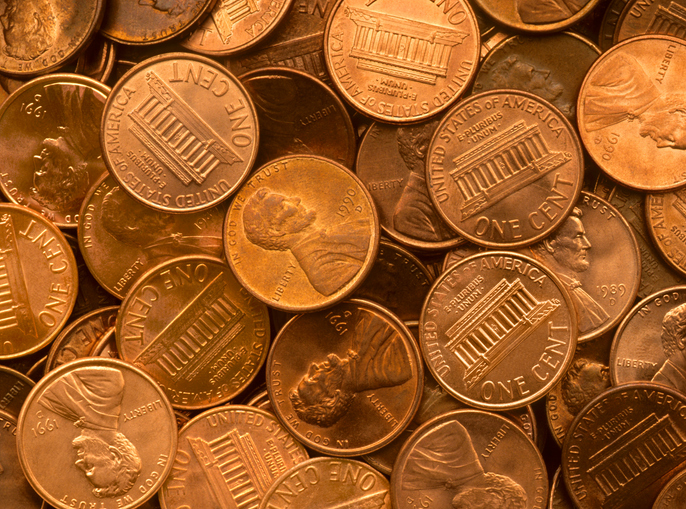
The last American penny has been struck at the U.S. Mint in Philadelphia, marking the end of a coinage era that began in 1793 and concluded on November 12. The once-ubiquitous one-cent coin is already being missed by shoppers and cashiers alike.
According to USA TODAY, some retailers have begun running short on pennies and are now rounding cash payments up or down to the nearest five cents when customers don’t have exact change.
In February, President Donald Trump directed the Treasury Department to halt penny production as part of a federal budget-cutting initiative. However, switching to nickels—which are even more costly to make—could ultimately create new financial challenges for the government.
“For far too long the United States has minted pennies which literally cost us more than 2 cents. This is so wasteful!” Trump wrote on Truth Social, his social media platform. “I have instructed my Secretary of the US Treasury to stop producing new pennies.”
According to the U.S. Mint’s 2024 annual report, the familiar Abraham Lincoln penny cost about 3.7 cents to produce in the last fiscal year. A nickel, by comparison, cost roughly 13.8 cents to make.
Pennies were among the first coins ever minted by the United States, dating back more than 230 years. But the price of producing them—along with nickels—has steadily increased over the past two decades. Rising raw material costs, including copper, nickel, and zinc, have pushed those expenses even higher.
When production costs exceed the coin’s face value, the seigniorage—the difference between what a coin is worth and what it costs to make—becomes negative, meaning it costs taxpayers more to produce the coin than its actual value in commerce.
In fiscal year 2024, the Mint manufactured approximately 3.2 billion pennies, down from the previous year’s total. Yet the cost to mint and distribute each penny rose by 20% during that same period.
Although coins typically remain in circulation until they’re damaged or lost, many pennies disappear over time—tossed aside, misplaced, or simply forgotten. During the COVID-19 pandemic, the nation’s penny inventory plunged, prompting the Federal Reserve to request increased production, according to the Cato Institute.
The Treasury Department placed its final order for penny blanks—the flat metal discs used to make the coins—in May, according to the Federal Reserve Bank of Richmond.
While the penny “remains legal tender and will retain its value indefinitely,” the Treasury confirmed it will no longer be minted, as reported by USA TODAY. The department estimates there are about 300 billion pennies still in circulation—“far exceeding the amount needed for commerce,” according to its statement.
The debate over eliminating the penny isn’t new. Many lawmakers and economists have supported the move, arguing it’s a logical step in a digital economy. Former President Barack Obama even commented in 2013 that the penny serves as a “good metaphor” for the challenges facing Congress, ABC News reported.
The U.S. now joins a long list of countries that have dropped their smallest coins, including Canada, Great Britain, Australia, Israel, Brazil, Norway, Finland, and New Zealand, according to Reuters. Canada ended penny production in 2012, rounding all cash transactions to the nearest five cents—a transition that caused little disruption.